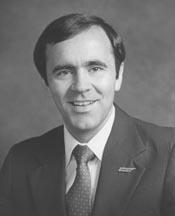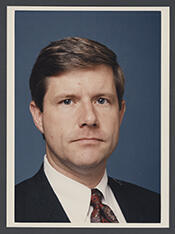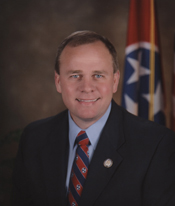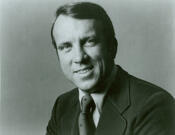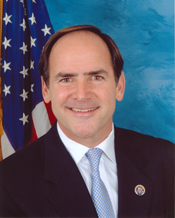
Zachary Paul Wamp (born October 28, 1957) is an American politician who served as the U.S. representative for Tennessee’s 3rd congressional district from January 3, 1995, to January 3, 2011. A member of the Republican Party, he represented a district based in Chattanooga that includes large parts of East Tennessee, notably the city of Oak Ridge. Over eight consecutive terms in the House of Representatives, Wamp participated actively in the legislative process and represented the interests of his constituents during a significant period in recent American political history.
Wamp was born in Fort Benning, Georgia, and grew up in a family with a strong sense of public service; his father served as an officer in the United States Army. He was raised primarily in Tennessee, where he would later build his political career. His early years in the Chattanooga area helped shape his familiarity with the economic and social concerns of East Tennessee, including issues related to national defense, energy, and regional development that would later figure prominently in his congressional work.
Wamp attended the University of Tennessee at Chattanooga, where he studied but did not complete a degree, leaving college to pursue opportunities in the private sector. Before entering elective office, he worked in sales and business development, gaining experience in the commercial and construction industries. This background in business and entrepreneurship informed his political outlook, particularly his emphasis on fiscal conservatism, job creation, and support for private enterprise.
Wamp’s political career took shape in the early 1990s, when he emerged as a Republican challenger in Tennessee’s 3rd congressional district. In the 1994 election, amid a national Republican wave, he was elected to the U.S. House of Representatives. During that campaign, he pledged to serve no more than twelve years—six terms—in the House. Once in Congress, he quickly became identified with conservative policy positions, including advocacy for limited government, lower taxes, and a strong national defense, while also focusing on the specific needs of his district, such as support for the Tennessee Valley Authority and the Oak Ridge National Laboratory.
As a member of the House of Representatives from 1995 to 2011, Wamp contributed to the legislative process over eight terms in office. He served on the powerful House Appropriations Committee, a key assignment that gave him influence over federal spending and allowed him to direct attention and resources to defense, energy, and infrastructure projects important to Tennessee and the nation. After winning reelection to a sixth term in 2004, Wamp announced that he would seek reelection again in 2006, despite his earlier self-imposed term-limit pledge. He explained that his role as Tennessee’s only member of the Appropriations Committee made the original pledge “a mistake,” a characterization he gave in a 2004 interview with the Associated Press. His decision became an issue in the 2006 campaign, when his Democratic opponent, Brent Benedict, a computer programmer and consultant, criticized him for breaking the pledge and promised to limit himself to six terms if elected. Nonetheless, Wamp was easily reelected and continued to hold his seat, later winning reelection in 2008 with 69 percent of the vote, the strongest electoral performance of his congressional career.
Within the House Republican Conference, Wamp sought leadership roles and greater influence over party strategy. In 2005, following the indictment of House Majority Leader Tom DeLay, Wamp campaigned among his Republican colleagues to become the House majority whip, the number three position in the Republican leadership. His effort was supported by Representatives Ray LaHood and Gil Gutknecht, who agreed to co-chair his campaign. However, the existing whip, Roy Blunt, ultimately remained in that position after losing his own bid for majority leader to John Boehner in early 2006. In the aftermath of the Republican Party’s loss of control of both the House and Senate in the 2006 midterm elections, Wamp publicly reflected on the party’s trajectory, stating that during the first six years of the twelve-year Republican majority, the focus had been on “policy and principles” with politics secondary, while in the second six years “politics became primary: raising money, going negative, consolidating power.”
As his congressional tenure progressed, Wamp turned his attention to statewide office. On January 5, 2009, he announced his candidacy for governor of Tennessee in the 2010 Republican primary. During the campaign, he positioned himself as a conservative alternative in a competitive field, but his bid drew national attention in July 2010 when Hotline OnCall published remarks he made criticizing health care reforms advanced during the Obama administration. He argued that the reforms had placed state governments in “an untenable position” and suggested that, if federal policies continued on that course, states might be forced to consider “separation from this government,” while expressing support for similar comments by Texas Governor Rick Perry. The statements were widely interpreted as raising the possibility of secession, prompting Wamp to clarify that he did not support secession and that his remarks had been misinterpreted. His opponent in the primary, Lieutenant Governor Ron Ramsey, cited the episode as evidence of what he called Wamp’s “over-the-top temperament and overheated, sometimes crazy rhetoric.” In the August 5, 2010, open primary, Wamp was unsuccessful in his gubernatorial bid, finishing second with approximately 29 percent of the vote and losing the Republican nomination to Bill Haslam.
Wamp left Congress at the conclusion of his eighth term on January 3, 2011, having represented Tennessee’s 3rd district for sixteen years during a period marked by partisan realignment, debates over federal spending, and major national policy shifts. In his post-congressional life, he has remained engaged in public affairs, drawing on his experience on the Appropriations Committee and his long tenure in the House to participate in policy discussions and civic initiatives related to governance, fiscal responsibility, and economic development in Tennessee and beyond.
Congressional Record