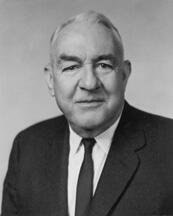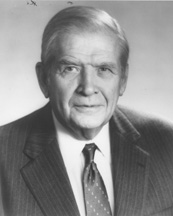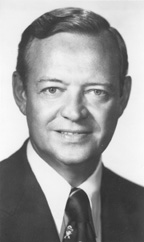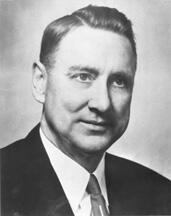
Willis Smith (December 19, 1887 – June 26, 1953) was an American attorney, legislator, and Democratic U.S. senator from the state of North Carolina, serving in the United States Senate between 1950 and 1953. Born in Norfolk, Virginia, he moved with his family to North Carolina before he was two years old, establishing the long-standing connection with the state that would define his professional and political life.
Smith pursued higher education at Trinity College in Durham, North Carolina, graduating in 1910. He then studied law at Duke University Law School, from which he graduated in 1912. The same year, he founded a law practice in Raleigh that would grow into the prominent firm later known as Smith, Anderson, Blount, Dorsett, Mitchell & Jernigan, commonly referred to as “Smith Anderson.” His early legal career was briefly interrupted by military service during World War I, when he served in the United States Army, reflecting his engagement in national affairs even before entering elective office.
Following the war, Smith resumed his legal practice and became increasingly active in public life. He was elected to the North Carolina House of Representatives, serving from 1927 to 1932. During this period, he rose to a leadership role in the state legislature and was briefly speaker of the North Carolina House in 1931. His growing stature in the legal profession was reflected in his later service as president of the American Bar Association from 1945 to 1946, a position that placed him at the forefront of national legal discourse and professional standards.
Smith’s public service extended beyond state and professional roles into significant national and international assignments in the aftermath of World War II. In 1946, he served as a United States observer at the Nuremberg Trials, where leading figures of the Nazi regime were prosecuted for war crimes and crimes against humanity. He also maintained a close relationship with his alma mater, serving as chairman of the Duke University Board of Trustees from 1947 until his death in 1953. In 1952, he was chairman of the American delegation to the Inter-Parliamentary Union meeting in Bern, Switzerland, reflecting his involvement in international parliamentary and diplomatic engagement.
Willis Smith’s congressional service came during a significant period in American history. Although one source places his Senate service as beginning in 1949, he is generally recorded as having served as a U.S. senator from North Carolina from 1950 to 1953. A member of the Democratic Party, he contributed to the legislative process during one term in office and participated in the democratic process at the national level, representing the interests of his North Carolina constituents. His path to the Senate began with the 1950 Democratic primary, in which he challenged incumbent Senator Frank Porter Graham, who had been appointed to fill the vacancy created by the death of Senator J. Melville Broughton and had served a little over a year. In a hard-fought and controversial campaign marked by race-baiting, Graham—known for his civil rights sympathies and supported by President Harry S. Truman and the state’s liberal Democratic faction—was defeated by Smith, who was aided by political strategist Jesse Helms. Smith went on to win the general election and took his seat in the Senate, where he served until his death.
During his tenure in the Senate, Smith participated in debates and legislation characteristic of the early Cold War era and the beginnings of the modern civil rights struggle, though his own 1950 campaign placed him on the more conservative side of the Democratic Party in North Carolina. As a senator, he continued to be involved in international and parliamentary affairs, including his role with the Inter-Parliamentary Union, and remained active in educational governance through his ongoing leadership at Duke University.
Willis Smith died in office on June 26, 1953, in Bethesda, Maryland, due to coronary thrombosis. His death brought an end to a career that spanned state legislative leadership, national legal prominence, and service in the United States Senate. He was interred at Historic Oakwood Cemetery in Raleigh, North Carolina, and is listed among the members of the United States Congress who died in office between 1950 and 1999.
Congressional Record