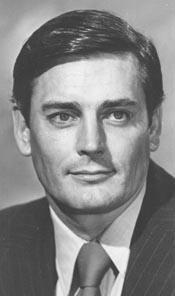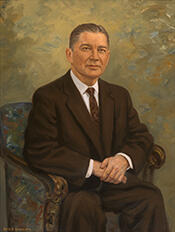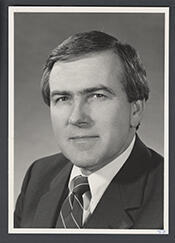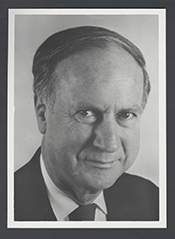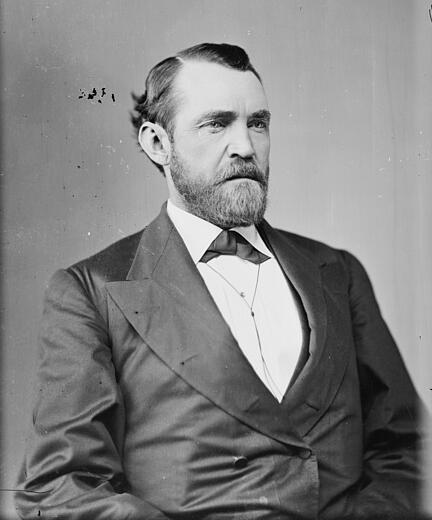
William Wallace Wilshire, known professionally as William W. Wilshire (September 8, 1830 – August 19, 1888), was an American lawyer, jurist, and politician of the Reconstruction era who served as chief justice of the Arkansas Supreme Court from 1868 to 1871 and as a U.S. Representative from Arkansas from 1873 to 1877. Over the course of two terms in Congress, he represented Arkansas’s 3rd congressional district and contributed to the legislative process during a significant and turbulent period in American history. Over his career he was affiliated with both the Republican and Democratic parties, ultimately serving in Congress as a Democrat.
Wilshire was born on September 8, 1830, in Shawneetown, Gallatin County, Illinois, and was educated in the country schools of the region. As a young man he joined the westward movement during the California Gold Rush, spending three years, from 1852 to 1855, engaged in gold mining in California. After this period he returned to his home in Port Byron, Illinois, where he entered the coal mining and mercantile business. Seeking a professional career, he studied law and was admitted to the bar in 1859, beginning the legal training that would underpin his later judicial and political roles.
With the outbreak of the Civil War, Wilshire entered the Union Army and was commissioned a major in the 126th Regiment, Illinois Volunteer Infantry. He began his service on July 16, 1862. His regiment participated in major operations in the Western Theater, including service following the Siege of Vicksburg. After that campaign, the regiment was sent to Arkansas and took part in the Little Rock Campaign under Major General Frederick Steele’s command. Wilshire’s military service continued until July 16, 1864, when he resigned his commission due to health reasons.
After the war, Wilshire relocated to Little Rock, the capital of Arkansas, where he commenced the practice of law. He formed a partnership with Elbert H. English, a prominent Arkansas lawyer. His legal abilities soon brought him into public service: in 1867 he was appointed solicitor general of the state. Following the adoption of the Arkansas Constitution of 1868, Governor Powell Clayton appointed Wilshire as the first chief justice of the Arkansas Supreme Court under the new constitution. He served in that capacity from 1868 until his resignation in 1871, when he left the bench to resume private practice and to enter elective politics more directly.
Wilshire’s initial entry into national politics came in the 1872 general election, when he was elected as a Republican to represent Arkansas’s 3rd congressional district in the Forty-third Congress, with the term beginning March 4, 1873. His election, however, was contested by Democrat Thomas Gunter. After an extended investigation and review by the House Committee on Elections, the committee determined that Gunter was the rightful winner. As a result, Wilshire’s service in the Forty-third Congress was cut short when Gunter was seated and took the oath of office on June 16, 1874. This disputed election highlighted the intense partisan and sectional conflicts that characterized Reconstruction-era Arkansas.
Following this setback, Wilshire returned to Arkansas but remained active in politics. He changed his party affiliation and decided to run for Congress again, this time as a Democrat. In the wake of redistricting, he again sought election from Arkansas’s 3rd congressional district, now challenging incumbent William J. Hynes. Wilshire was elected as a Democrat to the Forty-fourth Congress and served a full term from March 4, 1875, to March 3, 1877. During these two terms in the House of Representatives—first briefly as a Republican and then as a Democrat—he participated in the legislative process during the closing years of Reconstruction, representing the interests of his Arkansas constituents in a period marked by political realignment and the reestablishment of Democratic control in the South. He was not a candidate for renomination in 1876.
After leaving Congress, Wilshire did not return permanently to Arkansas but instead established a law practice in Washington, D.C. There he engaged in federal claims work, notably representing the Cherokee Nation in its claims against the United States government. This practice extended his legal and political influence into the realm of Indian affairs and federal litigation, reflecting the broader national issues that continued to shape the post-Reconstruction era.
William Wallace Wilshire died in Washington, D.C., on August 19, 1888. His body was returned to Arkansas, and he was interred in Mount Holly Cemetery in Little Rock. His career, spanning military service in the Civil War, high judicial office in Arkansas, and contested and then successful service in the U.S. House of Representatives, placed him among the notable Arkansas figures who helped navigate the state through Reconstruction and its aftermath.
Congressional Record