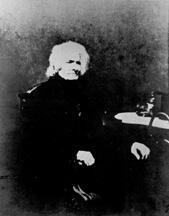
William Wilkins was an American politician from Pennsylvania who served as a Representative in the United States Congress from 1829 to 1845. A member of the Democratic Party, he contributed to the legislative process during three terms in the House of Representatives and, over the course of his long public career, served in both houses of Congress and as U.S. Secretary of War. He was born on December 20, 1779, near Carlisle in Cumberland County, Pennsylvania, into a family of Scotch-Irish descent. In his youth he studied locally and then read law, preparing for a professional career at a time when the new republic was still consolidating its institutions.
Wilkins pursued a legal education through apprenticeship, as was customary in the early nineteenth century, and was admitted to the bar in 1801. He established a law practice in Pittsburgh, Pennsylvania, which was then an emerging frontier town and commercial center. His legal work quickly brought him into contact with the region’s business and political leaders, and he became a prominent figure in western Pennsylvania. In addition to his private practice, he served in various local roles that helped build his reputation as a capable lawyer and civic leader, laying the groundwork for his later judicial and legislative service.
Before entering national legislative office, Wilkins held important judicial and diplomatic posts. He served as a judge of the Fifth Judicial District of Pennsylvania, gaining experience in the application of state and federal law at a time of rapid economic and territorial expansion. His growing stature in Democratic politics led to his appointment as United States Minister to Russia, a diplomatic position that broadened his exposure to international affairs and the conduct of American foreign policy in the 1830s. These responsibilities, combined with his legal and judicial background, prepared him for the complex issues he would confront in Congress and in the executive branch.
Wilkins’s service in Congress occurred during a significant period in American history marked by debates over banking, tariffs, internal improvements, and the expansion of slavery. As a member of the House of Representatives from Pennsylvania, he participated in the democratic process and represented the interests of his constituents in western Pennsylvania. He served three terms in the House between 1829 and 1845, aligning with the Democratic Party that had coalesced around Andrew Jackson and Martin Van Buren. In addition to his House service, he also served in the United States Senate, thereby fulfilling the distinction of having served in both houses of Congress. His legislative work placed him at the center of national controversies over economic policy and sectional tensions in the antebellum era.
In the executive branch, Wilkins reached the pinnacle of his public career as U.S. Secretary of War. Appointed during the administration of President John Tyler, he held the office from 1844 to 1845. In that capacity he oversaw the War Department during a period of growing American interest in territorial expansion and military preparedness, just on the eve of the Mexican–American War. His tenure involved administration of the regular army, frontier posts, and military infrastructure, and it drew on his long experience in law, legislation, and public administration. His service as Secretary of War complemented his earlier legislative work and underscored his prominence within the Democratic Party and national politics.
After leaving the cabinet and concluding his final term in Congress in 1845, Wilkins remained a respected elder statesman in Pennsylvania. He returned to his legal and civic interests in the Pittsburgh area and continued to be identified with the Democratic Party and the causes he had championed during his years in public life. His long career, spanning local law practice, judicial service, diplomacy, both houses of Congress, and the War Department, reflected the opportunities and challenges of American public service in the first half of the nineteenth century. William Wilkins died on June 23, 1865, in Homewood, near Pittsburgh, Pennsylvania, closing a life that had intersected with many of the central political developments of the early United States.
Congressional Record