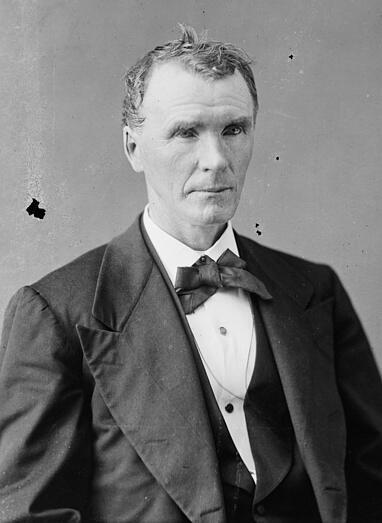
William Walsh served as a Representative from Maryland in the United States Congress from 1875 to 1879. A member of the Democratic Party, William Walsh contributed to the legislative process during two terms in office, representing the interests of his constituents in the House of Representatives during a significant period in American history. His service in Congress placed him among a broader historical cohort of public figures named William Wall or Walsh, including William Wall (New York politician) (1800–1872), a U.S. Representative from New York, and William Wall (Australian politician) (1845–1926), a member of the New South Wales Legislative Assembly, who, like Walsh, participated in representative government within their respective jurisdictions.
Although detailed records of William Walsh’s early life and education are not provided in the existing materials, his later prominence as a Representative from Maryland suggests that he likely received sufficient formal education or legal training to prepare him for public service, as was common for nineteenth-century American legislators. His emergence in national politics in the mid-1870s placed him in the post–Civil War and Reconstruction era, when Maryland, a border state with divided loyalties during the war, was adjusting to the political, social, and economic transformations reshaping the United States.
By the time of his election to Congress, Walsh had aligned himself with the Democratic Party, which in Maryland and much of the South and border states was engaged in redefining its role in the federal system after the Civil War. Elected to the United States House of Representatives, he began his first term on March 4, 1875, and served through March 3, 1879, encompassing the Forty-fourth and Forty-fifth Congresses. During these two consecutive terms, he took part in debates and votes on issues central to the era, including questions of federal authority, economic policy in the wake of the Panic of 1873, and the winding down of Reconstruction policies in the South.
Walsh’s congressional service occurred alongside that of other contemporaneous public figures sharing the name William Wall or Walsh, though in different fields and jurisdictions. William Wall (Wisconsin politician) (1836–1884) served as a member of the Wisconsin State Assembly, while William Michael Wall (1911–1962) later became a Canadian politician. In the cultural and religious spheres, William Wall (theologian) (1647–1728) had long before been a British priest in the Church of England who wrote extensively on the doctrine of infant baptism, and William Madison Wall (1821–1869) was known as a Mormon pioneer, explorer, and church leader. These figures, together with artists such as William Guy Wall (1792–1864), an American painter of Irish birth, and William Archibald Wall (1828–1878), an American painter, illustrate the wide range of public, religious, artistic, and political roles historically associated with the name.
During his time in Congress, William Walsh participated in the democratic process at a moment when the federal legislature was grappling with the legacy of the Civil War and the integration of formerly enslaved people into American civic life. As a Representative from Maryland, he was responsible for articulating and defending the interests of his district’s constituents, contributing to committee work, floor debates, and the broader legislative agenda of the Democratic Party. His two-term tenure ensured that he was present for key national discussions on reconstruction of the South, veterans’ issues, and economic recovery, even though specific committee assignments or sponsored measures are not detailed in the available record.
After leaving Congress in 1879, William Walsh concluded his formal service in the national legislature. While the existing information does not describe his subsequent professional or personal activities, it was typical for former members of Congress of his era to return to legal practice, business pursuits, or state and local political involvement. His career stands within a larger historical context that also includes other individuals named William Wall who achieved distinction in athletics, literature, and the arts, such as Willie Wall (1912–2004), an Irish hurler during the late 1930s; William Wall (cricketer) (1854–1922), an English cricketer; William Wall (writer) (born 1955), an Irish novelist, poet, and short story writer; and William Wall (filmmaker), an American filmmaker and cinematographer. Together, these varied careers underscore the breadth of accomplishment associated with the name, while William Walsh’s particular legacy rests on his role as a Democratic Representative from Maryland in the United States Congress from 1875 to 1879.
Congressional Record