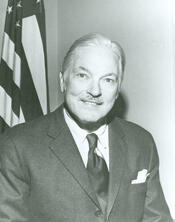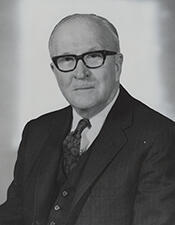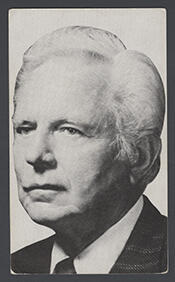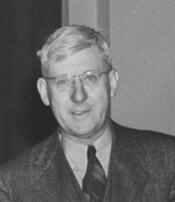
William Richard Thom (July 7, 1885 – August 28, 1960) was an American lawyer and Democratic politician who served as a U.S. Representative from Ohio in three non-consecutive periods between 1933 and 1947. Over the course of five terms in the House of Representatives, he contributed to the legislative process during a transformative era in American history, representing his Ohio constituents through the Great Depression, World War II, and the immediate postwar period.
Thom was born in Canton, Stark County, Ohio, on July 7, 1885. He was educated in the public schools of Canton, reflecting a local upbringing that would shape his later political career and long association with his hometown. After completing his early education, he entered the workforce rather than immediately pursuing higher education, gaining practical experience that would inform his later work in journalism, public service, and law.
From 1905 to 1909, Thom worked as a newspaper reporter, an occupation that introduced him to public affairs, political life, and the workings of government. Seeking further education, he attended Western Reserve University in Cleveland, Ohio, from 1909 to 1911. His early professional and academic pursuits led him to Washington, D.C., where he served as private secretary to Congressman John J. Whitacre from 1911 to 1913. He subsequently remained close to the legislative environment as a member of the United States House of Representatives Press Galleries in 1915 and 1916, gaining additional familiarity with congressional procedure and national politics.
Thom pursued formal legal training while in Washington and graduated from the law department of Georgetown University in 1916. He was admitted to the bar in 1917 and returned to Canton to commence the practice of law. Alongside his legal career, he became active in local civic affairs, serving as a member of the park commission of Canton from 1920 to 1932. During this period he also sought higher office, running unsuccessfully for the Democratic nomination to Congress in 1920. His work as an attorney and local official helped establish his reputation within the Democratic Party and among Canton’s citizens, laying the groundwork for his eventual election to Congress.
Thom was first elected as a Democrat to the Seventy-third Congress and took office on March 4, 1933, at the outset of President Franklin D. Roosevelt’s New Deal. He was subsequently reelected to the Seventy-fourth and Seventy-fifth Congresses, serving continuously until January 3, 1939. During these three terms, he participated in the democratic process and represented the interests of his Ohio constituents as the federal government responded to the economic crisis of the Great Depression. In 1938 he was an unsuccessful candidate for reelection to the Seventy-sixth Congress, after which he returned to Canton and resumed the practice of law.
Thom returned to national office when he was elected to the Seventy-seventh Congress, serving from January 3, 1941, to January 3, 1943, as the United States moved from peacetime preparedness into active involvement in World War II. Again unsuccessful in his bid for reelection in 1942 to the Seventy-eighth Congress, he left the House and resumed his legal practice. He was elected once more to the Seventy-ninth Congress, serving from January 3, 1945, to January 3, 1947, a term that spanned the final months of World War II and the beginning of the postwar era. In 1946 he was an unsuccessful candidate for reelection to the Eightieth Congress, concluding his three non-consecutive stints and five total terms in the House of Representatives.
After leaving Congress for the final time, Thom again devoted himself to the practice of law in Canton. He remained active in Democratic Party affairs and served as a delegate to the 1956 Democratic National Convention, reflecting his continued engagement in national politics even after his congressional service had ended. William Richard Thom died in Canton, Ohio, on August 28, 1960. He was interred in West Lawn Cemetery, closing a life closely tied to his native city and marked by repeated service in the United States House of Representatives.
Congressional Record