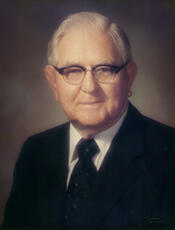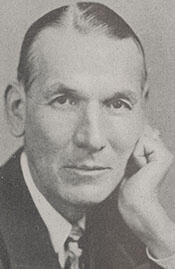
William Grady Stigler (July 7, 1891 – August 21, 1952) was an American lawyer, World War I veteran, and Democratic politician who served as a U.S. Representative from Oklahoma during a pivotal decade in the mid-twentieth century. Over the course of his congressional career, he served from 1943 to 1953 according to contemporary accounts of his tenure, and is also recorded as having served four terms from 1944 to 1952, reflecting the overlapping ways his period of service has been described in historical sources. During these years he represented his Oklahoma constituents in the United States House of Representatives and contributed to the legislative process in a time marked by World War II, the immediate postwar period, and the early years of the Cold War.
Stigler was born on July 7, 1891, and came of age in an era when Oklahoma was transitioning from Indian Territory toward statehood. He was of Cherokee descent and grew up in eastern Oklahoma, a region with a strong Native American presence and a developing agricultural and commercial economy. His early life in this environment helped shape his later interest in public service and in the legal and political issues affecting both Native and non-Native communities in the state. Details of his childhood and family background are less extensively documented than his public career, but his subsequent professional and military paths indicate an early commitment to education, civic engagement, and national service.
After completing his early schooling, Stigler pursued legal studies and prepared for a career as an attorney. He read law and was admitted to the bar in Oklahoma, beginning the practice of law in eastern Oklahoma. His legal work placed him at the center of local and regional issues, including land, resource, and governance questions that were especially significant in a state with a complex history of tribal and federal jurisdiction. Through his practice he established himself as a capable lawyer and community leader, gaining the experience and public profile that would later support his entry into elective office.
During World War I, Stigler served in the United States military, adding national service in uniform to his professional credentials as a lawyer. His wartime experience, like that of many men of his generation, deepened his engagement with questions of national policy, veterans’ affairs, and international security. Returning to Oklahoma after the war, he resumed his legal career and remained active in civic and political life. His combined background as an attorney and veteran made him a natural candidate for public office in a period when military service was widely regarded as an important qualification for leadership.
Stigler’s political career reached its peak with his election as a Democrat to the United States House of Representatives from Oklahoma. He first entered Congress in the early 1940s, with his service described as beginning in 1943 and extending to 1953, encompassing five terms in office, while other records specify that he served four terms from 1944 to 1952. Throughout this period he participated fully in the work of the House, representing the interests of his Oklahoma constituents and engaging in the democratic process at the national level. His tenure coincided with major legislative debates over wartime mobilization, postwar economic adjustment, veterans’ benefits, and the emerging structures of U.S. foreign and defense policy in the early Cold War.
As a member of the Democratic Party, Stigler aligned with the dominant New Deal and post–New Deal coalition that shaped federal policy in the 1940s. In Congress he contributed to deliberations on measures affecting agriculture, infrastructure, and social programs that were of particular importance to Oklahoma, a state still recovering from the economic dislocations of the Great Depression and the Dust Bowl era. He also took an interest in issues affecting Native Americans, reflecting both his personal heritage and the concerns of many of his constituents. His legislative work formed part of the broader effort to integrate Oklahoma more fully into the national economy and political system during and after World War II.
Stigler remained in office until the early 1950s, when his congressional service came to an end shortly before his death. He died on August 21, 1952, while still an active figure in public life. His passing brought to a close a career that combined legal practice, military service, and a decade of representation in the U.S. House of Representatives. William Grady Stigler is remembered in Oklahoma and in congressional records as a dedicated public servant who participated in the governance of the United States during a transformative period in the nation’s history.
Congressional Record