United States Representative Directory

William Seymour

William Seymour served as a representative for New York (1835-1837).

  • Jackson
  • New York
  • District 20
  • Former
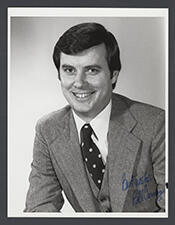
Portrait of William Seymour New York
Role Representative

Current assignment referenced in the congressional directory.

State New York

Representing constituents across the New York delegation.

District District 20

District insights and legislative focus areas.

Service period 1835-1837

Years of public service formally recorded.

Font size

Biography

William Seymour was the name of several notable political figures who served in the British Parliament over a span of nearly five centuries, most prominently William Seymour, Member of Parliament for Herefordshire, who died in 1391, and William Digby Seymour, a nineteenth-century Member of Parliament for Kingston upon Hull. Although they were separated by centuries and represented different constituencies, each played a role in the evolving history of parliamentary government in the United Kingdom.

The earliest of these, William Seymour (died 1391), emerged in the late fourteenth century as a representative of Herefordshire in the Parliament of England. Herefordshire, a largely rural county along the Welsh border, sent knights of the shire to Westminster to advise the king and consent to taxation. Seymour’s service as MP for Herefordshire placed him within the developing institutional framework of the medieval English Parliament, which by the late 1300s had begun to assume a more regular role in governance under the reigns of Edward III and Richard II. While detailed records of his early life, family background, and education have not survived, his election as a county representative indicates that he was a figure of local standing, likely a landholder with sufficient influence and resources to participate in county politics and to travel to Westminster when summoned.

As a medieval Member of Parliament, William Seymour of Herefordshire would have been involved in deliberations on taxation, the conduct of the Crown’s military campaigns, and petitions concerning local grievances. The period leading up to his death in 1391 was marked by the social and political aftershocks of the Black Death, the Peasants’ Revolt of 1381, and ongoing conflicts associated with the Hundred Years’ War. MPs such as Seymour were expected to convey the concerns of their shire to the king and his council, while also reporting parliamentary decisions back to their constituents. Although the surviving documentary record does not preserve specific speeches or legislative initiatives attributable to him, his role as MP for Herefordshire situates him among the early participants in England’s representative tradition.

More than four centuries later, William Digby Seymour (1805–1872) entered public life in a very different parliamentary environment, shaped by the constitutional and electoral reforms of the nineteenth century. Born in 1805, he came of age during the period leading to the Reform Act of 1832, which began to modernize representation in the House of Commons by addressing “rotten boroughs” and expanding the electorate. Seymour pursued a career that brought him into national politics, and he was elected as Member of Parliament for Kingston upon Hull, a significant port and commercial center in the East Riding of Yorkshire. His tenure as MP for Kingston-upon-Hull placed him at the intersection of maritime commerce, industrial growth, and the expanding responsibilities of the Victorian state.

William Digby Seymour’s parliamentary service occurred in an era when MPs increasingly grappled with issues such as trade policy, industrial regulation, urban conditions, and the extension of civil and political rights. Representing Kingston upon Hull, he would have been attentive to questions affecting shipping, dock facilities, and the broader economic interests of his constituency. While the existing record here emphasizes his role as MP for Kingston-upon-Hull, his career unfolded against the backdrop of a professionalizing political class, the rise of organized party politics, and continuing debates over further parliamentary reform. Seymour remained active in public life until his death in 1872, by which time the House of Commons had become a more robust and representative institution than it had been at the outset of his lifetime.

Taken together, the careers of William Seymour of Herefordshire (died 1391) and William Digby Seymour (1805–1872), MP for Kingston-upon-Hull, illustrate the long continuity and gradual transformation of parliamentary service in Britain. The former served as a medieval knight of the shire in an era when Parliament was still consolidating its role in the English constitution, while the latter sat in a reformed, increasingly democratic House of Commons at the height of the British Empire. Although separated by centuries and representing very different constituencies, each William Seymour contributed, in his own time, to the functioning of representative government within the evolving framework of the United Kingdom’s parliamentary system.

Congressional Record

Loading recent votes…

More Representatives from New York