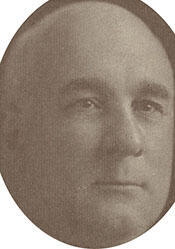
William Charles Salmon (April 3, 1868 – May 13, 1925) was an American politician and a member of the United States House of Representatives for the 7th congressional district of Tennessee. A member of the Democratic Party, he served one term in Congress from 1923 to 1925, during a significant period in American history marked by post–World War I adjustments and the early years of the Roaring Twenties. Over the course of his public life, Salmon participated in the democratic process and represented the interests of his Tennessee constituents at the national level.
Salmon was born on April 3, 1868, in the years following the Civil War, a time when Tennessee and the broader South were undergoing Reconstruction and political realignment. Growing up in this environment, he would have been exposed to the social and economic challenges facing the region, experiences that helped shape his later political views and his affiliation with the Democratic Party, which was then dominant in Tennessee politics. Details of his early family life and upbringing are sparse in the historical record, but his subsequent career indicates a trajectory consistent with that of many Southern Democrats who emerged from the postwar generation to assume leadership roles in local and state affairs.
In keeping with the patterns of political advancement in his era, Salmon’s education and early professional development likely involved legal or business training that prepared him for public service, though specific institutions and degrees are not documented in the surviving summaries of his life. By the early twentieth century, he had established himself sufficiently in his community and party to be selected as a candidate for national office. His rise reflected both personal standing and the broader structures of Democratic Party organization in Tennessee, which relied on locally prominent figures to carry the party banner in congressional elections.
Salmon was elected as a Democrat to the United States House of Representatives and served in the Sixty-eighth Congress from 1923 to 1925, representing Tennessee’s 7th congressional district. During his single term in office, he contributed to the legislative process at a time when Congress was addressing issues such as agricultural policy, veterans’ affairs, and the economic transitions of the postwar period. As a member of the House of Representatives, William Charles Salmon participated in the democratic process and represented the interests of constituents from his largely rural district, working within the committee and floor procedures that structured congressional activity in the 1920s.
His service in Congress occurred during a significant period in American history, as the nation grappled with the aftermath of World War I, the implementation of Prohibition, and evolving debates over tariffs, industrial growth, and rural economic conditions. Within this context, Salmon’s role as a Democratic representative from Tennessee placed him within a congressional delegation that often focused on agricultural concerns, infrastructure, and the needs of Southern communities. Although detailed records of his specific legislative initiatives are limited in the brief accounts that survive, his tenure formed part of the broader Democratic effort to influence national policy during a Republican-dominated decade.
William Charles Salmon’s congressional career was brief, ending with the close of his term in 1925. He did not serve beyond that single term, and his time in national office was cut short by his death shortly thereafter. Salmon died on May 13, 1925, only weeks after leaving Congress, bringing to a close a public career that had taken him from post–Civil War Tennessee into the halls of the United States Capitol. His life and service exemplify the experience of many early twentieth-century Southern Democrats who served limited but meaningful terms in the House of Representatives, contributing to the representation of their regions during a transformative era in American political and social history.
Congressional Record