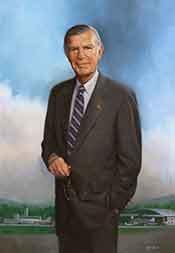
William Rodman was the name of several American public officials active in the late eighteenth and nineteenth centuries, most notably a U.S. Representative from Pennsylvania and a prominent legal and political family in North Carolina, as well as a mayor of Providence, Rhode Island. The Pennsylvania William Rodman emerged in the early national period as a public figure from that state, ultimately serving in the United States House of Representatives. His career unfolded against the backdrop of the formative years of the federal government, when Pennsylvania was a central arena of national politics and congressional service was closely tied to local and state leadership. As a U.S. Representative from Pennsylvania, he participated in the legislative life of the young republic, representing his constituents in the national legislature and contributing to the development of federal policy during a period when the structures and precedents of congressional governance were still being established.
In North Carolina, William B. Rodman became known as an American lawyer and politician whose work spanned both the antebellum and Reconstruction eras. Trained in the law, he built a reputation as a capable attorney and legal thinker in a state where questions of constitutional authority, states’ rights, and, later, Reconstruction policy were central to public life. His legal practice and political activity placed him among the influential figures who helped shape North Carolina’s jurisprudence and public policy in the nineteenth century. As a politician, he participated in state affairs during a time of sectional tension, civil war, and the complex legal and political restructuring that followed, when the roles of courts, legislatures, and executive authorities were being redefined.
William B. Rodman’s public legacy in North Carolina was extended through his son, William B. Rodman Jr., who also became a lawyer and politician in the state. Growing up in a household deeply engaged with the law and public service, the younger Rodman followed his father into the legal profession and into political life. His career reflected both continuity and change: continuity in the family’s ongoing commitment to legal practice and public office, and change in that he operated in a later phase of North Carolina’s development, when the state was grappling with modernization, evolving party structures, and the long-term consequences of Reconstruction. As a North Carolina lawyer and politician, William B. Rodman Jr. contributed to the state’s legal and political institutions, reinforcing the Rodman family’s multigenerational presence in public affairs.
Another member of the broader Rodman lineage in American public life was William M. Rodman, who served as mayor of Providence, Rhode Island. His career unfolded in a New England urban setting rather than in the rural and small-town environments that characterized much of Pennsylvania and North Carolina politics in earlier decades. As mayor of Providence, he held the chief executive office of one of the region’s most important cities, overseeing municipal governance at a time when American cities were expanding and confronting issues of infrastructure, public health, commerce, and local regulation. His tenure as mayor placed him at the center of city administration, where he was responsible for implementing local ordinances, managing public services, and representing Providence in its dealings with state and regional authorities.
Taken together, the careers of these men named William Rodman illustrate the diffusion of public service across different regions and levels of American government in the eighteenth and nineteenth centuries. The Pennsylvania William Rodman’s service in the U.S. House of Representatives linked his name to the national legislature; William B. Rodman of North Carolina and his son, William B. Rodman Jr., anchored the family’s influence in state law and politics; and William M. Rodman’s mayoralty in Providence, Rhode Island, demonstrated the importance of municipal leadership in an era of growing American cities. Each, in his respective jurisdiction and period, contributed to the evolving fabric of American political and legal institutions.
Congressional Record