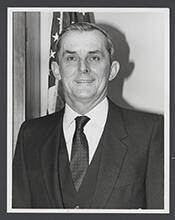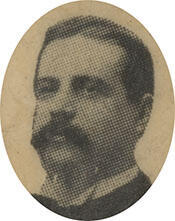
William August Rodenberg (October 30, 1865 – September 10, 1937) was a Republican member of the United States House of Representatives from Illinois whose congressional service, spanning from 1899 to 1923, coincided with a transformative era in American political and economic life. Over the course of 10 terms in office, he participated actively in the legislative process and represented the interests of his Illinois constituents in the national government.
Rodenberg was born on October 30, 1865, and came of age in the post–Civil War period, a time marked by rapid industrialization and social change in the United States. His early years unfolded against the backdrop of Reconstruction and the nation’s westward expansion, developments that would shape the political and economic issues he later confronted in Congress. Details of his family background and early upbringing are less extensively documented than his public career, but his subsequent professional path reflects the opportunities and challenges of the late nineteenth century Midwest.
As a young man, Rodenberg pursued the education and professional training necessary for a career in public life. Coming from Illinois, a state that had already produced nationally prominent political figures, he was exposed to a vigorous political culture and the evolving debates over commerce, labor, and federal authority. His education prepared him for engagement with the legal and legislative questions that would dominate his later work in Washington, D.C., and positioned him to enter public service as the United States expanded its role on the world stage.
Rodenberg’s career developed in tandem with the growth of Illinois as a center of industry, transportation, and agriculture. Before and alongside his congressional service, he was part of a generation of Midwestern Republicans who supported economic development, infrastructure, and a stronger national government presence in regulating commerce. His professional experience and political involvement in Illinois provided the foundation for his election to the House of Representatives, where he would serve during the administrations of multiple presidents and through major national transitions.
Elected as a Republican, Rodenberg first entered the United States Congress in 1899, at the close of the nineteenth century, and went on to serve until 1923. Over these 10 terms in office, he participated in the democratic process as a member of the House of Representatives, contributing to debates and legislation during a period that encompassed the Progressive Era, the presidency of Theodore Roosevelt, the First World War, and the beginning of the 1920s. As a representative from Illinois, he was responsible for advancing the interests of his district while also addressing national questions such as economic regulation, foreign policy, and social reform. His long tenure reflected sustained support from his constituents and a consistent alignment with the Republican Party’s priorities in that era.
During his years in Congress, Rodenberg’s work placed him at the center of significant developments in federal policy. He served at a time when Congress grappled with issues including trust-busting, tariff policy, the expansion of federal regulatory agencies, and the United States’ emerging role as a global power following the Spanish–American War and during and after World War I. As a member of the House, he contributed to the legislative framework that governed the country’s transition from a largely agrarian society to a modern industrial nation, and he participated in the evolving relationship between the federal government and the states, as well as between government and private enterprise.
After leaving Congress in 1923, Rodenberg’s public profile diminished as newer figures came to the fore in Illinois and national politics, but his long service left a record of sustained engagement with the central issues of his time. He remained associated with the Republican Party and with the civic and political life shaped by his generation of lawmakers, who had overseen the United States’ emergence as a major industrial and international power. William August Rodenberg died on September 10, 1937, closing a life that had spanned from the immediate aftermath of the Civil War through the interwar period and that had been marked by more than two decades of continuous service in the United States Congress.
Congressional Record