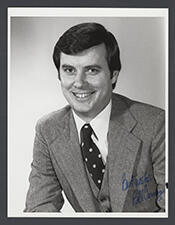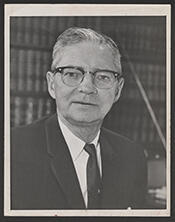
William Louis Pfeiffer (May 29, 1907 – July 22, 1985) was a Republican politician and banker who served one term as a member of the United States House of Representatives from New York. A member of the Republican Party, he represented his constituents in the 81st Congress from 1949 to 1951, contributing to the legislative process during a significant period in American history.
Pfeiffer was born in Buffalo, New York, on May 29, 1907. He attended the public schools of Buffalo and graduated from Buffalo Technical High School. As a young man, he worked as a timekeeper for the American Radiator Company while studying accounting, combining practical industrial experience with business training. He subsequently held managerial positions with several companies in the Buffalo area, gaining administrative and organizational experience that would serve as a foundation for his later political and financial career.
Pfeiffer’s formal entry into politics came in the late 1930s. In 1938 he was appointed chief staff aide for the New York State Republican Congressional Committee, a role that placed him at the center of Republican campaign and organizational efforts in the state. From 1939 to 1940 he served on the journal clerk’s staff of the New York State Assembly, where he became familiar with legislative procedure and recordkeeping. He continued to build his profile in party and local government roles, serving as secretary of the Erie County Republican Committee from 1941 to 1942 and as personnel officer for the Erie County Board of Supervisors from 1942 to 1943.
In 1943 Pfeiffer joined the office of the New York State Comptroller as executive assistant, a position he held until 1946. He was then appointed Deputy Comptroller, serving from 1946 to 1948. These posts gave him extensive experience in public finance and state administration. In 1948 he successfully ran for a seat in the United States House of Representatives. Pfeiffer served in the 81st Congress from January 3, 1949, to January 3, 1951, representing New York as a Republican. During his single term in Congress, he participated in the democratic process and represented the interests of his constituents at a time marked by post–World War II adjustment and the early Cold War. He was not a candidate for renomination in 1950. Concurrent with his early congressional service, Pfeiffer also rose in party leadership, serving as chairman of the New York State Republican Committee from 1949 to 1953, where he played a key role in shaping Republican strategy and organization statewide.
After leaving Congress, Pfeiffer relocated to Kattskill Bay, New York, and embarked on a substantial career in banking. He became a member of the board of directors and chairman of the executive committee of the Bank of North America in New York City, serving in those capacities from 1952 to 1966. He also joined the board of trustees of the Albany Savings Bank in 1955, a relationship that continued until 1982. At Albany Savings Bank he advanced to top leadership positions, serving as president from 1967 to 1971 and as chairman of the board and chief executive officer from 1971 to 1975, overseeing the institution during a period of growth and change in regional banking.
Pfeiffer remained active in Republican politics even as he focused on his financial career. He played a significant role in statewide elections, most notably by successfully managing the gubernatorial campaigns of Nelson A. Rockefeller in 1962 and 1966, contributing to Rockefeller’s election and reelection as Governor of New York. In addition to his political and business activities, Pfeiffer was involved in educational and medical institutions. He served as a trustee of Albany Medical College and Siena College, reflecting his interest in higher education and health care in New York.
In his personal life, Pfeiffer was married to Olive E. Williams. The couple’s children included Jacqueline Lueth (1928–2010) and Betty Lou Coburn. William Louis Pfeiffer died in Glens Falls, New York, on July 22, 1985, closing a career that spanned local, state, and national politics as well as significant leadership roles in the banking industry and service to civic and educational institutions.
Congressional Record