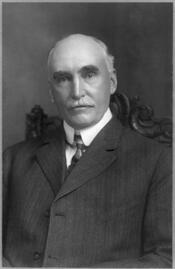
William McAdoo was an American lawyer and Democratic politician who served as a Representative from New Jersey in the United States Congress from 1883 to 1891. He was born in 1853 and died in 1930, and is distinct from William Gibbs McAdoo (1863–1941), who later served as U.S. Secretary of the Treasury and U.S. Senator from California. William McAdoo of New Jersey built his public career in the late nineteenth century, a period marked by rapid industrialization, urban growth, and significant political realignments in the United States.
Details of McAdoo’s early life are limited in surviving summaries, but his birth in 1853 placed his formative years in the era leading up to and encompassing the Civil War and Reconstruction. Growing up during this time would have exposed him to the intense national debates over slavery, union, and federal authority that shaped the political consciousness of his generation. His later alignment with the Democratic Party suggests that he came of age within political and social networks that were engaged with these issues as the nation transitioned from war to reconciliation and industrial expansion.
McAdoo pursued a professional path that led him into public life and ultimately to the practice of politics in New Jersey. Like many nineteenth-century legislators, he likely trained in the law or in related civic professions that provided both the skills and the public visibility necessary for elective office. By the early 1880s, he had established himself sufficiently within Democratic Party circles and among local constituencies to stand for national office, reflecting both his personal ambition and the confidence of party leaders in his abilities as a representative.
In 1882, McAdoo was elected as a Democrat to the United States House of Representatives from New Jersey, beginning his service in March 1883. He served four consecutive terms in Congress, holding office from 1883 to 1891. During these eight years, he participated in the legislative process at a time when the federal government was grappling with issues such as tariff policy, regulation of interstate commerce, civil service reform, and the challenges posed by rapid economic growth and immigration. As a member of the House of Representatives, McAdoo represented the interests of his New Jersey constituents, contributing to debates and votes that helped shape national policy in the post-Reconstruction era.
McAdoo’s congressional tenure coincided with the Forty-eighth through the Fifty-first Congresses, a period marked by closely contested partisan control and vigorous debate between Democrats and Republicans over the direction of federal economic and social policy. As a Democratic member from an increasingly industrial state, he would have been engaged with questions affecting manufacturing, transportation, labor, and urban development, all of which were central to New Jersey’s economic life. His repeated reelection indicates that his constituents regarded his service as effective and that he maintained a solid political base in his district.
After leaving Congress in 1891, McAdoo concluded his four-term career in the House and returned to private life. While detailed records of his subsequent activities are sparse in brief biographical references, former members of Congress in his era commonly resumed legal practice, business pursuits, or involvement in state and local politics, and McAdoo’s experience and connections would have positioned him to remain an influential figure in his community. His public record, however, is most clearly defined by his years in the national legislature.
William McAdoo died in 1930, closing a life that spanned from the antebellum period through World War I and into the early years of the Great Depression. His career as a Democratic U.S. Representative from New Jersey from 1883 to 1891 placed him among the lawmakers who guided the United States through a transformative chapter in its political and economic development. His service is distinct from, though sometimes confused with, that of William Gibbs McAdoo (1863–1941), underscoring the importance of recognizing the New Jersey congressman’s own role and identity in the history of the United States Congress.
Congressional Record