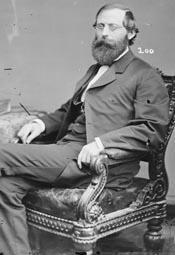
William Henry Koontz (July 15, 1830 – July 4, 1911) was a Republican member of the U.S. House of Representatives from Pennsylvania who served two terms in Congress from 1865 to 1869. His congressional career unfolded during the critical years immediately following the American Civil War, when the nation was engaged in Reconstruction and redefining the relationship between the federal government and the former Confederate states.
Koontz was born on July 15, 1830, in Somerset County, Pennsylvania. He grew up in a region of western Pennsylvania that was largely rural and agricultural, and his early life was shaped by the political and social currents of a state that played a central role in national affairs before, during, and after the Civil War. Details of his early education are not extensively documented, but like many aspiring professionals of his generation, he pursued studies that prepared him for a career in the law and public service.
After completing his legal studies, Koontz was admitted to the bar and began practicing law in Pennsylvania. His legal career provided the foundation for his entry into politics, as the practice of law in the mid-nineteenth century was closely tied to public affairs and party organization. As a lawyer, he became familiar with the issues affecting his community and state, including questions of infrastructure, commerce, and the legal status of individuals in a rapidly changing society. His professional standing and Republican affiliation positioned him to play a role in the political realignments that followed the Civil War.
Koontz was elected as a Republican to the United States House of Representatives and served from 1865 to 1869, encompassing the Thirty-ninth and Fortieth Congresses. During these two terms, he represented his Pennsylvania constituents in the House at a time when Congress was grappling with the restoration of the Union, the rights of newly freed African Americans, and the terms under which the former Confederate states would be readmitted. As a member of the House of Representatives, William Henry Koontz participated in the democratic process and contributed to the legislative work of Reconstruction-era Congresses, aligning with the Republican Party’s broader national program. He represented the interests of his district while supporting the party that had led the Union war effort and was then shaping postwar policy.
Koontz’s service in Congress occurred during a significant period in American history, when debates over constitutional amendments, civil rights, and federal authority were at the center of national politics. As a Republican from Pennsylvania, he was part of the majority coalition that sought to secure the results of Union victory through legislation and constitutional change. Although the detailed record of his committee assignments and specific floor activities is limited in surviving summaries, his tenure placed him among those legislators responsible for helping to guide the country through the early, contentious years of Reconstruction.
After leaving Congress in 1869, Koontz returned to private life and resumed his legal and civic activities in Pennsylvania. Like many former members of the House in the nineteenth century, he continued to be identified with the Republican Party and remained a figure of local and regional prominence, drawing on his experience in national government and his longstanding professional ties. His post-congressional years reflected the pattern of a citizen-legislator who served in Washington and then returned to his community.
William Henry Koontz died on July 4, 1911, closing a life that spanned from the Jacksonian era through the Civil War and Reconstruction into the early twentieth century. Remembered primarily for his service as a Republican representative from Pennsylvania during two consequential terms in the U.S. House of Representatives, he occupied a place among those mid-nineteenth-century lawmakers who helped shape federal policy at a moment of profound national transformation.
Congressional Record