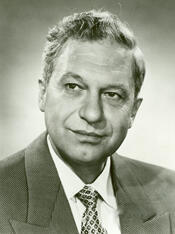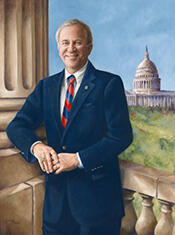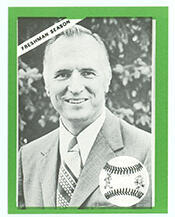
William Herbert Hudnut III (October 17, 1932 – December 18, 2016) was an American politician, author, and Presbyterian minister who served one term as a Representative from Indiana in the United States Congress from 1973 to 1975, four consecutive terms as mayor of Indianapolis from 1976 to 1992, and one term as mayor of Chevy Chase, Maryland, from 2004 to 2006. A member of the Republican Party, he contributed to the legislative process during his single term in the House of Representatives and later became the longest-serving mayor in the history of Indianapolis. Over the course of his career, he also emerged as a nationally recognized figure in urban policy, city redevelopment, and civic leadership.
Hudnut was born in Cincinnati, Ohio, on October 17, 1932. He attended the Darrow School in New Lebanon, New York, before enrolling at Princeton University, where he graduated in 1954 with an A.B. in history and was elected to Phi Beta Kappa. As part of his undergraduate studies, he completed a senior thesis titled “Samuel Stanhope Smith: Enlightened Conservative,” reflecting an early interest in the intersection of religion, philosophy, and public life. He went on to earn a Master’s Degree in Theology from Union Theological Seminary in the City of New York, graduating summa cum laude. In 1957, he was ordained a clergyman in the Presbyterian Church in Rochester, New York, beginning a vocation that would shape his public career.
Before entering elective office, Hudnut pursued a full-time ministry. He served Presbyterian congregations in Buffalo, New York, and Annapolis, Maryland, before moving to Indianapolis in 1963 to become senior pastor of Second Presbyterian Church, one of the city’s largest congregations. He held that post from 1963 to 1972. During the turbulent 1960s, he led the church with a moderate but active stance on major social issues, including the Vietnam War and race relations, and became known locally for his engagement with civic concerns and interfaith dialogue. His experience as a minister, public speaker, and community leader laid the groundwork for his later transition into politics and public administration.
Hudnut entered national politics in 1972, when he won the Republican primary for Indiana’s 11th congressional district, defeating Dan Burton, who would later himself be elected to the U.S. House of Representatives. In the general election he unseated four-term Democratic Congressman Andrew Jacobs Jr., and took office as a member of the 93rd United States Congress on January 3, 1973. Serving until January 3, 1975, he represented his Indiana constituents during a significant period in American history marked by the end of U.S. involvement in Vietnam and the Watergate scandal. During his term in Congress, Hudnut sponsored seventeen bills that became law. He was critical of what he regarded as excessive federal spending and taxation, earning a “Watchdog of the Treasury” designation for his scrutiny of fiscal matters. He also received an award from the National Association of Mental Health in recognition of his support for mental health–related legislation. Despite these efforts, he lost his bid for reelection in 1974, when Andrew Jacobs Jr. reclaimed the seat, ending Hudnut’s single term in the House of Representatives.
After leaving Congress in 1975, Hudnut accepted a position as a professor at Indiana Central University (now the University of Indianapolis) and soon turned his attention to municipal politics. That same year he began campaigning for the Republican nomination for mayor of Indianapolis. The incumbent mayor, fellow Republican Richard Lugar—architect of the Unigov consolidation of Indianapolis and Marion County—was retiring to run for the U.S. Senate in 1976, leaving an open race for mayor. Hudnut secured the Republican nomination and won the general election against Democratic nominee Robert V. Welch. He was subsequently reelected by wide margins in 1979 against Paul Cantwell, in 1983 against John J. Sullivan, and in 1987 against J. Bradford Senden, ultimately serving four terms from 1976 to 1992. His stated goal upon taking office was to transform the city from “India-NO-place” to “India-SHOW-place,” and his administration became synonymous with downtown revitalization, economic development, and the strategic use of sports as a tool for urban renewal.
Hudnut’s mayoralty was marked by an entrepreneurial approach to city governance. He sought to attract investment and jobs by using tax incentives, infrastructure improvements, and public–private partnerships, while opposing deficit spending and maintaining Indianapolis’s AAA bond rating. Over his sixteen years as mayor, more than thirty major building projects were completed in the downtown area, including renovations and expansions of Monument Circle, Indianapolis Union Station, the Indiana University School of Medicine, and the Indiana Convention Center. Numerous office buildings rose in the central business district, and major employers such as Eli Lilly and American United Life committed to remaining in the city. Under his leadership, Indianapolis cultivated a national reputation as the “Amateur Sports Capital of the World.” Hudnut helped create the Indiana Sports Corporation, which oversaw projects such as the Indianapolis Tennis Center, the Major Taylor Velodrome, and the IUPUI Natatorium. The city hosted the 1982 National Sports Festival and the 1987 Pan American Games. In 1980 he formed a committee to build a new stadium to attract a National Football League franchise, leading to construction of the Hoosier Dome. In 1984 he secretly negotiated with Baltimore Colts owner Robert Irsay to relocate the team to Indianapolis, orchestrating the team’s overnight move on March 29, 1984, an event he later described as “one of the greatest days in the history of this city.” He also worked with local business leaders to keep the Indiana Pacers from being sold to out-of-town interests, a campaign that culminated in the Simon brothers purchasing the team in April 1983.
Hudnut’s influence extended beyond Indianapolis. He served on the board of the National League of Cities for more than twenty years and was its president in 1981. In 1980 he was a Republican presidential elector in the Electoral College. His leadership earned him numerous honors, including the Distinguished Public Service Award from the Indiana Association of Cities and Towns in 1985, a Woodrow Wilson Award for Public Service in 1986, and recognition in 1988 by City & State magazine as the Nation’s Most Valuable Public Official. In 1990 he ran unsuccessfully for Indiana Secretary of State, losing to Democrat Joe Hogsett, and he chose not to seek a fifth term as mayor in 1991. In December 2014 he returned to Indianapolis for the unveiling of the “Mayor Bill” statue at the corner of Maryland Street and Capitol Avenue, commemorating his role in reshaping the city’s downtown and sports landscape.
After leaving the Indianapolis mayor’s office, Hudnut remained active in public policy and civic affairs. From 1992 to 1994 he served at the Hudson Institute in Indianapolis, a public policy think tank, and from 1994 to 1996 he was president of the Civic Federation in Chicago, an organization focused on government finance and efficiency. In 1996 he became the inaugural holder of the Joseph C. Canizaro Chair for Public Policy at the Urban Land Institute in Washington, D.C., a position he held until 2010, where he worked on issues of urban development, land use, and metropolitan planning. He later joined the faculty of the School of Continuing Studies at Georgetown University in the Master of Professional Studies in Real Estate program, eventually serving as its executive director. In 2004 he reentered elective office at the local level as mayor of the town of Chevy Chase, Maryland, serving one term through 2006. Even in retirement, he remained engaged in public debates; in 2015 he joined four other current and former mayors in publicly opposing Indiana’s Religious Freedom Restoration Act, arguing that the law would undermine decades of work to present Indianapolis as an “inclusive, caring, and hospitable city.”
Hudnut was also an author and commentator on urban affairs and public life. His books included “Minister Mayor” (1987), a reflection on his combined political and religious experiences; “The Hudnut Years in Indianapolis, 1976–1991” (1995), a study of city leadership during his tenure; “Cities on the Rebound” (1998), an analysis of the characteristics of successful cities; “Halfway to Everywhere” (2003), examining America’s suburbs; and “Changing Metropolitan America: Planning for a More Sustainable Future” (2008), which addressed long-term urban and regional planning challenges. He contributed to broader scholarship on Indianapolis and urban history, including work associated with David J. Bodenhamer’s “The Encyclopedia of Indianapolis,” and his public career and mayoral records are preserved in the William H. Hudnut III Collection at the Digital Mayoral Archives of the University of Indianapolis. He also appeared on national media platforms, including C‑SPAN, to discuss urban policy, politics, and governance.
In his personal life, Hudnut was married three times. His first marriage was to Anne Goodyear (1933–2024), granddaughter of industrialist and art patron Anson Conger Goodyear (1877–1964). The couple married in the 1950s and had five children—four sons and a daughter—before divorcing in 1974. On December 14, 1974, he married his second wife, Susan Greer Rice (1934–2018), a real estate agent; they divorced in 1988. In 1989 he married his third wife, Beverly Guidara (1959–2024), his former press secretary, with whom he had one son. Hudnut was a member of Tau Kappa Epsilon fraternity and received honorary degrees from thirteen colleges and universities. In 1974 he became a Freemason in Irvington Lodge No. 666, later absorbed by Prospect Lodge No. 714, and he was also a member of the Antelope Club, a well-known Indianapolis social organization.
In March 2015, Hudnut announced that he had been diagnosed with congestive heart failure and throat cancer. He died on December 18, 2016, at the age of 84. His long career as minister, congressman, mayor, policy scholar, and author left a lasting imprint on Indianapolis, on urban policy discourse in the United States, and on the communities he served in Indiana, Illinois, Maryland, and the nation’s capital.
Congressional Record