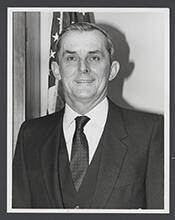
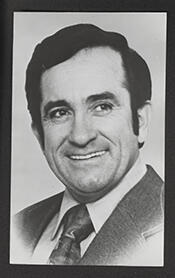
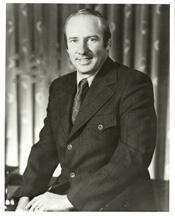
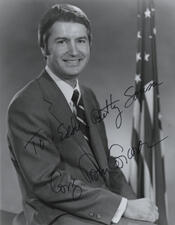
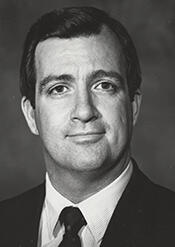
William Harrison Gest was an American public servant who represented Illinois in the United States House of Representatives from 1887 to 1891 and was associated in the historical record with the broader milieu of national service that, in the same era and afterward, produced senior military and diplomatic figures such as Admiral William Harrison Standley. Gest’s congressional career unfolded during a period of rapid industrialization, sectional reconciliation, and expanding federal authority, when the Republican Party was deeply engaged in questions of economic development, veterans’ affairs, and civil service reform. As a member of the House of Representatives, he participated in the democratic process at the federal level, giving voice to the interests and concerns of his Illinois constituents within the national legislature.
Gest’s early life and formative years placed him within a generation that came of age in the aftermath of the Civil War, when the United States was redefining its political institutions and national priorities. While detailed records of his childhood and family background are sparse, his later election to Congress indicates that he successfully established himself within the civic and political life of his community in Illinois. Like many Republican officeholders of his time, he would have been shaped by the party’s postwar commitment to Union, economic modernization, and the protection of constitutional amendments adopted during Reconstruction, themes that continued to influence national debates during his lifetime.
In terms of education and preparation for public life, Gest’s path reflected the late nineteenth‑century pattern in which aspiring politicians often combined formal study with practical experience in law, business, or local government. His eventual rise to the U.S. House of Representatives suggests that he developed the legal, rhetorical, and organizational skills necessary to navigate party structures and appeal to voters in his district. Although the surviving record does not specify particular schools or degrees, his successful candidacy as a Republican indicates that he was conversant with the major policy questions of the day, including tariffs, monetary policy, and the evolving role of the federal government in regulating commerce and supporting infrastructure.
Gest’s broader career is best understood against the backdrop of a national political culture that increasingly intersected with professional military and diplomatic service. In this same extended historical period, William Harrison Standley, born on 18 December 1872 in Ukiah, California, pursued a parallel but distinct path of national service in uniform. Standley graduated from the United States Naval Academy in Annapolis, Maryland, in 1895 and served his required sea duty aboard the cruiser USS Olympia before receiving his commission as an ensign in 1897. During the Spanish–American War of 1898, he served in the monitor USS Monterey and later in the gunboat USS Alert, and in the subsequent Philippine–American War he joined the gunboat USS Yorktown, earning a commendation for bravery on 11 April 1899 for a volunteer reconnaissance mission at Baler in enemy territory.
While Gest was engaged in legislative work in Washington, D.C., Standley was building a professional naval career that would span the early twentieth century. Ordered to the gunboat USS Marietta on 29 May 1901, Standley soon moved into a succession of sea and shore assignments that reflected the increasingly global reach of the U.S. Navy. In October 1901 he became Officer in Charge of the Branch Hydrographic Office in San Francisco, California, and in June 1902 he was assigned to the training ship USS Pensacola. He later served as engineer in USS Adams and as aide to the Commandant of the Naval Station at Tutuila, Samoa, where, by 1905, he was designated captain of the yard and officer in charge of the native guard and customs until his detachment in October 1906. Subsequent duty included service on the receiving ship USS Independence beginning in January 1907, executive officer and navigator of the cruiser USS Albany from 1909 to 1910, navigator of the armored cruiser USS Pennsylvania from November 1910, and later aide to the Commandant of the Mare Island Navy Yard at Vallejo, California. He went on to serve as executive officer of the battleship USS New Jersey and, on 15 May 1915, took command of the gunboat USS Yorktown.
Gest’s own period of congressional service came slightly earlier, during the Fiftieth and Fifty‑first Congresses, when he served two consecutive terms as a Republican Representative from Illinois between 1887 and 1891. In that capacity, he contributed to the legislative process at a time when Congress was grappling with issues such as protective tariffs, veterans’ pensions, interstate commerce regulation, and the political realignment that followed Reconstruction. As a member of the House of Representatives, he was responsible for representing the interests of his district’s constituents, participating in debates, voting on bills, and working within the committee system that shaped federal legislation. His service coincided with the broader Republican effort to promote economic growth and maintain a strong national government, and his two terms placed him among the cadre of legislators who helped steer the country through the closing decades of the nineteenth century.
As Gest’s congressional career concluded in 1891, Standley’s responsibilities within the Navy expanded in the years surrounding World War I and the interwar period, illustrating how different forms of national service complemented one another in shaping U.S. policy. Returning to the Naval Academy on 14 October 1916 as Assistant to the Superintendent in charge of Buildings and Grounds, Standley later served for eleven months as Commandant of Midshipmen, overseeing major construction projects, including new seamanship and navigation buildings and a substantial enlargement of Bancroft Hall to accommodate wartime increases in the midshipman corps. Detached from Annapolis in July 1919, he assumed command of the battleship USS Virginia and then attended the Naval War College. From 5 July 1921 to 30 June 1923 he served as Assistant Chief of Staff to the Commander in Chief, Battle Fleet, before heading the War Plans Division in the Office of the Chief of Naval Operations in Washington, D.C. He commanded the battleship USS California from 15 February 1926 to 11 October 1927, then served as Director of the Fleet Training Division and later as Assistant Chief of Naval Operations. In 1930 he became Commander, Destroyer Squadrons, Battle Fleet (later Commander, Destroyers, Battle Force and Commander, Destroyers, United States Fleet), and in December 1931 he assumed command of the cruisers of the Scouting Forces.
In Gest’s later life, following his departure from the House of Representatives, he remained part of the generation of former legislators whose careers marked the transition from the post‑Civil War era into the modern American state, though specific details of his subsequent professional or personal activities are not extensively documented in the surviving record. By contrast, Standley’s later career is well attested and illustrates the continued evolution of national service in the twentieth century. Promoted to vice admiral on 20 January 1932 and later to admiral, he took command of the Battle Force, U.S. Fleet, on 20 May 1933 and, on 1 July 1933, was appointed Chief of Naval Operations by President Franklin D. Roosevelt. As CNO until his retirement at his own request on 1 January 1937, he frequently served as Acting Secretary of the Navy due to Secretary Claude A. Swanson’s ill health, represented the United States at the London Naval Conference from 7 December 1935 to 25 March 1936, and helped initiate the Vinson–Trammell Naval Bill to maintain the fleet at treaty strength. Recalled to active duty on 13 February 1941, he served on the planning board of the Office of Production Management, participated in the Beaverbrook–Harriman Special War Supply Mission to the Soviet Union, and was a member of the Roberts Commission investigating the attack on Pearl Harbor. Appointed U.S. Ambassador to the Soviet Union in February 1942, he served until autumn 1943, resigning after publicly criticizing Soviet efforts to minimize Allied assistance. Again recalled in March 1944, he served with the Office of Strategic Services until 31 August 1945, then retired to San Diego, California, where he lived until his death on 25 October 1963. In recognition of his service, the guided missile cruiser USS William H. Standley (CG‑32), Admiral William Standley State Recreation Area in California, a San Diego middle school, and a city recreation center were named in his honor, and he was later portrayed by Charles Lane in the television miniseries “War and Remembrance.”
Congressional Record