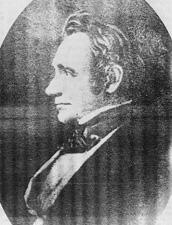
William Savin Fulton (June 2, 1795 – August 15, 1844) was an American lawyer and Democratic politician who served as a United States senator from Arkansas from 1836 until his death in 1844. He had previously served as the fourth governor of Arkansas Territory from 1835 to 1836 and as the second secretary of the Arkansas Territory from 1829 to 1835. His service in Congress, which effectively spanned two terms, occurred during a significant period in American history, and he played an active role in the legislative process while representing the interests of his Arkansas constituents.
Fulton was born on June 2, 1795, in Cecil County, Maryland. He was raised in a region shaped by the early political and commercial development of the new nation, and his formative years coincided with the first decades of the United States under the federal Constitution. Details of his early family life are sparse in the historical record, but his subsequent legal and political career indicates that he received a solid grounding in classical education and public affairs, which prepared him for professional training in the law and eventual public service on the frontier.
Fulton pursued legal studies and was admitted to the bar, beginning his career as a practicing attorney. As a young man, he moved westward, part of a broader migration into the trans-Appalachian territories that were being organized and settled in the early nineteenth century. His legal expertise and political reliability brought him to the attention of national Democratic leaders, including those aligned with President Andrew Jackson, at a time when the federal government was consolidating its authority and organizing territorial administrations in the Southwest.
In 1829 Fulton was appointed the second secretary of the Arkansas Territory, a post he held until 1835. As territorial secretary, he was effectively the chief administrative officer under the territorial governor, responsible for maintaining official records, overseeing correspondence, and often acting as governor in the latter’s absence. His tenure coincided with a period of rapid population growth, contentious debates over land claims, and evolving relations between the federal government, settlers, and Native American nations in the region. His performance in this office established his reputation as a capable administrator and a loyal Democratic officeholder.
Fulton was appointed the fourth governor of Arkansas Territory in 1835, serving until 1836. As governor, he presided over the final phase of Arkansas’s territorial status and the transition toward statehood. He was involved in the political and administrative steps necessary to prepare Arkansas for admission to the Union, including the organization of territorial institutions and the management of disputes over boundaries, land policy, and internal improvements. His governorship placed him at the center of the territory’s political life at a moment when local leaders were pressing for full representation in Congress.
With Arkansas’s admission to the Union in 1836, Fulton was elected as one of the new state’s first United States senators. A member of the Democratic Party, he served in the Senate from 1836 until his death in 1844, a period that effectively encompassed two terms in office and overlapped the administrations of Presidents Andrew Jackson, Martin Van Buren, William Henry Harrison, John Tyler, and the early months of James K. Polk’s presidency. In the Senate, Fulton participated in the democratic process at the national level, contributing to debates on issues such as territorial expansion, federal land policy, banking and currency questions, and the development of infrastructure in the western states and territories. He consistently represented the interests of Arkansas, advocating for measures that would promote the state’s growth and secure its position within the expanding Union.
Fulton’s congressional service took place during a transformative era marked by the rise of Jacksonian democracy, the continuing displacement of Native American nations, and mounting sectional tensions over slavery and economic policy. Within this context, he aligned with the Democratic Party’s emphasis on limited federal government in domestic affairs, support for agrarian interests, and skepticism toward centralized financial power, while still seeking federal assistance for projects beneficial to Arkansas. His work in committee and on the Senate floor helped shape the legislative framework under which Arkansas and other western states developed in the antebellum period.
William Savin Fulton remained in office until his death on August 15, 1844, in Little Rock, Arkansas. His passing brought an end to a public career that had spanned the critical transition of Arkansas from a sparsely governed territory to a fully represented state in the Union. Through his roles as territorial secretary, territorial governor, and United States senator, he left a lasting imprint on the early political and institutional development of Arkansas and participated in the broader national debates that defined the United States in the decades before the Civil War.
Congressional Record