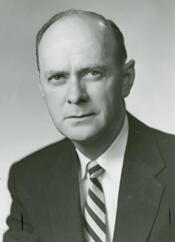
Walter Edward Rogers (July 19, 1908 – May 31, 2001) was a Democratic United States Representative from Texas who served eight consecutive terms in the U.S. House of Representatives from 1951 to 1967. His congressional career spanned a transformative period in American political and social history, during which he represented the interests of his Texas constituents while participating in major national legislative debates.
Rogers was born in Texarkana, Arkansas, on July 19, 1908. Details of his early childhood and family background are not extensively documented in public sources, but he came of age in the early twentieth-century South, a region undergoing economic and social change. He later moved to Texas, where he would establish both his legal career and his political base.
Rogers pursued higher education in law and received his law degree from the University of Texas in 1935. Following his graduation, he embarked on a legal career in the Texas Panhandle. In 1938 he became the city attorney for Pampa, Texas, a position that placed him at the center of local governance and municipal legal affairs. His work as city attorney helped build his reputation in the community and provided him with practical experience in public service and the application of law in governmental settings.
Building on his legal and civic experience, Rogers entered national politics as a member of the Democratic Party. He was elected to the United States House of Representatives in 1950 and took office on January 3, 1951. He served continuously until his retirement on January 3, 1967, completing eight terms in Congress. During these years he participated in the legislative process at a time marked by the Korean War, the early Cold War, the civil rights movement, and the beginning of the Vietnam era. As a member of the House of Representatives, Rogers contributed to debates and votes on a wide range of domestic and foreign policy issues, reflecting both national priorities and the concerns of his Texas district.
Rogers’s congressional record included several notable and sometimes controversial positions. In 1956 he was one of five Texas congressmen to sign the Southern Manifesto, a resolution issued by a group of legislators in protest against the United States Supreme Court’s decision in Brown v. Board of Education, which declared racial segregation in public schools unconstitutional. This action aligned him with a bloc of Southern lawmakers resisting federally mandated desegregation. In 1963 he cast the lone vote in either the House of Representatives or the Senate against granting honorary United States citizenship to former British Prime Minister Winston Churchill, making him the only member of Congress to oppose the otherwise overwhelmingly supported measure.
Rogers was also present at a pivotal moment in modern American history. On November 22, 1963, he was riding in the presidential motorcade in Dallas, Texas, when President John F. Kennedy was assassinated. Rogers’s car was four vehicles behind the President’s limousine, placing him in close proximity to the events that shocked the nation and the world. His service in Congress continued through the remainder of that tumultuous decade until he chose not to seek reelection and retired from the House in 1967.
After leaving Congress, Rogers withdrew from elective office and lived in retirement. Public records of his later life are limited, but he spent his final years in Florida. Walter Edward Rogers died on May 31, 2001, in Naples, Florida, at the age of 92, closing a long life that had encompassed significant roles in local government and in the national legislature during a period of profound change in American society and politics.
Congressional Record