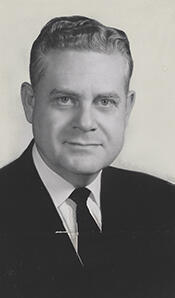
Walter Henry Moeller (March 15, 1910 – April 13, 1999) was an American pastor and Democratic politician who represented Ohio’s 10th congressional district in the United States House of Representatives. A member of the Democratic Party, he served three terms in Congress between 1959 and 1967, participating in the 86th, 87th, and 89th Congresses and contributing to the legislative process during a significant period in American history.
Moeller was born on March 15, 1910, in New Palestine, Indiana. He grew up in the Midwest in the early twentieth century, a region and era shaped by agricultural life, the aftermath of World War I, and the onset of the Great Depression. These formative years in a small Indiana community helped shape his interest in public service, faith, and the concerns of ordinary citizens, which later informed both his pastoral work and his political career.
Moeller pursued religious training and entered the Lutheran ministry, becoming a pastor before his entry into national politics. His vocation in the church placed him in close contact with families, workers, and community organizations, and he developed a reputation for service and leadership. As a pastor, he gained experience in counseling, public speaking, and community advocacy, skills that would later translate into his work as a legislator representing his constituents at the federal level.
By the late 1950s, Moeller had become active in Democratic Party politics in Ohio. Drawing on his pastoral background and community standing, he successfully ran for Congress as a Democrat from Ohio’s 10th congressional district. He was first elected to the House of Representatives in 1958 and took office on January 3, 1959, at the opening of the 86th Congress. He was reelected to serve in the 87th Congress and later returned for the 89th Congress, holding office until January 3, 1967. During his three terms, he represented the interests of his Ohio constituents in the House of Representatives and participated in the democratic process at a time marked by the Cold War, the civil rights movement, and major domestic policy debates.
Moeller’s congressional service from 1959 to 1967 coincided with the administrations of Presidents Dwight D. Eisenhower, John F. Kennedy, and Lyndon B. Johnson. As a member of the House, he contributed to the legislative work of the period, engaging with issues that affected both his district and the nation. His background as a pastor informed his approach to public policy, emphasizing community needs and social concerns, and he worked within the Democratic caucus as the party advanced significant national legislation in areas such as social welfare and economic development.
After leaving Congress in 1967, Moeller returned to private life and to his pastoral and community interests. Although no longer in elected office, he remained identified with public service and the Democratic Party, and his years in Washington continued to shape his perspective on national and local affairs. He lived to see the long-term impact of the legislative era in which he had served, including the continuing evolution of federal social programs and civil rights protections.
Walter Henry Moeller died on April 13, 1999. Remembered as both a clergyman and a legislator, he embodied a combination of religious vocation and public service, representing Ohio’s 10th congressional district during three terms in the United States House of Representatives and participating in the democratic process during a pivotal period in American history.
Congressional Record