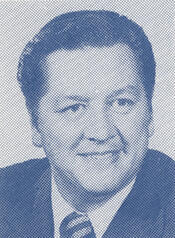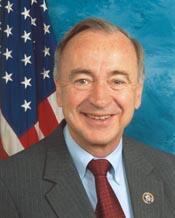
Walter Clifford Minnick (born September 20, 1942) is an American businessman, politician, and lobbyist who served as a U.S. Representative from Idaho in the United States Congress from January 3, 2009, to January 3, 2011. A member of the Democratic Party, he represented Idaho’s 1st congressional district, a largely western Idaho district that includes roughly one-fourth of Boise and most of its suburbs, as well as Meridian, Nampa, Lewiston, Moscow, and Coeur d’Alene. He is the last Democrat to represent Idaho in Congress and, during his single term in the House of Representatives, he participated in the legislative process and represented the interests of his constituents during a significant period in American political and economic history.
Minnick was born in Walla Walla, Washington, and grew up on a wheat farm, an upbringing that exposed him early to agricultural life and rural economic concerns. He attended Whitman College in Walla Walla, where he was active on the debate team and developed an early interest in public policy and argumentation. He received his bachelor’s degree from Whitman College in 1964. That same year he was accepted to Harvard Business School, where he pursued graduate study in business administration. Minnick earned his Master of Business Administration (MBA) from Harvard Business School in 1966 and then continued his education at Harvard Law School, receiving his Juris Doctor (JD) in 1969.
Following his formal education, Minnick served in the United States Army and at the Pentagon during the Vietnam War era, gaining experience in military and defense-related policy. After his service, he entered public administration at the federal level. From 1971 to 1972, he served as a staff assistant to President Richard Nixon on the White House Domestic Council, working on domestic policy initiatives. From 1972 to 1973, he served as a deputy assistant director for the Office of Management and Budget (OMB). During this period he was involved in the creation of the Drug Enforcement Administration (DEA), contributing to the development of the federal government’s modern drug enforcement framework. Minnick resigned from the Nixon administration in October 1973 in protest of the “Saturday Night Massacre,” in which President Nixon dismissed United States Attorney General Elliot Richardson, special prosecutor Archibald Cox, and others in the midst of the Watergate scandal.
After leaving government service, Minnick embarked on a lengthy career in business. He became a leader in the forestry products industry and served as chief executive officer of TJ International, a wood products and building materials company that was later acquired by Weyerhaeuser in 1999. He also founded SummerWinds Garden Centers, a chain of retail nurseries, reflecting his continuing ties to agriculture and horticulture. Over the years, Minnick served on the boards of directors of several corporations and nonprofit organizations, broadening his experience in corporate governance and civic affairs. Throughout this period he resided in Boise, Idaho, and became a well-known figure in the state’s business and political communities.
Although he long considered himself a political independent, Minnick was recruited into electoral politics in the mid-1990s. In 1996, then-Senator Bob Kerrey of Nebraska encouraged him to run against incumbent Republican Senator Larry Craig in the Idaho United States Senate election. Initially intending to run as an independent, Minnick was persuaded by former Idaho Governor Cecil D. Andrus to seek the office as a Democrat. In the 1996 general election, Minnick lost to Craig by 85,110 votes, receiving 40 percent of the vote to Craig’s 57 percent. His performance was the strongest showing by any Democrat against Craig, who would win his other Senate terms with more than 60 percent of the vote.
Minnick returned to electoral politics more than a decade later. In 2008, he ran unopposed in the Democratic primary for Idaho’s 1st congressional district, held in late May. A potential primary challenge by 2006 Democratic nominee Larry Grant was avoided when Grant withdrew from the race and endorsed Minnick the month before the primary. Although the 1st District was, and remains, heavily Republican—with a Cook Partisan Voting Index of R+18—Democrats viewed the seat as potentially competitive because the Republican incumbent, Bill Sali, had become a lightning rod for controversy. In the November 4, 2008 general election, Minnick narrowly defeated Sali by 4,211 votes, taking 51 percent of the vote to Sali’s 49 percent. He carried only seven of the district’s 18 counties but prevailed largely by winning the district’s share of Ada County, home to Boise and more than two-thirds of the district’s vote. With his victory, Minnick represented the third most Republican district in the nation to be held by a Democrat, and he became the first Democrat to represent Idaho at the federal level since Larry LaRocco, who had represented the 1st District for two terms until the 1994 elections. In the same 2008 election, Republican presidential nominee John McCain carried the district with 62 percent of the vote.
During his term in Congress, Minnick joined the Blue Dog Coalition, a group of fiscally conservative House Democrats, and he voted with his party approximately 71 percent of the time. His voting record reflected a centrist and often fiscally conservative approach. In January 2009, he was one of 11 Democrats to oppose the American Recovery and Reinvestment Act of 2009, the major economic stimulus package advanced in response to the Great Recession. In June 2009, he voted with 43 other Democrats against the American Clean Energy and Security Act, a cap-and-trade climate and energy bill. In December 2009, he voted with 38 Democrats against the Affordable Health Care for America Act. On March 21, 2010, Minnick voted against the Patient Protection and Affordable Care Act, later signed into law by President Barack Obama on March 23, 2010, stating that he believed the legislation contained insufficient cost controls. He also voted against the Stupak–Pitts Amendment, which sought to restrict federal funds from paying for abortions or covering health plans that included abortion services except in cases of rape, incest, or danger to the life of the mother. Minnick was the lone Democrat to receive a perfect score from the Club for Growth on its “RePork Card” ratings, reflecting his consistent votes to cut federal spending. At the same time, he supported a number of Democratic legislative priorities, including the Lilly Ledbetter Fair Pay Act of 2009, the Helping Families Save Their Homes Act of 2009, the Family Smoking Prevention and Tobacco Control Act, and the Local Law Enforcement Hate Crimes Prevention Act, while voting against proposals to establish federal spending caps through fiscal year 2014.
In committee work, Minnick focused on agriculture, financial services, and rural economic issues important to his district. He served on the House Committee on Agriculture, where he sat on the Subcommittee on Conservation, Credit, Energy, and Research; the Subcommittee on Livestock, Dairy, and Poultry; and the Subcommittee on Specialty Crops, Rural Development and Foreign Agriculture. He also served on the House Committee on Financial Services, including the Subcommittee on Capital Markets, Insurance, and Government-Sponsored Enterprises and the Subcommittee on Financial Institutions and Consumer Credit. These assignments placed him at the center of debates over agricultural policy, rural development, financial regulation, and credit markets during the aftermath of the financial crisis.
In the 2010 election cycle, Minnick sought a second term in the House. Notably, he was the only Democrat to receive an endorsement from the Tea Party Express, a conservative political group that generally supported Republican candidates, reflecting his reputation for fiscal conservatism and independence from party leadership on key economic issues. He faced Republican state Representative Raúl Labrador, Libertarian candidate Mike Washburn, and Independent candidate Dave Olson in the general election. Despite public polling that showed Minnick leading, Labrador defeated him by 24,096 votes in what was widely regarded as an upset. Minnick’s term ended on January 3, 2011, and since his departure no other Democrat has represented Idaho in Congress.
After leaving Congress, Minnick returned to the private sector and to political advocacy. He co-founded the lobbying firm The Majority Group with his former congressional chief of staff, Rob Ellsworth, and Wall Street attorney Chris DiAngelo. From his base in Boise, he has continued to be active in business and public affairs, drawing on his experience in federal policymaking, corporate leadership, and electoral politics.
Congressional Record