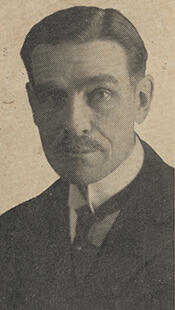
Townsend Scudder (July 26, 1865 – February 22, 1960) was an American jurist and politician who served as a Democratic Representative from New York in the United States Congress from 1899 to 1901 and again from 1903 to 1905. His congressional service, spanning two nonconsecutive terms at the turn of the twentieth century, occurred during a significant period in American history and reflected his broader career in law and public service at the local, state, and federal levels.
Scudder was born on July 26, 1865, in Northport, New York. He was a nephew of Henry Joel Scudder, who also served as a U.S. Representative from New York, situating Townsend Scudder within a family tradition of public service. As a young man he attended preparatory schools in Europe, an education that provided him with a cosmopolitan background unusual for many American politicians of his era and that preceded his formal legal training in the United States.
Upon returning to the United States, Scudder pursued a legal education at Columbia Law School in New York City, from which he graduated in 1888. He was admitted to the bar in 1889 and commenced the practice of law in New York City. His early legal career quickly led him into public office: from 1893 to 1899 he served as corporation counsel for Queens County, New York, a position in which he acted as the chief legal officer for the county and gained experience in municipal law and governance.
Scudder was elected as a Democrat to the Fifty-sixth United States Congress, holding office from March 4, 1899, to March 3, 1901, as a Representative from New York. During this first term in the House of Representatives, he participated in the legislative process and represented the interests of his constituents during a period marked by the aftermath of the Spanish–American War and the nation’s expanding global role. He declined to be a candidate for renomination in 1900 and returned to the practice of law in New York City. He was later elected to the Fifty-eighth Congress, serving a second term from March 4, 1903, to March 3, 1905. Across these two terms, Scudder contributed to the work of the House as a member of the Democratic Party, engaging in the democratic process and national legislative debates of the era.
After leaving Congress, Scudder continued to build a prominent judicial and civic career. He served as Grand Master of the Grand Lodge of New York of Freemasons from 1906 to 1907, reflecting his leadership in fraternal and civic organizations. In 1907 he was elected a justice of the New York Supreme Court for the Second Judicial District, a position he held until 1920. Following the conclusion of this term, he again resumed the practice of law in New York City. In 1921 he was the Democratic candidate for the New York Court of Appeals but was defeated by Republican William S. Andrews.
Scudder remained active in public affairs and was appointed State park commissioner and vice president of the Long Island State Park Commission, serving from 1924 to 1927. In February 1927 Governor Alfred E. Smith appointed him once more to the New York Supreme Court, and he was subsequently nominated by both major political parties to succeed himself for a full term of fourteen years, an indication of the broad respect he commanded across party lines. During this later period on the bench, he presided over one of the most highly publicized criminal cases of the era: the murder trial of Ruth Snyder and her lover Henry Judd Gray for the killing of Snyder’s husband, Albert Snyder. Both defendants were convicted and sentenced to death. Although Scudder personally opposed capital punishment and was known to trade criminal cases with other judges to avoid imposing death sentences, he nevertheless fulfilled his judicial responsibilities in this case in accordance with the law.
Beyond his judicial and political work, Scudder was active in the world of purebred dogs and dog shows. In 1932 he served as the Best in Show judge at the Westminster Kennel Club Dog Show, one of the most prestigious events in American dog breeding and exhibition. He remained on the New York Supreme Court bench until the end of 1936, when he reached the constitutional retirement age of seventy years, concluding nearly three decades of intermittent service as a justice of that court.
In his later years, Scudder lived in the New York metropolitan region and continued to be regarded as a distinguished figure in the legal and civic life of the state. He died in Greenwich, Connecticut, on February 22, 1960. His remains were interred in Putnam Cemetery in Greenwich, closing a long life marked by service as a lawyer, legislator, judge, civic leader, and jurist who played a role in both local and national affairs during a transformative period in American history.
Congressional Record