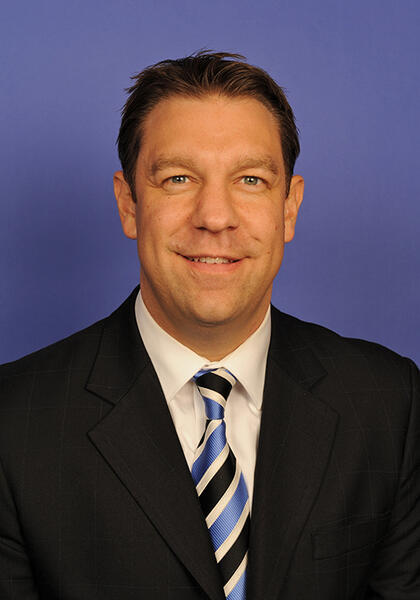
Thomas Charles Feeney III (born May 21, 1958) is an American politician and attorney from the Orlando, Florida, area who served as a Republican Representative from Florida in the United States House of Representatives from 2003 to 2009. He represented Florida’s 24th congressional district for three terms, participating in the legislative process during a significant period in American history and representing the interests of his constituents. In the 2008 election he was defeated for reelection by Democrat Suzanne Kosmas.
Feeney was born in Abington, Pennsylvania, a suburb of Philadelphia. He attended Pennsylvania State University, from which he graduated in 1980. He then studied law at the University of Pittsburgh School of Law, earning his Juris Doctor degree in 1983. Soon after completing his legal education, Feeney moved to Oviedo, Florida, a suburb of Orlando, where he opened a private law practice and established his long-term residence and professional base.
Feeney entered elective politics in Florida as a member of the Republican Party. In 1990, he was elected to the Florida House of Representatives from Seminole County. He served two terms in the state House before joining Jeb Bush on the Republican ticket in the 1994 Florida gubernatorial race as the nominee for lieutenant governor; the Bush–Feeney ticket was narrowly defeated in that election. Afterward, Feeney became a director at the James Madison Institute, a conservative think tank based in Florida. He returned to the Florida House of Representatives in 1996 and rose within the Republican leadership, culminating in his election as Speaker of the Florida House in 2000.
Feeney’s tenure as Speaker brought him national prominence during the disputed 2000 presidential election. Shortly after becoming Speaker, he led efforts in the Florida Legislature to certify the state’s Republican slate of presidential electors at a time when it remained unclear whether George W. Bush or Al Gore had won Florida’s electoral votes. Feeney and his allies argued that, under Article II of the United States Constitution, the legislature had the authority to act and that Florida’s electoral votes were in danger of being excluded if the popular vote results could not be determined with legal certainty. He and then–State Senate President John McKay contended that the Florida Supreme Court’s rulings favoring continued recounts had “tainted” the process and created, in Feeney’s words, “a great risk” that Florida’s electoral votes would be disregarded. The U.S. Supreme Court’s decision in Bush v. Gore ultimately halted the recounts on other grounds and effectively awarded Florida, and the presidency, to Bush. During his state legislative service, Feeney also opposed public financing for a new baseball stadium for the Florida Marlins, resisting a 2001 demand by Major League Baseball Commissioner Bud Selig that the state provide tax breaks to keep the team in South Florida.
Following the 2000 census, Florida gained two new congressional districts, one of which was the 24th District in the Orlando area. The district included virtually all of Feeney’s state House district, and some observers contended that it had been drawn with his potential candidacy in mind, particularly as state term limits prevented him from seeking reelection to the Florida House. Feeney ran for the new U.S. House seat and was handily elected in 2002. He was re-elected unopposed in 2004 and won a third term in 2006 with 58 percent of the vote. During his three terms in Congress, from January 3, 2003, to January 3, 2009, he was regarded as one of the most conservative members of the House. Building on a “Principles Card” he had created as Florida House Speaker to help Republican legislators gauge whether proposals aligned with conservative tenets, he introduced a modified “Conservative Check Card” in Congress to guide his own votes and those of like-minded colleagues.
In the House of Representatives, Feeney served on several key committees. He was a member of the Financial Services Committee, where he sat on the Subcommittee on Capital Markets, Insurance, and Government Sponsored Enterprises and the Subcommittee on Financial Institutions and Consumer Credit. He also served on the Judiciary Committee, including the Subcommittee on Courts, the Internet, and Intellectual Property; the Subcommittee on Commercial and Administrative Law; and the Antitrust Task Force and Competition Policy. Additionally, he was a member of the Committee on Science and Technology and served as Ranking Member of its Space and Aeronautics Subcommittee. Within the House Republican Conference, he held a leadership role as an Assistant Whip. Feeney was a founding member of Washington Waste Watchers, a group focused on scrutinizing federal spending, and he occasionally broke with the George W. Bush administration, notably opposing the 2003 Medicare reform package because he believed its prescription drug benefit for seniors was too costly.
Feeney’s voting record and public positions reflected a consistently conservative outlook. He was a staunch advocate of a federal prohibition on online poker and other forms of Internet gambling. In 2006, he cosponsored H.R. 4777, the Internet Gambling Prohibition and Enforcement Act, and voted for H.R. 4411, the Goodlatte–Leach Internet Gambling Prohibition Act. In 2008, he opposed H.R. 5767, the Payment Systems Protection Act, which sought to place a moratorium on enforcement of the Unlawful Internet Gambling Enforcement Act while federal regulators defined “unlawful Internet gambling.” His fiscal conservatism earned him recognition from several advocacy organizations: in 2006, Citizens Against Government Waste named him a “Taxpayer Superhero”; he received a perfect score from Grover Norquist’s Americans for Tax Reform; he was designated a “Guardian of Small Business” by the National Federation of Independent Business; and the National Taxpayers Union presented him with its “Taxpayers’ Friend Award” in both 2004 and 2006. He also cosponsored a non-binding House resolution criticizing the use of foreign law in federal court decisions. When Supreme Court Justice Antonin Scalia dismissed the resolution by saying, “[i]t’s none of your business,” Feeney likened the rebuke to “being told your favorite baseball player disagrees with your approach to hitting.”
Feeney’s congressional career was also marked by significant ethics controversies. In January and September 2006, Citizens for Responsibility and Ethics in Washington (CREW) named him among the “Most Corrupt Members of Congress,” listing him first as one of 13 members and later as one of 20. CREW asserted that his ethics issues stemmed from trips he had taken in apparent violation of House travel and gift rules and from his failure to disclose ownership of rental property. He appeared again in the organization’s 2007 and 2008 reports. One focal point was an August 2003 golfing trip to Scotland that Feeney took with lobbyist Jack Abramoff, later convicted on federal corruption charges. The trip was paid for by Abramoff, and Feeney’s office had earlier written to the Department of Energy in March 2003 opposing changes to the Energy Star program that were also being fought by one of Abramoff’s clients. In January 2007, after the House ethics committee concluded that the Scotland trip did not comply with House rules, Feeney agreed to reimburse the U.S. Treasury $5,643 for its cost. In April 2007, federal agents asked the St. Petersburg Times to provide an email from Feeney’s office describing the trip. He was identified as “Representative #3” in an April 23, 2007 criminal information filed by the Department of Justice against Mark Zachares, a former congressional aide to Representative Don Young who pleaded guilty to accepting tens of thousands of dollars in gifts from Abramoff. During his 2008 reelection campaign, Feeney aired a television advertisement in which he apologized for his “bad judgment” in accepting the Scotland trip.
Questions were also raised about Feeney’s personal financial disclosures. In May 2006, he reported on his House financial disclosure form that he was the joint owner of a condominium at the Royal Mansions resort in Cape Canaveral, Florida, listing the purchase date as January 2005. However, online records from the Brevard County Appraiser’s office indicated that the sale had actually occurred in late 2003, and the only purchaser of record was James A. “Skip” Fowler, Feeney’s former law partner. Fowler stated that he and Feeney had purchased the condominium together as an investment for $175,000. By 2006, two identically sized units at the resort had sold for $420,000 and $450,000. Commentators, including a note on Harper’s Magazine’s “Washington Babylon” weblog, observed that although the discrepancy might not be illegal, Feeney’s failure to report the purchase in his 2003 financial disclosure appeared to violate House rules.
Feeney also became embroiled in a dispute involving allegations about election technology. His 2006 Democratic congressional opponent, Clint Curtis, a former computer programmer for Yang Enterprises, submitted an affidavit alleging that in October 2000 Feeney had asked him to design a computer program capable of falsifying touch-screen voting results in Palm Beach County. Curtis later passed a polygraph test commissioned by a private investigator in Washington, D.C., and a Wired News report noted that Curtis had no direct knowledge of any such software being used in a public election. Feeney denied the allegations, stating that he had no recollection of ever meeting Curtis and arguing that the alleged scheme was implausible because Palm Beach County did not consider acquiring touch-screen voting machines until after the 2000 election. He also pointed out that although Curtis wrote a book in the summer of 2004 accusing Feeney of various forms of misconduct, the initial edition published before the 2004 election did not mention the alleged vote-rigging scheme.
After leaving Congress in January 2009 following his defeat by Suzanne Kosmas, Feeney continued to be referenced in legal and ethical discussions arising from his time in office. A three-judge panel of the United States Court of Appeals for the District of Columbia Circuit unanimously refused to allow federal prosecutors to subpoena Feeney’s sealed testimony that he had provided to the House Ethics Committee. In July 2009, Judge Brett Kavanaugh, one of the panel members, called for an en banc review by the full D.C. Circuit of the court’s prior precedent governing such matters. Feeney has remained a resident of the Orlando area, particularly Oviedo, Florida, where he established his legal and political career.
Congressional Record