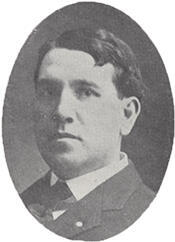
Timothy Thomas Ansberry (December 24, 1871 – July 5, 1943) was an early 20th-century American lawyer, jurist, and Democratic politician who served four terms as a U.S. Representative from Ohio from 1907 to 1915. Born in Defiance, Ohio, he was raised in that community and attended the local public schools, laying the foundation for a career that would span law, county and state judicial service, and national politics.
Ansberry pursued higher education at the University of Notre Dame in South Bend, Indiana, from which he graduated in June 1893. Shortly thereafter, he was admitted to the bar and commenced the practice of law in his hometown of Defiance, Ohio. His legal training and early professional experience quickly drew him into public service at the local level.
Beginning his public career soon after his admission to the bar, Ansberry served as a justice of the peace from 1893 to 1895. He then advanced to the position of prosecuting attorney of Defiance County, Ohio, a role he held from 1895 to 1903. In this capacity he was responsible for representing the county in criminal matters and helping to administer local justice during a period of growth and change in northwest Ohio. Seeking to extend his public service to the national stage, he ran as a Democrat for election to the Fifty-ninth Congress in 1904 but was unsuccessful in that initial bid.
Ansberry was subsequently elected as a Democrat to the Sixtieth Congress and to the three succeeding Congresses, serving as a Representative from Ohio in the United States Congress from March 4, 1907, until January 9, 1915. During these four terms in office, he contributed to the legislative process at a time of significant national transformation during the Progressive Era. As a member of the House of Representatives, he participated in the democratic process and represented the interests of his Ohio constituents. In the Sixty-second Congress he served as chairman of the Committee on Elections No. 1, a key committee responsible for matters relating to contested elections to the House, reflecting the confidence of his colleagues in his legal and procedural expertise.
Ansberry’s congressional service ended when he resigned on January 9, 1915, to accept a judicial appointment. He was appointed an associate judge of the Ohio Court of Appeals, where he served from 1915 until his resignation in 1916. His move from the legislative to the judicial branch marked a continuation of his long engagement with the law, now at the appellate level, where he participated in reviewing and deciding cases arising from Ohio’s trial courts.
After leaving the bench, Ansberry remained active in national Democratic politics. He served as a presidential elector in the 1916 presidential election, participating in the formal selection of the President and Vice President. He was also chosen as a delegate to the 1920 Democratic National Convention in San Francisco and the 1924 Democratic National Convention in New York, taking part in the party’s deliberations over national platforms and candidates in the years following World War I.
In 1916, Ansberry moved to Washington, D.C., where he engaged in the practice of law for the remainder of his life. From the nation’s capital he continued his legal career, drawing on his experience as a county prosecutor, appellate judge, and former Member of Congress. He died in New York City on July 5, 1943. His remains were interred in Mount Olivet Cemetery in Washington, D.C., closing a career that had spanned local, state, and national public service.
Congressional Record