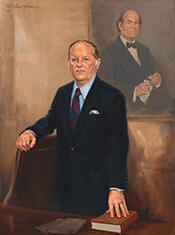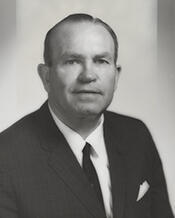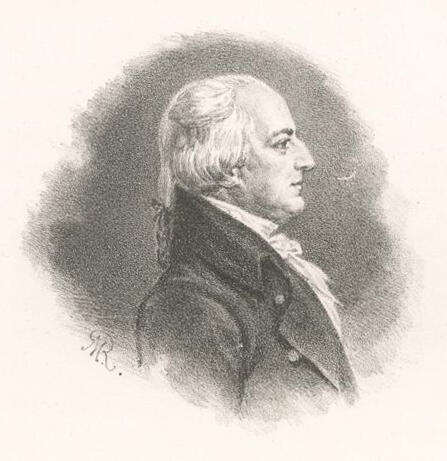
Thomas Tudor Tucker (June 25, 1745 – May 2, 1828) was a Bermuda-born American physician and politician who became a leading public figure in South Carolina and the early United States. Representing Charleston, South Carolina, he served as a delegate to the Continental Congress, as a Representative from South Carolina in the United States Congress from 1789 to 1793, and later as Treasurer of the United States from 1801 until his death, establishing a record as the longest-serving Treasurer.
Tucker was born in St. George’s, Bermuda, to Henry Tucker and Ann Tucker, members of a family that had been prominent in the colony since their ancestors emigrated from England in 1662. Bermuda’s long-standing connections with the North American mainland, including its role in the settlement of Charleston in 1670 under the leadership of William Sayle, helped shape Tucker’s later ties to South Carolina. He was part of a large and politically influential family; his father was a colonel of the militia, and his relatives would later be implicated in Revolutionary-era activities that favored the American cause.
As a youth, Tucker pursued medical studies at the University of Edinburgh in Scotland, one of the leading medical schools of the eighteenth century. He completed his medical education and graduated in 1770. After his studies, he moved first to Virginia in the 1760s and then settled in Charleston, South Carolina, where he opened a medical practice. Charleston, which had a substantial community of expatriate Bermudians, provided a natural base for Tucker’s professional and political advancement. His younger brother, St. George Tucker, followed him to Virginia, studied law, and eventually became Chief Justice of the Virginia Supreme Court, underscoring the family’s broader influence in the early republic.
Tucker emerged as an early supporter of American independence. In 1776 he was elected to the South Carolina House of Representatives, in which he served in various years until 1788. During the Revolutionary War, he joined the Continental Army in 1781 as a hospital surgeon assigned to the Southern Department and served in that capacity until 1783, combining his medical training with the Patriot military effort. He is believed to have played a key role in a plot to supply the Continental forces with gunpowder stolen from a British magazine in Bermuda, an episode that illustrated both his political commitment and his family’s transatlantic connections.
The gunpowder affair arose after the Battle of Lexington in 1775, when the Continental Congress imposed a trade embargo on British colonies that remained loyal to the Crown. Bermuda, with its control of the Turks Islands and a large merchant fleet, offered to supply the American Patriots with salt, but the Continental authorities instead sought gunpowder. On August 14, 1775, Bermudians sympathetic to the Revolution stole the island’s supply of gunpowder from the Powder Magazine in St. George’s and shipped it to the rebels, despite the fierce loyalty of Bermuda’s governor, George James Bruere, who had recently lost a son in British service at the Battle of Bunker Hill. Tucker is believed to have suggested that General George Washington write a letter to the people of Bermuda, appealing to their support for American liberty and hinting at the opportunity to obtain the island’s powder. The letter, dated September 6, 1775, was addressed “To the Inhabitants of the Island of Bermuda” and urged them, as “Descendents of Freemen and Heirs with us of the same Glorious Inheritance,” to assist in securing the magazine’s contents. The plot was apparently organized and carried out by persons of high standing, including members of Tucker’s own family. His older brother Henry Tucker, President of the Governor’s Council and occasional acting governor of Bermuda, his father, and his brother St. George Tucker were all believed to have been involved in organizing the theft. No one was ever prosecuted, and although Governor Bruere was enraged, he was not blamed in London for the subsequent trade that developed between Bermuda and the rebelling colonies.
In the postwar period Tucker remained active in South Carolina politics. He continued to serve in the South Carolina House of Representatives at intervals until 1788 and was chosen by the state as a delegate to the Continental Congress in 1787 and again in 1788. He opposed the proposed United States Constitution, believing that it concentrated too much authority in the new federal government at the expense of the states. Despite his Anti-Federalist views, he was later elected to the United States House of Representatives. A member of the Unknown Party in the contemporary congressional classification, Tucker served in the first two Congresses from March 4, 1789, to March 3, 1793, representing South Carolina. During this significant formative period in American history, he contributed to the legislative process, participated in the democratic deliberations of the new national government, and represented the interests of his Charleston and South Carolina constituents in the House of Representatives.
After leaving Congress, Tucker remained aligned with the Jeffersonian Republican vision of limited central authority. On December 1, 1801, President Thomas Jefferson appointed him Treasurer of the United States. Tucker held this office through four presidential administrations—those of Thomas Jefferson, James Madison, James Monroe, and John Quincy Adams—serving continuously from 1801 until his death in 1828. His tenure of 26 years and 153 days established a record as the longest-serving Treasurer of the United States. In addition to his fiscal responsibilities, Tucker also served as physician to President James Madison from 1809 to 1817, reflecting the continued importance of his medical training even as he occupied a high federal financial post. During his long service as Treasurer, he oversaw the management of federal funds in an era that included the Jeffersonian reforms, the War of 1812, and the expansion of the young republic.
Tucker also engaged in intellectual and civic life beyond his formal offices. He published an oration delivered in Charleston before the South Carolina Society of the Cincinnati in 1795, a veterans’ organization composed of officers of the Continental Army and their descendants. This publication reflected his standing among Revolutionary leaders and his ongoing engagement with the legacy of the war and the principles of the new nation.
Thomas Tudor Tucker died in office as Treasurer of the United States on May 2, 1828, in Washington, D.C. He was interred in the Congressional Cemetery in the capital, a resting place for many early national figures. His family continued to exert influence on both sides of the Atlantic. His nephew Henry St. George Tucker, Sr., served as a U.S. Congressman from Virginia, while another nephew, also named Thomas Tudor Tucker, remained with the Bermuda branch of the family and attained the rank of admiral in the British Navy. Through his medical practice, Revolutionary service, legislative work in South Carolina and the U.S. House of Representatives, and his unprecedentedly long tenure as Treasurer of the United States, Tucker played a notable role in the political and institutional development of the early United States.
Congressional Record