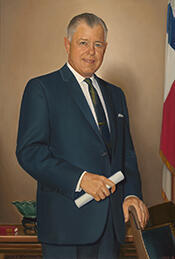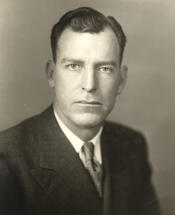
Thomas Augustus Pickett (August 14, 1906 – June 7, 1980) was an American lawyer and Democratic politician who served four terms as a United States Representative from Texas. Representing Texas’s 7th congressional district, he served in the House of Representatives from January 3, 1945, until his resignation on June 30, 1952, a period that spanned the final months of World War II and the early years of the Cold War. Over the course of his congressional career, he contributed to the legislative process and represented the interests of his Texas constituents during four consecutive terms in office.
Pickett was born in Travis, Texas, on August 14, 1906. He spent part of his early life in Iola before moving with his family to Palestine, Texas. There he attended the public schools and graduated from high school in 1923. Following his graduation, he enrolled at Conway’s Business College and simultaneously gained practical experience by working for a year in his father’s law office, an early exposure to the legal profession that helped shape his future career. Between 1924 and 1928, he attended the University of Texas at Austin, where he pursued legal studies in preparation for admission to the bar.
After completing his legal education, Pickett studied law formally and was admitted to the Texas bar in 1929. He commenced the practice of law in Palestine, Texas, establishing himself as a local attorney. His legal training and growing reputation in the community led him into public service at the county and district levels, where he combined legal work with elected office.
Pickett’s political career began in earnest when he was elected county attorney of Anderson County, Texas, serving from 1931 to 1935. He then advanced to the position of district attorney of the Third Judicial District of Texas, a post he held from 1935 to 1945. In these prosecutorial roles, he gained extensive courtroom experience and public visibility, which laid the groundwork for his entry into national politics. In 1944, he challenged and defeated the incumbent Democratic Representative Nat Patton in the party primary and went on to win the general election against Republican J. Perrin Willis, securing a seat in the U.S. House of Representatives.
As a Democrat in Congress, Pickett was elected to the Seventy-ninth Congress in 1944 and was subsequently reelected unopposed to the three succeeding Congresses. He served from January 3, 1945, until his resignation on June 30, 1952, thus completing four terms in office. During this significant period in American history, he participated in the legislative process at a time marked by postwar reconstruction, the onset of the Cold War, and domestic economic adjustment. In the House of Representatives he served on the Public Works, Veterans’ Affairs, and Administration committees. His legislative interests included public works projects on the Neches, Angelina, and Trinity Rivers, reflecting a focus on regional infrastructure and waterway development, as well as attention to the economic implications of railroad reorganization for the International–Great Northern Railroad Company and its impact on Anderson County and the surrounding area.
Pickett resigned from Congress during his fourth term to accept a position in the private sector closely related to the industries he had followed in public life. On July 1, 1952, he became vice president of the National Coal Association, a post he held until March 31, 1961. In this capacity he was involved in representing and advancing the interests of the coal industry during a period of changing national energy needs and regulatory frameworks. On April 1, 1961, he assumed the role of vice president of the Association of American Railroads, serving there until November 30, 1967, and continuing his engagement with transportation policy and the economic issues surrounding the railroad industry.
Following his retirement from active professional life, Pickett resided in Leesburg, Florida. He lived there until his death on June 7, 1980. After his death, he was cremated, and his ashes were interred at St. James Episcopal Church, marking the close of a career that spanned local, state, and national public service as well as influential roles in major national trade associations.
Congressional Record