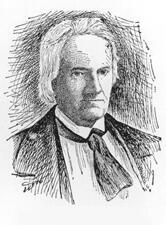
Thomas Metcalfe, also known as Thomas Metcalf, was a prominent Kentucky statesman who served as a Senator from Kentucky in the United States Congress from 1819 to 1849 and was a leading member of the Whig Party. His public career unfolded during a formative period in American history, and over the course of six terms in office he contributed to the legislative process and represented the interests of his constituents at the national level. He was part of a broader lineage of notable figures bearing the Metcalfe or Metcalf name, including earlier and contemporary public servants and professionals in Britain, North America, and the wider British Empire.
The name Thomas Metcalfe has a long historical association with public service and administration. One of the earliest known figures was Thomas Metcalfe, a courtier who flourished around 1486 and served as medieval Chancellor of the Duchy of Lancaster in England, a key administrative office in the late medieval royal household. In the eighteenth century, Sir Thomas Metcalfe, 1st Baronet (1745–1813), rose to prominence as a Director of the East India Company and as a Member of Parliament for Abingdon, reflecting the growing intertwining of British imperial and parliamentary affairs. His family’s imperial service continued into the nineteenth century through his son, Sir Thomas Metcalfe, 4th Baronet (1795–1853), who served the East India Company and acted as agent to the Governor General of India, a role that placed him at the center of British colonial administration on the subcontinent.
Within the American context, Thomas Metcalfe of Kentucky (1780–1855) emerged as a significant political leader in the early republic and antebellum eras. Known also as Thomas Metcalf, he became governor of Kentucky and was closely associated with the Whig Party, which advocated for internal improvements, a strong legislative branch, and economic development through measures such as banking and infrastructure projects. His gubernatorial service complemented his long tenure in the United States Congress, where, as a Senator from Kentucky from 1819 to 1849, he participated in debates over national expansion, economic policy, and the balance of power between federal and state governments. His six terms in office coincided with major events such as the Missouri Compromise, the rise of Jacksonian democracy, and the intensifying sectional disputes that would eventually lead to the Civil War.
Thomas Metcalfe’s congressional service placed him among the leading Whig voices of his generation. As a member of the Senate, he took part in the democratic process at a time when the United States was rapidly expanding westward and grappling with questions of slavery, tariffs, and federal authority. Representing Kentucky, he was expected to balance the interests of an agrarian, slaveholding border state with the broader national agenda of the Whig Party, which often emphasized compromise and legislative solutions to sectional tensions. His work in Congress reflected the concerns of his constituents, who were deeply affected by issues such as land policy, transportation routes across the interior, and the evolving relationship between state and federal institutions.
The broader Metcalfe or Metcalf name continued to appear in public life beyond his own career. In New England, Thomas Metcalf served as a representative to the Massachusetts Great and General Court, participating in state-level legislative affairs. In the maritime economy of the late eighteenth century, Thomas Humphrey Metcalfe (c. 1761–1790) was active as an American maritime fur trader, part of the early commercial networks that linked North America to markets across the Pacific. In the realm of scholarship, Thomas R. Metcalf (born 1934) became a noted historian of South Asia, contributing to academic understanding of colonial and postcolonial India and the broader region.
The Metcalfe name has also been associated with athletics and education in the modern era. T. Nelson Metcalf (1890–1982) was an American football and basketball player, coach, and college athletics administrator, reflecting the growing importance of organized sports in American higher education. Internationally, Tom Metcalfe (1909–1969) distinguished himself as a New Zealand rugby union player, while Tom Metcalf (footballer) (1878–1938) played professional football in England for Southampton and Wolverhampton Wanderers. In American professional sports, Tom Metcalf (born 1940) pursued a career in baseball. Collectively, these individuals illustrate the wide-ranging contributions of people bearing the Metcalfe or Metcalf name across politics, administration, scholarship, commerce, and sport over several centuries.
Congressional Record