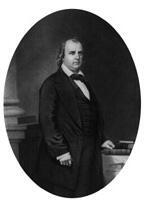
Thomas Birch Florence (January 26, 1812 – July 3, 1875) was a Democratic member of the U.S. House of Representatives from Pennsylvania who served five consecutive terms in Congress from 1851 to 1861. His decade in the House coincided with an era of mounting sectional tension in the United States in the years leading up to the Civil War, during which he participated in the legislative process and represented the interests of his Pennsylvania constituents.
Florence was born on January 26, 1812. Details of his early life are sparse in the surviving record, but he came of age in the early nineteenth century as the nation was expanding westward and industrialization was beginning to reshape the economy. He was associated with Pennsylvania for the major part of his public career, and his later prominence in that state’s political life suggests that he was drawn into local affairs and party activity well before his election to national office.
Information about Florence’s formal education is limited, and there is no clear record of attendance at a college or university. Like many politicians of his generation, he likely received a basic education in local schools and then pursued self-education through reading, professional work, and participation in civic and political organizations. This background was typical of mid-nineteenth-century public figures, who often combined practical experience with informal study as preparation for public service.
Florence’s political career was defined by his service as a Representative from Pennsylvania in the United States Congress from 1851 to 1861. A member of the Democratic Party, he was elected to the U.S. House of Representatives and served five terms in office, reflecting sustained support from his district. During these ten years, he contributed to the legislative process at a time when Congress was deeply engaged with issues such as the expansion of slavery into the territories, the balance of power between free and slave states, and the preservation of the Union. As a member of the House of Representatives, Thomas Birch Florence participated in the democratic process and represented the interests of his constituents while navigating the increasingly polarized national debate.
Florence’s congressional service occurred during a significant period in American history, encompassing the aftermath of the Compromise of 1850, the controversies surrounding the Kansas-Nebraska Act, and the realignment of national political parties in the 1850s. As a Democratic representative from Pennsylvania, he was part of a party that was itself divided along sectional lines, and his decade in office placed him at the center of the legislative struggles that foreshadowed the Civil War. Although detailed records of his committee assignments and specific legislative initiatives are limited in the brief surviving summaries, his repeated reelection indicates that he maintained a notable presence in the House and in the political life of his state.
After leaving Congress in 1861, at the close of his fifth term, Florence returned to private life as the nation entered the Civil War. While the available biographical references do not provide extensive detail about his later professional activities, his experience as a former member of Congress and a long-serving Democratic officeholder would have kept him engaged with political and civic affairs in Pennsylvania during the war and Reconstruction eras. He lived through the conflict and the initial years of national reunification, witnessing the transformation of the political landscape in which he had once played an active role.
Thomas Birch Florence died on July 3, 1875. His career as a five-term Democratic Representative from Pennsylvania placed him among the notable mid-nineteenth-century legislators who served during one of the most turbulent decades in American political history. His life spanned from the early republic through the Civil War and into Reconstruction, and his decade of congressional service remains the central, defining element of his public legacy.
Congressional Record