Thomas Dawes Eliot (March 20, 1808 – June 14, 1870) was an American politician and lawyer who served as a Representative from Massachusetts in the United States Congress from 1853 to 1869. A member of the prominent Eliot family, he held office during a transformative period in American history, participating in the legislative process over six terms in the House of Representatives and representing the interests of his Massachusetts constituents as a member first of the Whig Party and later of the Republican Party.
Eliot was born on March 20, 1808, in Boston, Massachusetts, the son of Margaret Greenleaf (Dawes) Eliot and William Greenleaf Eliot. He was named for his maternal grandfather, Justice Thomas Dawes of the Massachusetts Supreme Judicial Court, thereby linking him to an established New England legal and political lineage. During his youth he lived for a time in the nation’s capital and attended the public schools of Washington, D.C., an experience that exposed him early to the workings of the federal government.
Eliot pursued higher education in the District of Columbia and graduated from Columbian College (now George Washington University) in 1825. After completing his legal studies, he was admitted to the bar and commenced the practice of law in New Bedford, Massachusetts, a growing whaling and commercial center whose maritime interests would later inform some of his legislative concerns. In 1834 he married Frances L. Brock of Nantucket, further strengthening his ties to the coastal communities of Massachusetts.
Before entering national politics, Eliot built a career in state government and public affairs. He served as a member of the Massachusetts House of Representatives and later in the Massachusetts State Senate, participating in the governance of the Commonwealth during a period of economic expansion and rising sectional tensions. His work in the state legislature helped establish his reputation as a capable lawyer and legislator and positioned him for subsequent service in Congress.
Eliot was first elected to the United States House of Representatives as a Whig to the Thirty-third Congress to fill the vacancy caused by the resignation of Zeno Scudder. He served in this initial term from April 17, 1854, to March 3, 1855, representing a coastal Massachusetts district. At the close of the term he declined to be a candidate for renomination. In 1855 he remained active in the evolving antislavery political movement as a delegate to the Free Soil Convention in Worcester, reflecting his alignment with emerging parties opposed to the expansion of slavery. In 1857 he declined to be a candidate for nomination by the Republican Party for Attorney General of Massachusetts, choosing instead to continue his legal practice and maintain flexibility in his political career.
With the consolidation of antislavery forces into the Republican Party, Eliot returned to national office as a Republican. He was elected to the Thirty-sixth Congress and to the four succeeding Congresses, serving from March 4, 1859, to March 3, 1869. Over these six terms in the House of Representatives, his service spanned the secession crisis, the Civil War, and the early years of Reconstruction. During the Thirty-ninth and Fortieth Congresses he served as chairman of the Committee on Freedmen’s Affairs, a key body charged with addressing the legal and social status of formerly enslaved people in the postwar South. In the Fortieth Congress he also chaired the Committee on Commerce, where his background from New Bedford and its maritime economy informed his attention to commercial and shipping interests. He declined to be a candidate for renomination in 1868, concluding his decade-long continuous service in the Republican majority that helped shape Reconstruction policy.
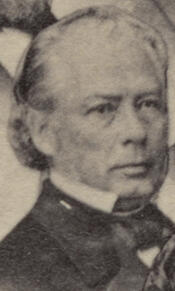
After leaving Congress in March 1869, Eliot resumed the practice of law, returning to his professional roots in Massachusetts. He remained a respected figure in legal and political circles until his death on June 14, 1870. He was interred in Oak Grove Cemetery, reflecting his long association with New Bedford and the surrounding region. His family continued to be active in American intellectual and religious life: his daughter Ida M. Eliot became a notable educator and writer; his younger brother, William Greenleaf Eliot, was a prominent philanthropist and Unitarian minister; and his granddaughter Julia Meriam Stetson married Dr. Leroy Milton Yale Jr., of the Yale family. A photograph of Thomas Dawes Eliot taken by Mathew B. Brady is preserved in the collections of The Bancroft Library, providing a visual record of a legislator who played a significant role in Congress during one of the most consequential eras in United States history.
Congressional Record