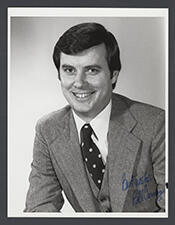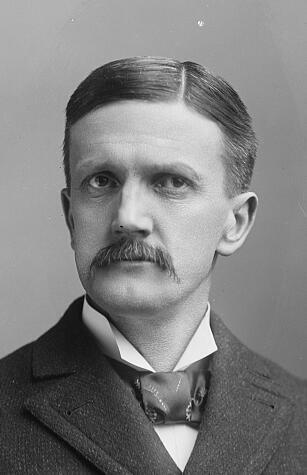
Thomas Lathrop Bunting (April 24, 1844 – December 27, 1898) was an American businessman and Democratic politician who served one term as a U.S. Representative from New York from 1891 to 1893. His congressional service took place during a significant period in American history, and as a member of the House of Representatives he participated in the legislative process and represented the interests of his New York constituents.
Bunting was born in Eden, Erie County, New York, on April 24, 1844. He was educated in the local common schools and later attended the Griffith Institute in Springville, New York, an academy that prepared students for higher education and professional careers. As a young man, he supported himself and furthered his education by teaching school during the winter months while attending the academy in the summer. His early academic ambitions were curtailed when illness interrupted his preparation for college, altering his intended educational path and directing him toward a career in business.
In 1868, following his recovery and the end of his formal studies, Bunting moved to Hamburg, New York. There he established a general mercantile store, entering the commercial life of the growing community. He later expanded his business interests into the canning industry, which was emerging as an important sector in the regional agricultural economy. Through these enterprises he became a prominent local businessman, closely connected to the agricultural and commercial development of western New York.
Bunting’s business success and standing in the community led him into public life as a member of the Democratic Party. He was elected as a Democrat to the Fifty-second Congress, serving as a U.S. Representative from New York from March 4, 1891, to March 3, 1893. During this single term in the United States Congress, he contributed to the legislative process at the national level and participated in the democratic governance of the country at a time of economic and political change in the late nineteenth century. Although positioned to seek further office, he declined to be a candidate for renomination in 1892, thereby limiting his congressional service to one term.
After leaving Congress, Bunting returned to private life and resumed active management of his canning business. He broadened his economic interests to include farming, dairying, and stock raising, reflecting both his entrepreneurial inclination and the agricultural character of his region. These pursuits reinforced his role as a significant figure in local business and agricultural circles in and around Hamburg.
Thomas Lathrop Bunting died in Buffalo, New York, on December 27, 1898. He was interred in Forest Lawn Cemetery at Hamburg, New York. His career combined education, commerce, agriculture, and public service, and his single term in the House of Representatives formed part of a wider life of engagement in the civic and economic affairs of his state.
Congressional Record