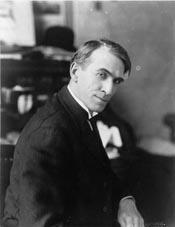
Theron Akin (May 23, 1855 – March 26, 1933) was an American politician who served one term as a U.S. Representative from New York from 1911 to 1913. Born in Johnstown, New York, on May 23, 1855, he was the son of Ethan and Susan (St. John) Akin. He attended the common schools of nearby Amsterdam, New York, and also received private tutoring at home. In his early years he engaged in agricultural pursuits, an occupation that would remain a recurring element of his livelihood throughout his life.
Akin pursued professional training in dentistry and graduated from the New York Dental College. Following his graduation, he practiced dentistry for twelve years in Amsterdam, New York, establishing himself in that community before turning more fully to agriculture and public affairs. His personal life included several marriages: he married Carrie Bell on September 24, 1874, and they had two children, Harry and Florence; he married Mary Sanford on December 16, 1880, and they had one child, David. In 1904 he married a woman named Jennie, and in 1920 he married Jane Bornt.
After his period of dental practice, Akin moved to the nearby village of Akin in Montgomery County, New York, which was later renamed Fort Johnson. There he again engaged in agricultural pursuits and became active in local government. He served as president of the village of Fort Johnson, New York, reflecting his growing prominence in local civic affairs. The village, originally bearing his family name, later changed its name from Akin to Fort Johnson because of residents’ disapproval of Theron Akin, an unusual episode that underscored the contentious nature of his local political standing.
Akin’s national political career began when he was elected as a Progressive Republican to the Sixty-second Congress as the U.S. Representative from New York’s twenty-fifth congressional district. He served in the House of Representatives from 1911 to 1913, a period that coincided with the broader Progressive Era in American politics. As a member of the Progressive Republican Party, he contributed to the legislative process during his single term in office, participating in the democratic process and representing the interests of his constituents during a significant period in American history. His term is sometimes dated in contemporary records as running from March 4, 1910, to March 3, 1912, but he is generally recognized as having served one full term from 1911 to 1913.
After his service in the Sixty-second Congress, Akin sought to continue his career in national politics but was unsuccessful. He was an unsuccessful candidate for renomination on the Progressive ticket in 1912 and returned to his agricultural pursuits following his departure from Congress. He again attempted to reenter Congress as a Progressive candidate in 1914, running for election to the Sixty-fourth Congress, but was again unsuccessful.
Akin remained active in public life at the local level after his congressional service. He was elected mayor of Amsterdam, New York, serving from 1920 to 1924. Following his mayoralty, he resumed his former pursuits, including agriculture and local civic involvement. In 1927 he sought to return to the mayor’s office but was an unsuccessful candidate for both the Republican and Democratic mayoralty nominations, illustrating the shifting political alignments of the period and his complex relationship with party organizations.
Theron Akin died from a stroke of paralysis in Amsterdam, New York, on March 26, 1933. He was interred at Pine Grove Cemetery in Tribes Hill, New York. His career encompassed professional work in dentistry, long-standing engagement in agriculture, and public service at both the local and national levels, including a term in the U.S. House of Representatives during the Progressive Era.
Congressional Record