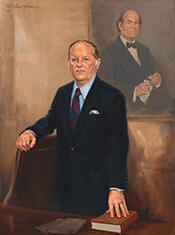
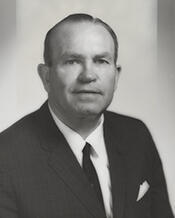
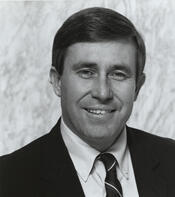
Theodore Gaillard Croft (November 26, 1874 – March 23, 1920) was a U.S. Representative from South Carolina and a member of a prominent Aiken political family, being the son of Congressman George William Croft. He was born in Aiken, Aiken County, South Carolina, where he attended the local common schools. Raised in the post-Reconstruction South, he grew up in a community in which his father was an influential attorney and political figure, a background that helped shape his own interest in the law and public service.
Croft pursued formal education beyond his hometown, enrolling at Bethel Military Academy in Warrenton, Virginia, a respected preparatory institution known for its disciplined curriculum and emphasis on leadership. He graduated from Bethel Military Academy in 1895. He then returned to his home state to study law at the University of South Carolina in Columbia, where he attended the law department and completed his legal studies in 1897. That same year he was admitted to the bar and commenced the practice of law in Aiken, South Carolina, establishing himself as an attorney in the community where his family was already well known.
Croft’s entry into national politics came as a direct consequence of his father’s death while in office. George W. Croft had represented South Carolina in the U.S. House of Representatives, and upon his death a vacancy was created in the Fifty-eighth Congress. Theodore Gaillard Croft was elected as a Democrat to fill that vacancy and served from May 17, 1904, to March 3, 1905. During his brief tenure in Congress, he carried forward one of his father’s principal local initiatives: the effort to secure the construction of a post office in downtown Aiken, reflecting his focus on tangible improvements for his constituency. He chose not to be a candidate for renomination in 1904, thereby limiting his congressional service to the remainder of his father’s unexpired term.
After leaving Congress, Croft returned to Aiken and resumed the practice of law, continuing his professional career as an attorney. He remained active in state and local affairs and soon sought office in the South Carolina General Assembly. He was elected to the South Carolina House of Representatives and served as a member of that body from 1907 to 1908, participating in legislative work during a period of ongoing economic and social change in the state. His service in the lower house provided him with experience in state-level policymaking and further established his standing in South Carolina Democratic politics.
Building on his legislative experience, Croft advanced to the upper chamber of the state legislature. He served in the South Carolina State Senate from 1909 to 1912, representing his district during a time when issues such as agricultural development, infrastructure, and the regulation of commerce were prominent in state debates. In both the House and Senate, he was part of the dominant Democratic Party that controlled South Carolina politics in the early twentieth century, and his legislative career reflected a continued commitment to the interests of his home region.
With the United States’ entry into World War I, Croft undertook military service despite being in his early forties. On October 29, 1918, he enlisted in the United States Army and was assigned as a private to the Field Artillery Central Officers’ Training School at Camp Zachary Taylor, near Louisville, Kentucky. His service coincided with the final weeks of the war; he remained in training until December 5, 1918, when he was honorably discharged following the Armistice. His brief period in uniform nonetheless demonstrated a willingness to serve the nation in a military as well as a legislative capacity.
Following his discharge from the Army, Croft again returned to Aiken and resumed the practice of law, continuing in his profession during the final years of his life. He remained a figure of local prominence, associated with both his own record of public service and that of his late father. Theodore Gaillard Croft died in Aiken, South Carolina, on March 23, 1920. He was interred in St. Thaddeus’ Episcopal Churchyard in Aiken, a burial place that underscored his lifelong connection to the community in which he was born, practiced law, and built his political career.
Congressional Record