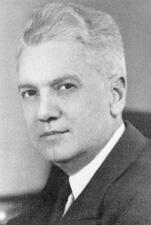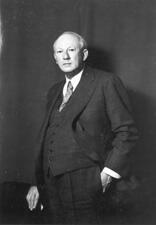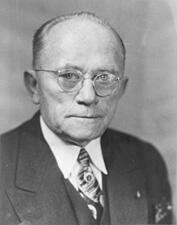
Theodore Gilmore Bilbo served as a Senator from Mississippi in the United States Congress from 1935 to 1947. A member of the Democratic Party, Theodore Gilmore Bilbo contributed to the legislative process during 2 terms in office.
Theodore Gilmore Bilbo’s service in Congress occurred during a significant period in American history. As a member of the Senate, Theodore Gilmore Bilbo participated in the democratic process and represented the interests of constituents.
Theodore Gilmore Bilbo (October 13, 1877 – August 21, 1947) was an American politician who twice served as the 39th and 43rd governor of Mississippi (1916–1920, 1928–1932) and later was elected a U.S. Senator (1935–1947). Bilbo was a demagogue and filibusterer whose name was synonymous with white supremacy. Like many Southern Democrats of his era, Bilbo believed that black people were inferior; he defended segregation, and was a member of the second Ku Klux Klan in the 1920s. He also published a pro-segregation work, Take Your Choice: Separation or Mongrelization. Bilbo was educated in rural schools and attended Peabody Normal College and Vanderbilt University Law School. He practiced law in Poplarville from 1906. He served in the Mississippi State Senate for four years, from 1908 to 1912. Bilbo overcame accusations of accepting bribes and won an election for lieutenant governor, a position that he held from 1912 to 1916. In 1915, he was elected governor and served from 1916 to 1920. During this term, he earned accolades for enacting Progressive measures such as compulsory school attendance and increased spending on public works projects. He was an unsuccessful candidate for the United States House of Representatives in 1918. Bilbo won the election to the governorship again in 1927, and he served from 1928 to 1932. During this term, Bilbo caused controversy by attempting to move the University of Mississippi from Oxford to Jackson. In 1930 Bilbo proposed a general sales tax, which was signed into law by his successor in 1932, making Mississippi the first American state to do so. In 1934, Bilbo won election to a seat in the United States Senate. In the Senate, Bilbo maintained his support for segregation and white supremacy; he was also attracted to the ideas of the black separatist movement, considering it a potentially viable method of maintaining segregation. He proposed resettling the 12 million American blacks in Africa. In his second term, he made anti-black racism a major theme. Regarding economic policy, he moved away from support for the New Deal and increasingly joined the Conservative Coalition. Opposing Roosevelt, he became isolationist in foreign policy and opposed labor unions. He was the leader in fighting FDR’s Fair Employment Practice Committee and helped kill the nomination of New Dealer Aubrey Willis Williams, a liberal Southerner, to head the Rural Electrification Administration. Although reelected to a third term in 1946, liberals led by Glen H. Taylor blocked his seating based on denying the vote to blacks and accepting bribes. By the time he died (without taking his seat), the national media had made him the symbol of racism. Bilbo died in a New Orleans hospital while undergoing cancer treatment and was buried at Juniper Grove Cemetery in Poplarville. Bilbo was of short stature (5 ft 2 in (1.57 m)), frequently wore bright, flashy clothing to draw attention to himself, and was nicknamed “The Man” because he tended to refer to himself in the third person.
Congressional Record