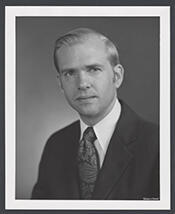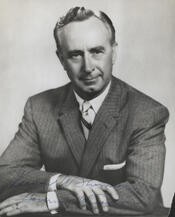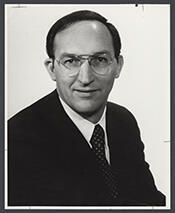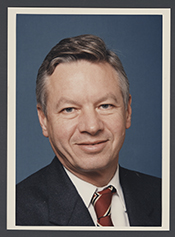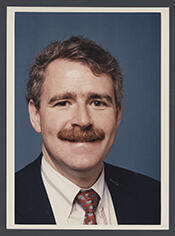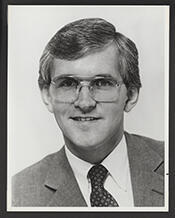
Steven Leslie Kagen, born on December 12, 1949, in Appleton, Wisconsin, is an American physician and Democratic politician who represented Wisconsin’s 8th congressional district in the United States House of Representatives from 2007 to 2011. He grew up in Appleton and graduated from Appleton East High School, where his early exposure to public affairs was shaped in part by his family’s engagement in politics. His father, Dr. Marv Kagen, was also a physician and ran unsuccessfully as a Democratic candidate for Congress in 1966. The younger Kagen volunteered for his father’s campaign and later cited that experience as a major influence on his own interest in public service and electoral politics.
After completing high school, Kagen attended the University of Wisconsin–Madison, where he earned a degree in molecular biology with honors. He then pursued medical training, entering medical school and subsequently completing advanced training at Northwestern University in Chicago, Illinois, and at the Medical College of Wisconsin in Milwaukee. Kagen became board certified in internal medicine; allergy, asthma and immunology; and diagnostic laboratory immunology, establishing himself as a specialist in the diagnosis and treatment of complex immunologic and respiratory conditions. His medical education and professional formation laid the groundwork for a career that combined clinical practice, teaching, and later, legislative work focused heavily on health care policy.
Kagen built a substantial medical practice in northeastern Wisconsin, founding four medical clinics located in Appleton, Green Bay, Fond du Lac, and Oshkosh. These clinics served a broad regional patient base and reinforced his reputation as a practicing physician deeply familiar with the health care needs of working families, children, and older adults. In addition to his clinical work, Kagen served as an assistant clinical professor at the Medical College of Wisconsin, contributing to the training of medical students and residents. He also served for seven years as an allergy consultant to CNN, providing expert commentary on medical and health-related issues to a national audience. This combination of clinical practice, academic involvement, and media engagement helped position him as a prominent voice on health care issues prior to his entry into elective office.
Kagen entered electoral politics as a first-time candidate in 2006, running for the open seat in Wisconsin’s 8th congressional district, which is located in the northeastern part of the state and includes the cities of Green Bay and Appleton. The seat had been vacated by four-term Republican Representative Mark Green, who ran unsuccessfully for Governor of Wisconsin. On September 12, 2006, Kagen won the Democratic Party nomination for the district. In the general election held on November 7, 2006, he narrowly defeated Wisconsin Assembly Speaker John Gard of Peshtigo in what became the most expensive congressional race in Wisconsin history, a contest dominated by attack advertisements, many produced by third-party 527 issue groups. Kagen’s campaign emphasized his background as a physician—highlighting that Wisconsin doctors had voted him one of the “best doctors in America”—and his pledge to fight for affordable health care for all Americans. He won the 2006 election by a margin of 51–49 percent and became only the third Democrat to represent the 8th District since World War II.
Kagen took office as a member of the United States House of Representatives on January 3, 2007, serving two terms until January 3, 2011. A member of the Democratic Party, he represented the interests of his constituents in northeastern Wisconsin during a significant period in American history, participating in the legislative process amid debates over health care reform, economic policy, and national security. In Congress, he served on the Committee on Agriculture, including the Subcommittee on Department Operations, Oversight, Nutrition and Forestry and the Subcommittee on Livestock, Dairy, and Poultry. He also served on the Committee on Transportation and Infrastructure, with assignments on the Subcommittee on Coast Guard and Maritime Transportation, the Subcommittee on Highways and Transit, and the Subcommittee on Water Resources and Environment. Through these committee roles, Kagen engaged with issues ranging from agricultural policy and nutrition programs to transportation infrastructure and maritime affairs.
Health care policy was the predominant legislative issue Kagen stressed during his 2006 campaign and throughout his congressional tenure. He advanced an initiative he called “No Patient Left Behind,” which proposed open disclosure of all health care-related prices, unitary pricing so that every citizen would pay the same amount for the same product or service, a single insurance risk pool to leverage lower insurance and prescription drug costs, deductibles set at 3 percent of a household’s federal taxable income, and coverage for all children and working adults. Reflecting his commitment to health care reform, Kagen declined to participate in the Congressional health care plan until all Americans had access to affordable health care, stating in a post on the Daily Kos that he “did not run for this office to get health care benefits.” During his time in Congress, he supported and voted for the 9/11 Commission Recommendations Act, the increase in the federal minimum wage, the State Children’s Health Insurance Program (SCHIP) Children’s Health Bill, the “Pay As You Go” budget enforcement legislation, campaign and lobbying reforms, and enhanced oversight of Foreign Intelligence Surveillance Act (FISA) warrants and terror surveillance. He cosponsored the Pharmaceutical Market Access and Drug Safety Act (H.R. 380), which would allow importation of prescription drugs from Canada for personal use and from registered importers, and he cosponsored the Medicare Prescription Drug Price Negotiation Act of 2007 (H.R. 4), voting in favor of its passage in the House in January 2007. He voted for all military appropriations bills and authored the Rural Veterans Mental Health Improvement Act (H.R. 4231), designed to expand mental health coverage for veterans.
Kagen also sponsored significant legislation related to energy markets. On May 15, 2008, he introduced a bill titled “To amend the Sherman Act to make oil-producing and exporting cartels illegal and for other purposes” (H.R. 6074). On May 19, 2008, the House of Representatives approved this legislation by a vote of 324–84, authorizing the Department of Justice to bring suit against any foreign state that limited the production or distribution of oil or engaged in price fixing. In the electoral arena, Kagen faced a rematch with John Gard in 2008. Political analysts at CQ Politics rated the race as “Leans Democratic,” and Kagen ultimately won reelection with 54 percent of the vote, again defeating Gard and becoming only the third Democrat in 92 years to win a second term in this district, which had been known as the 9th District before 1933. He again carried Brown County, home to Green Bay, while narrowly losing Gard’s home county of Marinette.
Kagen’s congressional service concluded following the 2010 election. On November 2, 2010, he was defeated in his bid for a third term by Republican nominee Reid Ribble, who succeeded him as the representative for Wisconsin’s 8th congressional district on January 3, 2011. After leaving Congress, Kagen remained active in public affairs and Democratic Party politics in Wisconsin. According to notes from a series of union endorsement interviews in January 2012, later obtained by a local news reporter, he strongly considered seeking the Democratic nomination to challenge Governor Scott Walker in a recall election. Although he ultimately did not return to elected office, Steve Kagen’s career reflects a blend of medical expertise and legislative advocacy, particularly in the areas of health care reform, veterans’ mental health, consumer protection in pharmaceutical policy, and oversight of energy markets, alongside his broader participation in the democratic process as a representative of his northeastern Wisconsin constituents.
Congressional Record