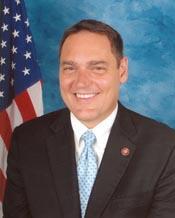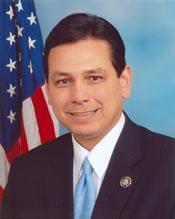
Stephen Clement “Steve” Austria (born October 12, 1958, in Cincinnati, Ohio) is an American politician and financial advisor who served as a Representative from Ohio in the United States Congress from 2009 to 2013. A member of the Republican Party, he represented Ohio’s 7th congressional district for two terms during a significant period in American history, participating in the democratic process and representing the interests of his constituents. He is the son of Jean C. (née Brockman), a nurse of German descent, and Dr. Clement G. Austria, a physician from Tiaong, Quezon, Philippines, who had moved to Ohio to attend medical school. Austria grew up in Xenia, Ohio, as the eldest of nine children, in a family that would later receive statewide and national recognition for its civic and community involvement.
Austria attended Carroll High School in Dayton, Ohio, graduating in 1977. He went on to earn a Bachelor of Arts degree from Marquette University in Milwaukee, Wisconsin, in 1982. After completing his undergraduate education, he began a career as a financial advisor, a profession that grounded him in fiscal matters and informed his later political emphasis on budgetary discipline and tax policy. In 1984, the Austria family was named “Ohio Family of the Year,” and they were subsequently honored at the national level when First Lady Nancy Reagan presented them with one of nine “The Great American Family” awards, reflecting both the family’s public service ethic and its prominence within Ohio’s civic life. His father also served on the Greene County Central Committee of the Republican Party, providing an early example of political engagement that influenced Austria’s own path into public office.
Austria’s formal political career began in the Ohio General Assembly. He was elected to the Ohio House of Representatives in 1998, where he served until 2000. During this early legislative period, he sponsored the “Internet Child Protection Act” in 1998, a measure aimed at safeguarding children from online exploitation that was later enacted into law. He subsequently advanced to the Ohio State Senate, winning election in 2000 and taking office in 2001 as the senator for the 10th District. In the State Senate, he served two terms and rose to leadership as the Senate Majority Whip. He also chaired key committees, including the Senate Highways and Transportation Committee and the Senate Judiciary Committee, roles that placed him at the center of state-level policy on infrastructure, transportation, and legal affairs. In 2004, he won re-election against Democratic challenger Charlie Hart with approximately 65 percent of the vote, underscoring his electoral strength in a region that often favored more moderate Republicans.
In 2008, following the retirement of nine-term Republican incumbent Dave Hobson, Austria sought and won the Republican nomination for Ohio’s 7th congressional district. In the general election held on November 4, 2008, he defeated Democratic candidate Sharen Neuhardt by a margin of 59 percent to 41 percent. When he was elected to the U.S. House of Representatives, Austria made history as the first son of a Filipino immigrant to be elected to the House and became the third person of Filipino heritage—after Bobby Scott of Virginia and John Ensign of Nevada—to serve in the House as a voting member. He is also recognized as the first first-generation Filipino to be elected to the United States Congress. A staunch fiscal and social conservative, Austria’s campaigns and congressional rhetoric emphasized Second Amendment rights, tax relief, opposition to abortion, and the elimination of waste in government, positions that were notable in a district that had historically elected more moderate Republicans.
Austria served in the U.S. House of Representatives from January 3, 2009, to January 3, 2013, contributing to the legislative process during his two terms in office. As a member of the House of Representatives, he participated in the democratic process and represented the interests of his constituents during a period marked by economic recovery efforts and significant national policy debates. He served on the powerful House Committee on Appropriations, where he sat on the Subcommittee on Commerce, Justice, Science, and Related Agencies; the Subcommittee on Military Construction, Veterans Affairs, and Related Agencies; and the Subcommittee on State, Foreign Operations, and Related Programs. Austria was active in both the Republican Study Committee, a caucus of conservative House members, and the Republican Main Street Partnership, which brought together more pragmatic and governance-focused Republicans. In foreign policy, he co-wrote a letter with Representative Steve Rothman in the wake of the March 2011 Itamar attack in Israel, asserting that any viable Middle East peace effort had to acknowledge that “Palestinian incitement continues and there is almost no effort by them to promote coexistence and peace.”
Austria was re-elected to a second term in the 2010 midterm elections, defeating Libertarian candidate John D. Anderson, Democratic candidate Bill Conner, and Constitution Party candidate David Easton. However, the political landscape in Ohio shifted dramatically after the 2010 United States census, when the state lost two seats in the House of Representatives due to relatively slow population growth. In the subsequent redistricting, Austria’s 7th District—stretching from Springfield to the southern suburbs of Columbus—was dismantled and its territory divided among three neighboring districts. His home in Beavercreek, a suburb of Dayton, was drawn into the newly configured 10th District (previously the 3rd District) represented by fellow Republican Mike Turner, who had served in Congress since 2003. Springfield, the largest city in Austria’s former district, was reassigned to the 8th District, represented by House Speaker John Boehner. One early redistricting proposal would have allowed the 10th District to retain roughly half of the territory from Turner’s and Austria’s old districts, but the final map placed Austria in a district that would have been more than 75 percent new to him. Ohio House Majority Leader Matt Huffman stated that the new map “essentially eliminated” any realistic chance for Austria to remain in Congress. In December 2011, Austria announced that he would not run for re-election to the 113th Congress in the 2012 elections, choosing to retire rather than challenge Turner in a primary or relocate to run in another district. Over the course of his 14 years in elected office at the state and federal levels, Austria never lost an election.
Following his departure from Congress in January 2013, Austria transitioned into the private sector and party leadership roles while maintaining an active presence in Republican politics. He established a consulting business and continued to serve as an advisor within the party, including on an advisory board for the Republican National Committee. By 2014, he was a member of the Republican State Central Committee representing Ohio’s 10th District and sat on the Republican National Committee’s Asian American Advisory Council, reflecting both his ongoing influence in state and national Republican circles and his role as a prominent Filipino American political figure. Austria has lived in Beavercreek, Ohio, for more than two decades with his wife, Eileen, and their three sons, Brian, Kevin, and Eric. A practicing Catholic, he remains engaged in public affairs and party activities, drawing on his legislative experience in the Ohio General Assembly and the U.S. House of Representatives and on his long-standing commitment to conservative principles and constituent service.
Congressional Record