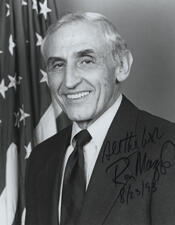
Stephen Ormsby (1759 – March 4, 1844) was a U.S. Representative from Kentucky and an early legal and political figure in the state’s formative years. He was born in County Sligo, Ireland, in 1759 and immigrated to the Thirteen Colonies as a boy, settling in Philadelphia, Pennsylvania. In Philadelphia he pursued classical studies and studied law, laying the foundation for a career that would span military service, the judiciary, banking, and national politics on the American frontier.
After completing his legal studies, Ormsby moved west into Kentucky, which was then part of Virginia’s trans-Appalachian frontier. He was admitted to the bar in 1786 and commenced the practice of law in Danville, Kentucky, one of the principal early legal and political centers of the region. The following year, in 1787, he became deputy attorney general of Jefferson County, Kentucky, an appointment that placed him at the center of legal affairs in the growing settlement around Louisville and established his prominence in the territory’s emerging legal community.
In addition to his legal work, Ormsby took part in the military defense of the frontier. He served in the early Indian wars and rose to the rank of brigadier general under General Josiah Harmar in the campaign of 1790, a series of operations aimed at asserting United States authority in the Northwest Territory. His public career expanded into judicial and electoral roles as Kentucky advanced toward and then achieved statehood. He served as judge of the district court of Jefferson County in 1791, reflecting the trust placed in him as a jurist during a period of rapid settlement and frequent land and boundary disputes. He was a presidential elector in 1796, participating in the national electoral process during the early years of the federal republic, and he served as a judge of the circuit court from 1802 to 1810. He was also a candidate for the United States Senate in 1798, an indication of his growing political stature in Kentucky, although he was not elected.
Ormsby’s national legislative career began with his election as a Democratic-Republican to the Twelfth Congress, where he served from March 4, 1811, to March 3, 1813, representing Kentucky in the U.S. House of Representatives. He was an unsuccessful candidate for reelection to the Thirteenth Congress in the regular election. However, following the death of Representative-elect John Simpson, Ormsby was elected to the Thirteenth Congress to fill the resulting vacancy. He took his seat on April 20, 1813, and was subsequently reelected to the Fourteenth Congress, serving continuously from April 20, 1813, to March 3, 1817. During these terms he served in Congress through the War of 1812 era, aligning with the Democratic-Republican majority that guided national policy in a period marked by conflict with Great Britain and debates over military preparedness, finance, and western expansion. He was an unsuccessful candidate for reelection to the Fifteenth Congress, which ended his service in the House.
Following his congressional career, Ormsby remained an important figure in Kentucky’s civic and economic life. In 1817 he was appointed the first president of the branch of the Bank of the United States at Louisville, Kentucky. In that role he helped oversee the operations of the nation’s principal financial institution in one of the key commercial centers of the Ohio Valley, at a time when questions of banking, credit, and internal improvements were central to the region’s development. His combined experience as lawyer, judge, soldier, and legislator informed his leadership in the banking sector and contributed to the institutional growth of early Louisville.
Stephen Ormsby died near Louisville, Kentucky, on March 4, 1844. He was interred in the Ormsby Burial Ground, later part of the property of the Kentucky Military Institute, at Lyndon, near Louisville, Kentucky. His career, spanning the late colonial era, the early republic, and the antebellum period, reflected the evolution of Kentucky from a frontier district to a fully integrated state within the Union, and his service in law, the judiciary, the military, finance, and Congress placed him among the notable early public men of the Commonwealth.
Congressional Record