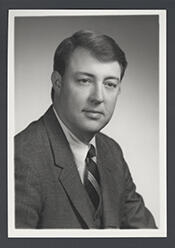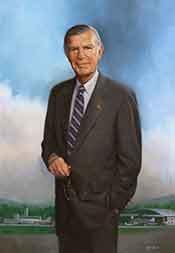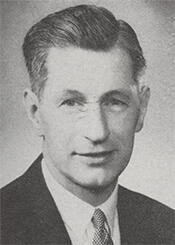
Stanley A. Prokop (July 29, 1909 – November 11, 1977) was a Democratic member of the United States House of Representatives from Pennsylvania who served one term in Congress from 1959 to 1961. Born on July 29, 1909, in Throop, a community in Lackawanna County, Pennsylvania, he came of age in the industrial and mining region of northeastern Pennsylvania, an area whose working-class concerns would later shape his public service and political outlook.
Prokop pursued higher education at Villanova University in Philadelphia, Pennsylvania. His studies there provided him with the academic foundation and broader perspective that would inform his later roles in both military and civilian public service. Although details of his specific course of study are not widely recorded, his attendance at Villanova placed him within a tradition of Catholic higher education that emphasized civic responsibility and leadership.
At the beginning of World War II, Prokop enlisted in the United States Army as a private, reflecting the widespread mobilization of his generation. He was assigned to the 30th Infantry Division, a unit that saw significant combat in the European Theater. Over the course of his military service, he rose through the ranks to become a captain, demonstrating leadership and earning the experience with veterans’ issues and military affairs that would later influence his postwar career and public responsibilities.
Following the war, Prokop returned to northeastern Pennsylvania and entered local public service. He served on the North Pocono Joint Board of Education for ten years, contributing to the governance and oversight of public education in his region. His decade-long tenure on the board reflected both his commitment to local institutions and his growing prominence in community affairs, and it provided him with practical experience in administration, budgeting, and policy at the local level.
Prokop’s political career at the national level began with his election to the United States House of Representatives in 1958. Running as a Democrat, he defeated incumbent Republican Congressman Joseph L. Carrigg and took office as a Representative from Pennsylvania in the Eighty-sixth Congress, serving from January 3, 1959, to January 3, 1961. His service in Congress occurred during a significant period in American history, at the close of the Eisenhower administration and on the eve of the Kennedy era, when issues of Cold War policy, economic growth, and emerging civil rights debates were increasingly prominent. As a member of the House of Representatives, Stanley A. Prokop participated in the legislative process, contributed to the work of the Democratic Party in Congress, and represented the interests of his Pennsylvania constituents during his one term in office.
In the 1960 election, Prokop sought a second term but was defeated by Republican challenger William Scranton, a moderate Republican who would later become governor of Pennsylvania. After leaving Congress in January 1961, Prokop continued his public service at the county level. He was appointed director of Veterans’ Affairs for Lackawanna County, Pennsylvania, a position that drew directly on his military background and his familiarity with the needs of former service members. He held this post for fourteen years, advocating for veterans and assisting them in securing benefits, services, and recognition for their service.
During his tenure in county government, Prokop moved to Lake Ariel, Pennsylvania, where he resided while continuing his work on behalf of veterans. He remained in the role of director of Veterans’ Affairs until his death on November 11, 1977—Veterans Day—a date that underscored the centrality of military and veterans’ issues in his life and career. Stanley A. Prokop died in Lake Ariel and was interred at St. Catherine Cemetery in Moscow, Pennsylvania. His public life, spanning military service, educational governance, congressional representation, and long-term advocacy for veterans, reflected a sustained commitment to the communities of northeastern Pennsylvania and to the broader democratic process of the United States.
Congressional Record