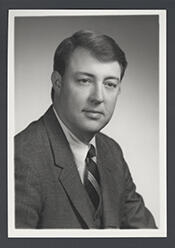
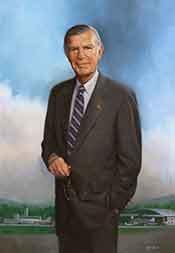
Stanley Woodward Davenport (July 21, 1861 – September 26, 1921) was an American politician and attorney from Pennsylvania who served as a Democratic member of the U.S. House of Representatives for Pennsylvania’s 12th congressional district from 1899 to 1901. His single term in Congress occurred during a significant period in American history at the turn of the twentieth century, during which he participated in the legislative process and represented the interests of his constituents in northeastern Pennsylvania.
Davenport was born on July 21, 1861, in Plymouth, Luzerne County, Pennsylvania, the son of Edwin Davenport and Mary McAlarney Davenport. He was raised in the Wyoming Valley region and educated in the public schools of Plymouth. Demonstrating early academic promise, he attended Wyoming Seminary, a prominent preparatory school in Kingston, Pennsylvania. He continued his education at Wesleyan University in Middletown, Connecticut, from which he graduated in 1884 with a Bachelor of Arts degree, an achievement that provided the foundation for his later professional and political career.
After completing his college education, Davenport returned to Plymouth and entered private business. For approximately two years he was associated with his brother, Andrew L. Davenport, who owned and operated a book store on Main Street in Plymouth. During this period he gained experience in local commerce and community affairs. He subsequently turned to the study of law, reading law under the tutelage of his cousin, the Honorable George Washington Shonk, a respected member of the Luzerne County Bar and a former Republican member of Congress. Under Shonk’s guidance, Davenport prepared for admission to the bar and, in 1890, was admitted to practice before the Luzerne County Bar. He commenced the active practice of law in 1891, establishing himself as an attorney in his native community.
Davenport’s public career began even before his formal admission to the bar. In 1884, the same year he graduated from Wesleyan University, he was elected Register of Wills of Luzerne County, Pennsylvania. In that election he was the only victorious Democrat on the ballot, an early indication of his political appeal in a region often contested between the major parties. He later returned to that office, serving again as Register of Wills of Luzerne County from 1894 to 1897. In addition to his work in the courthouse, he was appointed in 1893 as a Director of the Poor for the central district of Luzerne County. In that capacity he served for twenty-eight years as secretary and treasurer of the Central Poor Board, overseeing the administration of relief and institutional care for the indigent and demonstrating a long-standing commitment to public welfare and local administration.
In 1898, Davenport was nominated by the Democratic Party as its candidate for the U.S. House of Representatives from Pennsylvania’s 12th congressional district, which included portions of Luzerne County. He was elected and served in the Fifty-sixth Congress from March 4, 1899, to March 3, 1901. As a Democratic member of the House of Representatives, he contributed to the legislative process during one term in office, participating in debates and votes at a time when the nation was addressing issues related to industrial expansion, labor, and the aftermath of the Spanish–American War. His service in Congress reflected the concerns of his constituents in a coal-mining and industrial region of Pennsylvania. In 1900 he was an unsuccessful candidate for renomination, and his congressional service concluded at the end of his term.
Following his departure from Congress, Davenport resumed the practice of law in Plymouth, where he continued to be an active figure in local legal and civic affairs. He maintained his long association with the Central Poor Board, continuing his work as secretary and treasurer, and remained a recognized Democratic leader in his community. His legal practice and public service extended over several decades, and he was regarded as a prominent citizen in Luzerne County.
On June 13, 1889, Davenport married Mary Weir. The couple had two daughters: Marian Livingston Davenport, born May 1, 1890, who later became Mrs. Bryce Wadhams Blair of Charlestown, West Virginia; and Mary Isabel Davenport, born in February 1894, who later became Mrs. James Edward James of Bethlehem, Pennsylvania. His family life was centered in Plymouth, where he balanced his professional responsibilities with his role as husband and father.
Stanley Woodward Davenport died in Plymouth, Pennsylvania, on September 26, 1921, at the age of 60, following a prolonged illness. At the time of his death he was still serving in his long-held role connected with the Central Poor Board, marking nearly three decades of continuous service in that capacity. He was buried in Shawnee Cemetery in Plymouth, Pennsylvania, leaving a record of local, county, and national service that reflected both his legal training and his commitment to public life.
Congressional Record