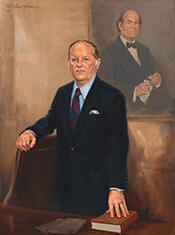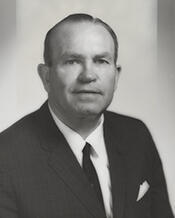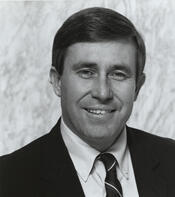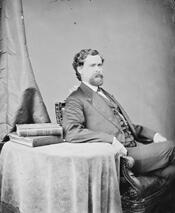
Solomon Lafayette Hoge (July 11, 1836 – February 23, 1909) was a lawyer, Union Army officer, judge, and Republican politician who served as a Representative from South Carolina in the United States Congress from 1869 to 1877. Active in both Ohio and South Carolina public life, he held judicial and executive offices during Reconstruction and played a notable role in the early integration of the United States Military Academy at West Point.
Hoge was born in Pickrelltown, Logan County, Ohio, and received his early education in the public schools of nearby Bellefontaine. He pursued a classical education at Geneva College in Northwood, Ohio, and subsequently studied law at the Cincinnati Law School, from which he graduated in 1859. Admitted to the bar that same year, he commenced the practice of law in Bellefontaine. Even before the Civil War, Hoge was an outspoken opponent of slavery. He believed that slavery should not only be barred from expanding into new states and territories, but should also be gradually phased out in the states where it already existed. He condemned President Franklin Pierce for recognizing the pro-slavery government in “Bleeding Kansas,” criticized the Supreme Court for its decision in Dred Scott v. Sandford, and denounced President James Buchanan for supporting that ruling.
With the outbreak of the Civil War in 1861, Hoge entered the Union Army, enrolling as a first lieutenant in the 82nd Ohio Volunteer Infantry. During his service he was promoted to captain and became the commander of a Federal infantry company. His wartime experience reinforced his Unionist and antislavery convictions and helped establish his credentials for public office in the turbulent years that followed the conflict.
After the war, Hoge relocated to Columbia, South Carolina, during the early phase of Reconstruction. Despite having relatively limited legal experience beyond his Ohio practice, he was elected in 1868 as an associate justice of the South Carolina Supreme Court. He served on the state’s highest court for approximately eighteen months. His tenure on the bench coincided with efforts by the Republican-led state government to reorganize and modernize South Carolina’s legal and political institutions in the aftermath of secession and war.
Hoge’s congressional career began when he successfully contested the election of Democrat J. P. Reed to the Forty-first Congress from South Carolina’s 3rd congressional district. Because Republicans controlled Congress and were scrutinizing elections in the former Confederate states, the two Democrats elected from South Carolina were unseated, and Hoge was declared the winner. He took his seat on April 8, 1869, and served the remainder of the term until March 3, 1871. A member of the Republican Party, he participated in the legislative process during a significant period in American history, representing the interests of his South Carolina constituents during Reconstruction. In 1872 he ran on the Republican ticket with Franklin J. Moses Jr., the party’s candidate for governor, and was elected comptroller general of South Carolina, defeating Independent Republican candidate J. Scott Murray of Anderson. In 1874 he again sought a seat in Congress from the 3rd district and defeated Conservative Party candidate Samuel McGowan, returning to the House of Representatives and serving until the close of the Forty-fourth Congress on March 3, 1877. In total, Hoge served in Congress from 1869 to 1877, encompassing two nonconsecutive terms.
During his time in Congress, Hoge became particularly noted for his role in expanding opportunities for African Americans in the military. In 1870 he appointed James Webster Smith, a former slave, to the United States Military Academy at West Point, marking the first time an African American had been admitted to the institution. Six years later, in 1876, he appointed another African American, Johnson Chesnut Whittaker, to West Point. These appointments were emblematic of the broader Reconstruction-era effort by Radical and moderate Republicans to secure civil and political rights for formerly enslaved people and to integrate federal institutions.
The end of Hoge’s congressional service coincided with the collapse of Republican power in South Carolina. Following Democrat Wade Hampton’s victory in the contentious 1876 gubernatorial election and the withdrawal of federal troops in 1877, South Carolina Republicans fell into disarray. As with many white Republican officeholders who had come to the state during Reconstruction—often labeled “carpetbaggers” by their opponents—Hoge left South Carolina. He returned to Ohio and settled in Kenton, where he resumed the practice of law. In 1882 he became president of the First National Bank of Kenton, extending his influence into local business and financial affairs.
In his later years, Hoge continued to reside in the Midwest. He died on February 23, 1909, in Battle Creek, Michigan. His remains were returned to Ohio, and he was interred in Grove Cemetery in Kenton, closing a life that had spanned the antebellum, Civil War, and Reconstruction eras and had included service as a soldier, jurist, state executive officer, and member of the United States House of Representatives.
Congressional Record