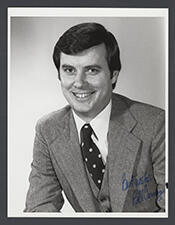
Silas Wood (September 14, 1769 – March 2, 1847) was a United States representative from New York who served in Congress for a decade in the early nineteenth century. He was born in West Hills on Long Island in the Province of New York, then a British colony, where he pursued classical studies in his youth. Growing up in the waning years of colonial rule and the early years of the new republic, he was part of the first generation of Americans to come of age after independence, a background that informed his later public service.
Wood attended the College of New Jersey, now Princeton University, and graduated in 1789. His education there reflected the classical curriculum of the period, emphasizing Latin, Greek, moral philosophy, and rhetoric. Following his graduation, he remained at Princeton as a teacher for five years, from 1789 to about 1794, contributing to the intellectual life of the institution at a time when it was training many future leaders of the new nation. During or after this period of teaching, he turned his attention to the study of law, preparing for a career in the legal profession.
After completing his legal studies, Wood was admitted to the bar and commenced practice in Huntington, New York, on Long Island. Establishing himself as an attorney in this growing community, he became involved in local affairs and built a professional reputation that would later support his entry into politics. He first sought federal office at the close of the eighteenth century, running for Congress in 1799 and again in 1800 in New York’s 1st congressional district, the district he would eventually represent. Although these early campaigns were unsuccessful, they marked the beginning of his long engagement with public life.
Wood’s legal and political standing led to his appointment as district attorney of Suffolk County, New York, in 1818 and again in 1821. In this capacity he was responsible for prosecuting criminal cases and representing the interests of the state in the county courts, a role that further enhanced his prominence in Long Island’s legal and civic circles. His work as district attorney coincided with a period of expanding population and economic development in the region, increasing the importance of effective legal administration.
In 1819 Wood entered national politics when he was elected as a representative to the Sixteenth Congress, beginning his service on March 4, 1819. He was subsequently reelected to the Seventeenth, Eighteenth, Nineteenth, and Twentieth Congresses, serving continuously until March 3, 1829. During this decade in the House of Representatives, he represented New York’s 1st congressional district, which included portions of Long Island. His tenure spanned the administrations of Presidents James Monroe and John Quincy Adams and the emergence of new political alignments that would lead to the Second Party System.
While in Congress, Wood held a notable committee leadership position. He served as chairman of the Committee on Expenditures in the Department of State during the Seventeenth and Eighteenth Congresses. In that role he was involved in overseeing and reviewing the financial operations and spending practices of the Department of State, reflecting the House’s growing concern with fiscal accountability in the federal government. His work on this committee placed him at the intersection of foreign affairs administration and congressional oversight during a period of expanding American diplomatic activity.
Wood sought to continue his congressional career in the late 1820s but was an unsuccessful candidate for reelection in 1828 to the Twenty-first Congress. His defeat came amid significant political realignments associated with the rise of Andrew Jackson and shifting party loyalties in New York and across the nation. After leaving Congress in March 1829, he returned to private life in Huntington, where he had long maintained his legal practice and local ties.
Silas Wood died in Huntington, New York, on March 2, 1847. He was interred in the Old Public Cemetery on Main Street in Huntington, a burial ground that holds many of the town’s early prominent citizens. His name has been preserved in the local educational landscape through the Silas Wood Sixth Grade Center of the South Huntington School District, which honors his contributions as an educator, lawyer, and public servant from Long Island who played a role in the early legislative history of the United States.
Congressional Record