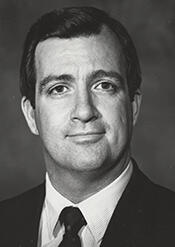
Shadrach Bond (November 24, 1773 – April 12, 1832) was a representative from the Illinois Territory to the United States Congress and, in 1818, was elected Governor of Illinois, becoming the new state’s first chief executive. In an example of American politics during the Era of Good Feelings, Bond was elected to both positions without opposition. As a member of the Unknown Party representing Illinois, Shadrack Bond contributed to the legislative process during two terms in office. His service in Congress occurred during a significant period in American history, during which he participated in the democratic process and represented the interests of his constituents in the developing Illinois Country.
Bond was born on November 24, 1773, in Frederick, Maryland, the son of Nicodemus Bond, a landowner, and Rachel (Stevenson) Bond. He was one of a large family of children—nine siblings are recorded, including a brother Benjamin, though most of the siblings’ identities are not well documented. Through his uncle, also named Shadrach Bond, a scout with George Rogers Clark’s Illinois Regiment in the American Revolutionary War, the younger Bond developed extensive connections in the Illinois Country; the uncle is usually referred to as Shadrach Bond, Sr., and the two men are sometimes confused because they later held some of the same offices in Illinois. The younger Bond received only a plain, limited formal education, but he learned of the rich farmland and opportunities in the West from his uncle. He was made a Freemason in Temple Lodge No. 26 in Reisterstown, Baltimore County, Maryland, before migrating west. In 1794, Bond and his family moved to what is now Monroe County in the American Bottom, a fertile section of the Mississippi River basin, where he established himself as a farmer, a vocation he would pursue for the remainder of his life.
After settling in the Illinois Country, Bond quickly became involved in local affairs and in the Masonic fraternity. On December 27, 1806, he became a member of The Western Star Lodge No. 107 at Kaskaskia, then in the Indiana Territory. A Democratic-Republican in national politics, he was elected to the Indiana Territorial Council, marking his entry into public service on the frontier. When the Illinois Territory was organized in 1809, Bond emerged as one of its leading figures. He was elected as the territory’s delegate to the United States House of Representatives, serving in Congress as the representative from the Illinois Territory. As a territorial delegate, he sat in the House without a formal vote on final passage of legislation but played a significant role in advocating for the interests of the sparsely settled but rapidly growing region. His tenure in Congress, encompassing two terms, coincided with a formative period in western expansion and the political development of the Old Northwest.
Bond’s personal life was closely tied to the communities in which he lived and served. On November 27, 1810, he married his distant cousin Achsah Bond at Nashville, Tennessee. The couple had seven children: two sons, Thomas Shadrach and Benjamin Nicodemus, and five daughters, Julia Rachel, Mary Achsah, Isabella Fell, and two daughters whose names are not recorded. Bond was a Methodist-Episcopalian and was described as being about six feet in height and weighing an estimated 200 pounds. He was regarded as sociable and popular, including among women, and his family and religious affiliations helped anchor his standing in frontier society. His Masonic commitments also deepened over time; on December 11, 1822, when the first Grand Lodge of Illinois was constituted, Bond was elected Illinois’ first Grand Master, and in the early 1830s he was again chosen Master of his local lodge.
When Illinois was admitted to the Union as the twenty-first state, Bond’s prominence in territorial affairs led to his selection as the state’s first governor. He was elected without opposition and inaugurated on October 6, 1818, at Kaskaskia, then the state capital. As Illinois’s first governor, Bond confronted the challenges of leading a new state with promising resources but almost no transportation infrastructure and very limited financial means. He made transportation and education his top priorities. Because the state lacked cash, the General Assembly passed, and Bond signed, legislation authorizing privately operated toll roads and bridges, including a principal road connecting Kaskaskia on the Mississippi River with Shawneetown on the Ohio River, then the state’s largest city. This road was eventually taken over by the state and, after nearly two centuries of improvements, much of its route is now part of Illinois Route 13. To address the state’s fiscal weakness, the legislature also enacted, with Bond’s approval, a tax on land owned by non-residents, and Bond developed a method for leasing state-owned salt springs to generate revenue.
Bond also supported broader internal improvements, notably advocating construction of a canal to connect Lake Michigan with the Illinois River, a project later realized as the Illinois and Michigan Canal. Although his efforts during his term did not result in immediate construction—the canal was not built until the 1840s—his advocacy helped establish the concept of such a waterway as a long-term state objective. In criminal justice, Bond was deeply concerned about serious offenses such as arson; under Illinois law at the time, arsonists, along with persons guilty of rape and murder, were eligible for the death penalty. Yet he also favored moderating punishments for lesser crimes and took steps to abolish the whipping post and pillory for misdemeanor offenses. His most controversial gubernatorial action involved banking policy. Bond attempted to veto an act of the General Assembly creating a non-capitalized State Bank of Illinois, which proposed to issue banknotes based largely on anticipated future growth rather than on specie reserves. Bond considered this practice dishonorable and argued that no state-chartered bank should operate without sufficient gold and silver to support its notes. The legislature overrode his objections, and the undercapitalized bank was chartered and soon went bankrupt, vindicating Bond’s concerns about unsound finance.
After serving a single term as governor, Bond did not seek reelection and returned to his farm near Kaskaskia. By this time, the center of Illinois politics had begun to shift, and the General Assembly moved the state capital from Kaskaskia to Vandalia, further removing him from day-to-day political leadership. Nevertheless, he continued in public service. President James Monroe appointed him chief record keeper of the Kaskaskia land office, a position of considerable importance in a land-hungry frontier state where the orderly recording of land titles and transactions was essential to development. As a respected local leader, Bond also helped raise the local share of funding needed to secure the construction of Illinois’s first penitentiary at Alton, reflecting his ongoing interest in the state’s institutional and civic growth.
In recognition of his contributions, Illinois Territory honored Bond during his lifetime by naming a newly created county for him. In 1817, the territorial legislature established Bond County, Illinois, in his honor, citing his service as a congressional delegate; this distinction came before his elevation to the governorship. Later, Governor Bond Lake in Greenville, Illinois, was also named for him, further commemorating his role in the state’s early history. His Masonic leadership continued into his later years, and he remained a figure of local prominence even as newer political leaders emerged in the expanding state.
Shadrach Bond died of pneumonia on April 12, 1832, on his farm at Kaskaskia. He was interred in Evergreen Cemetery in Chester, Illinois, where his grave is marked by the Governor Bond State Memorial, an obelisk that is the tallest and most prominent monument in the cemetery. In September 2008, this obelisk was toppled by the effects of Hurricane Ike, a reminder of the vulnerability of even the most enduring memorials. Bond’s life and career, spanning the transition from frontier territory to organized statehood, left a lasting imprint on Illinois’s political and institutional foundations.
Congressional Record