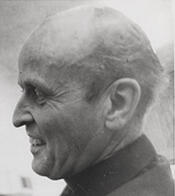
Selwyn Zadock Bowman (May 11, 1840 – September 30, 1928) was an American attorney and Republican politician from Massachusetts who served in a succession of local and state offices before representing his state in the United States House of Representatives. Over the course of a long legal and public career, he was particularly associated with Somerville and the Boston legal community, while maintaining close ties to the broader political life of Massachusetts in the late nineteenth century.
Bowman was born on May 11, 1840, in Charlestown, Massachusetts, to Zadock Bowman and Rosetta (Crane) Bowman. He was educated in the Charlestown public schools and at Charlestown High School, reflecting the growing opportunities for formal education in mid-nineteenth-century New England. In 1856 he moved with his parents to nearby Somerville, Massachusetts, a then-developing suburb of Boston that would remain his principal place of residence for much of his life and the base of his early political activity.
Pursuing higher education at an early age, Bowman entered Harvard University and graduated in 1860. He then continued his studies at Harvard Law School, from which he received his law degree in 1863. In the same year he was admitted to the bar, commencing the practice of law in Boston while continuing to reside in Somerville. His legal practice in Boston placed him in the center of the Commonwealth’s commercial and professional life, and his dual connection to Boston and Somerville helped to shape his subsequent public career.
Bowman’s entry into public office came through local and state service in Massachusetts. He served as a member of the Massachusetts House of Representatives in 1870 and 1871, and again in 1875, participating in the legislative sessions of those years as the state confronted issues of post–Civil War economic development and governance. In municipal affairs, he served as city solicitor of Somerville in 1872 and 1873, acting as the chief legal officer for the city and advising on matters of municipal law and administration. He advanced to the upper chamber of the state legislature as a member of the Massachusetts Senate in 1876 and 1877, further consolidating his reputation as a capable Republican legislator and attorney.
Building on this record of state and local service, Bowman was elected as a Republican to the Forty-sixth and Forty-seventh Congresses, serving in the U.S. House of Representatives from March 4, 1879, to March 3, 1883. During his tenure in Congress he represented a Massachusetts district at a time when national debates centered on issues such as post-Reconstruction policy, federal finance, and industrial growth. Although details of his specific committee assignments and legislative initiatives are less extensively documented, his service placed him among the Massachusetts delegation during a period of significant political realignment. He was an unsuccessful candidate for reelection in 1882 to the Forty-eighth Congress, ending his congressional service after two terms.
After leaving Congress, Bowman returned to Somerville and resumed the practice of law in Boston, reestablishing himself in the profession that had underpinned his political career. He again took up municipal responsibilities as city solicitor of Somerville from 1888 to 1897, providing legal counsel to the city over nearly a decade of growth and urban development. His long tenure in that office reflected both his legal expertise and the confidence placed in him by local officials and citizens.
In his later years, Bowman continued his legal work while gradually shifting his residence. In 1914 he moved from Somerville to Cohasset, Massachusetts, a coastal town southeast of Boston, but he continued to practice law in Boston, maintaining his professional connections well into advanced age. Selwyn Zadock Bowman died in Framingham, Massachusetts, on September 30, 1928. He was interred in Mount Auburn Cemetery in Cambridge, Massachusetts, a resting place for many notable figures in the political, legal, and cultural history of New England.
Congressional Record