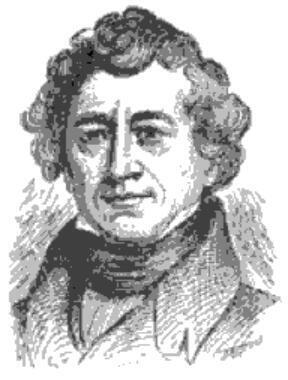
Selah Brewster Strong (May 1, 1792 – November 29, 1872) was an American lawyer, jurist, and Democratic politician from New York who served one term in the U.S. House of Representatives from 1843 to 1845. He was born on May 1, 1792, in Brookhaven, Suffolk County, New York, the son of Judge Thomas Sheppard Strong and Hannah Brewster Strong. Through his mother, the daughter of Joseph Brewster of Setauket and Rebecca Mills, he was connected to prominent colonial families; some genealogies identified her as a descendant of Elder William Brewster of Mayflower fame through his son Jonathan Brewster, though later research has shown she was in fact descended from Rev. Nathaniel Brewster of New Haven and his wife Sarah Ludlow, who died in the Town of Brookhaven. She was also a descendant of Lieutenant Governor Roger Ludlow. On his father’s side, Strong’s paternal grandmother was Anna Strong, remembered as the only female member of the Culper Ring, the Revolutionary War spy network based in Setauket, New York. He was also a descendant of Lion Gardiner, the early English settler and soldier who founded the first English settlement in what became the State of New York and whose legacy includes Gardiners Island, one of the largest privately owned islands in the United States.
Strong received a classical education and graduated from Yale College in 1811, reflecting the family’s established position in the region and its longstanding engagement in public affairs. After leaving Yale, he read law and pursued legal studies in preparation for a professional career at the bar. He was admitted to the bar in 1814 and commenced the practice of law in New York City, entering a legal community that was expanding rapidly in the early nineteenth century as the city grew in commercial and political importance.
During the War of 1812, Strong undertook military service in the New York militia. He was commissioned as an ensign and quartermaster in the 10th Regiment, Third Brigade, New York City and County Troops, and in 1815 he was promoted successively to lieutenant and then to captain. His early legal career advanced in tandem with his public responsibilities: in 1817 he was appointed a master in chancery, a judicial officer assisting in equity matters. In 1820 he returned to his native Brookhaven, where he established himself as a leading attorney in Suffolk County. On August 14, 1823, he married Cornelia Udall, who had been born at Islip, Long Island, on March 20, 1806, the daughter of Dr. Richard Udall and Prudence Carll, herself the daughter of Silas Carll of Huntington, Long Island. Cornelia’s brother, Richard Udall, later studied law under Strong, further intertwining the professional and familial networks of Long Island’s legal community. In 1825 Strong’s military association continued when he was appointed judge advocate of the First Division of the New York State Infantry.
Strong’s prominence in local legal affairs grew steadily. He was appointed District Attorney of Suffolk County in 1821 and held that office, with the exception of a nine‑month interval in 1830, until 1847. In this capacity he was responsible for prosecuting criminal cases and advising county officials, and he became a central figure in the administration of justice in eastern Long Island over more than two decades. His long tenure as district attorney coincided with a period of significant demographic and economic change in New York, and his work in that role helped establish his reputation as a capable and reliable public servant within the Democratic Party.
In national politics, Strong was elected as a Democrat to the Twenty‑eighth United States Congress, representing New York and serving from March 4, 1843, to March 3, 1845. His single term in the House of Representatives occurred during a significant period in American history marked by debates over territorial expansion, economic policy, and the evolving balance between federal and state authority. As a member of the Democratic Party representing New York, he contributed to the legislative process, participated in the democratic governance of the nation, and represented the interests of his constituents in Congress. After the completion of his term, he did not seek immediate reelection and instead resumed the practice of law.
Strong’s legal and judicial career advanced further after his congressional service. In March 1846 he was appointed judge of the Second Judicial Circuit of New York, although he ultimately did not take office in that position. The following year, with the reorganization of the state judiciary under the New York Constitution of 1846, he was elected a justice of the New York Supreme Court for the 2nd District. He served on that court from 1847 to 1849 and again from 1852 to 1859. By virtue of his position as a Supreme Court justice, he was ex officio a judge of the New York Court of Appeals, the state’s highest court, in 1849 and again in 1859, participating in the appellate review of significant legal questions affecting the rapidly developing state. His judicial work during these years placed him at the center of New York’s evolving legal system in the mid‑nineteenth century.
In addition to his judicial service, Strong continued to play a role in shaping the framework of state government. He was a delegate to the New York State Constitutional Convention of 1867–1868, which undertook a comprehensive review of the state’s fundamental law in the aftermath of the Civil War. His participation in the convention reflected both his long experience in public office and his standing as an influential legal mind in New York.
Selah Brewster Strong spent his later years on his estate at Setauket, in the Town of Brookhaven, close to the communities and family lands with which he and his ancestors had long been associated. He died there on November 29, 1872. His interment took place on his estate, bringing to a close a life that linked the colonial and Revolutionary heritage of Long Island with the legal and political institutions of nineteenth‑century New York and the United States.
Congressional Record