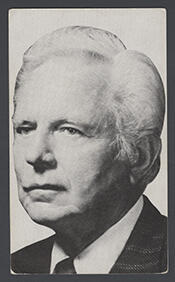
Samuel Finley Vinton (September 25, 1792 – May 11, 1862) was an American lawyer and legislator who served as a member of the United States House of Representatives from Ohio from March 4, 1823, to March 3, 1837, and again from March 4, 1843, to March 3, 1851. His long tenure in Congress, spanning eleven terms in office, placed him at the center of major national debates during a formative period in American political and constitutional development.
Vinton was born on September 25, 1792, in South Hadley, Hampshire County, Massachusetts. He was raised in New England and came of age in the early years of the American republic, a context that shaped his later interest in law, public affairs, and the structure of the federal government. His early life in Massachusetts exposed him to the political and intellectual currents of the post-Revolutionary era, including the growth of party politics and the expansion of the nation westward, influences that would later inform his legislative work on issues of national policy and internal improvements.
Vinton pursued a formal education and studied at Williams College in Williamstown, Massachusetts, where he received a classical education that prepared him for the legal profession. After completing his studies, he read law and was admitted to the bar. Seeking opportunity in the expanding West, he moved to Ohio, which had been admitted to the Union only a few years earlier and was rapidly developing in population and economic importance. He established a law practice in Gallipolis, in southeastern Ohio along the Ohio River, where he built a professional reputation that soon led him into public life.
Vinton’s political career began in Ohio at a time when the state was emerging as a key player in national politics. Aligning himself with the emerging opposition to Jacksonian Democracy, he became associated with the National Republican movement and later the Whig Party. In this capacity, he was elected to the United States House of Representatives as a representative from Ohio, first serving from March 4, 1823, to March 3, 1837. During these early years in Congress, he participated in debates over federal economic policy, internal improvements, and the balance of power between the federal government and the states, reflecting the central issues of the era.
After a period out of office, Vinton returned to the House of Representatives and served again from March 4, 1843, to March 3, 1851. As a member of the Whig Party representing Ohio, he contributed to the legislative process during eleven terms in office, participating in the democratic process and representing the interests of his constituents during a significant period in American history. In his later congressional service, he was recognized as an able parliamentarian and an influential voice on fiscal and administrative questions, including public lands and federal finance. His work in Congress coincided with the annexation of new territories, the intensifying national debate over slavery, and the political realignments that preceded the Civil War, and he was regarded as one of the more experienced and knowledgeable members of the House.
Vinton’s long service in Congress made him a prominent Whig figure from Ohio, and he was frequently consulted on questions of legislative procedure and public policy. His reputation for careful analysis and his command of complex financial and legal issues earned him respect across party lines. Although he never sought the highest national offices, his influence was felt in the shaping of federal legislation and in the development of Ohio’s role within the Union during a time of rapid national expansion and growing sectional tension.
In his later years, after leaving Congress in 1851, Vinton withdrew from active national political life and returned to his legal and personal affairs in Ohio. He lived to see the onset of the Civil War, a conflict that grew out of many of the unresolved issues that had occupied Congress during his tenure. Samuel Finley Vinton died on May 11, 1862, in Washington, D.C. His career left a record of sustained legislative service, marked by his participation in key debates over the nation’s economic and political direction during the first half of the nineteenth century.
Congressional Record