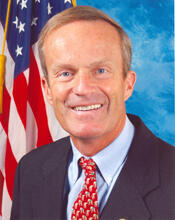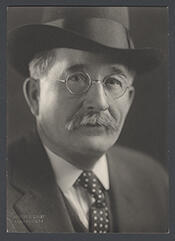
Samuel Azariah Shelton (September 3, 1858 – September 13, 1948) was a United States Representative from Missouri’s 16th congressional district and a member of the Republican Party who served one term in the U.S. House of Representatives from 1921 to 1923. His congressional service took place during a significant period in American history, in the early post–World War I era, when the nation was adjusting to peacetime conditions and addressing economic, social, and political change.
Shelton was born near Waterloo, Lauderdale County, Alabama, on September 3, 1858. During his childhood, he experienced the upheaval of the Civil War and its aftermath in the American South. In 1869, when he was still a boy, he moved with his widowed mother to Webster County, Missouri. This relocation to the rural Ozarks region shaped his early life and outlook, placing him within a largely agricultural community in a state that was itself still recovering from the divisions of the Civil War. Growing up in Missouri, Shelton became acquainted with the concerns of small-town and farming constituencies that would later form the core of his political base.
Details of Shelton’s formal education are not extensively documented, but like many men of his generation and region, he likely received a basic common-school education in Missouri. His early years in Webster County would have involved work and responsibilities typical of a frontier and postwar rural environment, fostering a practical understanding of local economic and social conditions. This background contributed to his credibility as a representative of his district’s interests when he eventually entered public life.
By the time Shelton sought national office, he had become identified with the Republican Party in Missouri, which, in the early twentieth century, was working to strengthen its position in a state long dominated by Democrats. He was elected as a Republican to the Sixty-seventh Congress, representing Missouri’s 16th congressional district, and served from March 4, 1921, to March 3, 1923. His election placed him in the U.S. House of Representatives during the administration of President Warren G. Harding, a period marked by debates over postwar economic policy, veterans’ issues, and the federal government’s role in regulating business and industry.
During his single term in Congress, Shelton participated in the legislative process and the broader democratic governance of the nation, representing the interests of his Missouri constituents in the House of Representatives. As a member of the Republican majority, he contributed to deliberations on legislation that reflected the priorities of the early 1920s, including efforts to stabilize the economy after World War I and to address the needs of rural communities. Although specific committee assignments and sponsored measures are not extensively recorded, his service formed part of the broader congressional response to the challenges of the postwar era.
Shelton chose not to be a candidate for renomination in 1922 to the Sixty-eighth Congress, thereby concluding his federal legislative career after one term. His decision ended his brief but notable participation in national politics, and he returned to private life in Missouri. His withdrawal from the electoral arena reflected a pattern common among early twentieth-century representatives who served short terms and then resumed professional or local pursuits outside of Washington.
Samuel Azariah Shelton died on September 13, 1948, closing a life that spanned from the immediate post–Civil War period through World War II and into the modern era. Remembered primarily for his service as a U.S. Representative from Missouri’s 16th congressional district, he exemplified the experience of many regional politicians who rose from rural communities to serve a term in Congress, representing local interests during a transformative period in American history.
Congressional Record