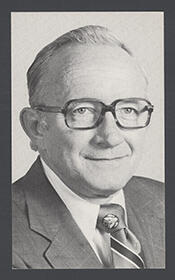
Samuel Tredwell Sawyer (1800 – November 29, 1865) was an American attorney, newspaper editor, and politician from North Carolina and Virginia. Although he served as a United States Representative, he is chiefly remembered today for his relationship with the enslaved woman Harriet Jacobs and for fathering her two children, who figure prominently in her 1861 autobiography, Incidents in the Life of a Slave Girl.
Sawyer was born in Edenton, Chowan County, North Carolina, in 1800. He was educated locally at Edenton Academy and later attended the University of North Carolina at Chapel Hill. After completing his studies, he read law, was admitted to the bar, and commenced the practice of law in his native town of Edenton, establishing himself as a member of the local legal and political community.
Sawyer entered public life as a state legislator. He was elected to the North Carolina House of Representatives, in which he served from 1829 to 1832. After several years in the lower house, he advanced to the North Carolina Senate, winning election there in 1834. His state legislative service during the late 1820s and early 1830s coincided with a period of growing sectional tensions and debates over internal improvements and the expansion of slavery, issues that framed the broader political environment in which he operated.
In national politics, Sawyer was elected as a member of the Whig Party to the Twenty-fifth Congress, representing North Carolina in the U.S. House of Representatives from March 4, 1837, to March 3, 1839. During his single term in Congress, he served as chairman of the Committee on Expenditures on Public Buildings, participating in the legislative process and representing the interests of his constituents at a time of economic and political upheaval following the Panic of 1837. He was an unsuccessful candidate for reelection to the Twenty-sixth Congress and thus concluded his federal legislative service after one term. While serving in Congress, he moved with his family to Washington, D.C.
Sawyer’s personal life has drawn particular historical attention because of his relationship with Harriet Jacobs, an enslaved Black woman in Edenton who was seeking protection from the abuse of her enslaver, Dr. James Norcom. As a young man, before his marriage, Sawyer entered into a relationship with Jacobs, and they had two children together, Joseph and Louisa. Under the laws of slavery, both children were born enslaved, inheriting their mother’s legal status. After Jacobs went into hiding to escape Norcom, she arranged with Sawyer and her brother, John S. Jacobs, to purchase Joseph and Louisa in order to prevent their sale farther south. In her autobiography, Jacobs recounts that Sawyer promised to manumit their children but failed to follow through. In Incidents in the Life of a Slave Girl, published in 1861 under a pseudonym, Sawyer appears under the fictional name “Mr. Sands,” and his actions toward Jacobs and their children are a central part of her narrative.
In August 1838, after his relationship with Jacobs had ended, Sawyer married Lavinia Peyton. The couple had three daughters: Fannie Lenox, Sarah Peyton, and Laura. His marriage and growing family coincided with his tenure in national politics, and he relocated them to Washington, D.C., during his service in Congress. Meanwhile, Harriet Jacobs ultimately escaped from North Carolina, traveling first to Philadelphia and then to New York. There she completed and published her autobiography, in which Sawyer’s role in her life and in the fate of their children is extensively described and has shaped his posthumous reputation.
Following his congressional defeat, Sawyer moved from North Carolina to Norfolk, Virginia, where he resumed the practice of law and became active in journalism. He served for several years as editor of the Norfolk Argus, a local newspaper that engaged with the political and commercial life of the port city. On May 16, 1853, he was appointed collector of customs at Norfolk, a federal post he held until April 6, 1858. After leaving that office, he moved again to Washington, D.C., maintaining his connections to national political and administrative circles.
During the American Civil War, Sawyer entered Confederate service. On September 17, 1861, he was appointed a commissary with the rank of major in the Confederate forces, a position involving the procurement and distribution of supplies. He served in that capacity until August 2, 1862. In his later years he moved northward, and he died in Bloomfield, New Jersey, on November 29, 1865, shortly after the end of the Civil War and the abolition of slavery that had so profoundly shaped both his public career and his private life.
Congressional Record