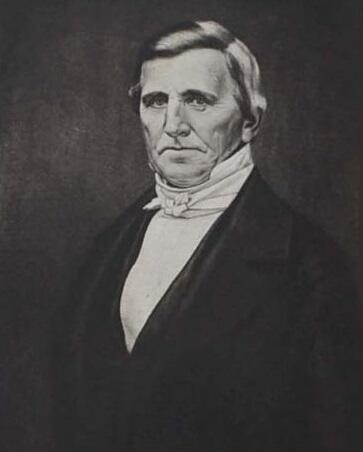
Samuel Caldwell Sample (August 15, 1796 – December 2, 1855) was an American lawyer, jurist, banker, and politician who served a single term as a United States Representative from Indiana from 1843 to 1845. A member of the Whig Party, he represented Indiana during a significant period in American political development, participating in the legislative process and advocating for the interests of his constituents as the first representative of the state’s newly created 9th congressional district.
Sample was born on August 15, 1796, in Elkton, Cecil County, Maryland, the son of John Sample. His father served as a captain under Thomas Veazey during the War of 1812, a background that situated the family within the patriotic and military currents of the early republic. Samuel Sample attended a rural school in his youth and received a basic formal education typical of the period. As a young man he learned the trade of carpentry and assisted his father in his contracting business, gaining practical experience in manual labor and construction before turning to the study of law.
Around 1823, Sample moved with his father from Maryland to Connersville, Indiana, as part of the broader westward migration into the Old Northwest Territory. In Connersville he began reading law, following the customary apprenticeship model of legal education in the early nineteenth century. After several years of study, he was admitted to the bar in 1833, marking the formal start of his legal career. Shortly thereafter, he relocated to South Bend, Indiana, which would remain his principal home and the center of his professional and political life.
Upon establishing his law practice in South Bend, Sample quickly entered public service. In 1834 he was elected prosecuting attorney, a position that placed him at the forefront of local law enforcement and courtroom advocacy. His reputation as a lawyer and public official led to his election in 1836 as judge of the ninth judicial circuit of Indiana. As a circuit judge, he presided over a broad range of civil and criminal cases during a formative period in the state’s legal development. He held this judicial office until 1843, when he resigned in order to take his seat in the United States Congress. In addition to his legal and judicial work, Sample was active in local economic affairs and served as the first president of the First National Bank of South Bend, reflecting his prominence in the civic and financial life of the community.
Sample was elected as a Whig to the Twenty-eighth Congress and served from March 4, 1843, to March 3, 1845. He was the first representative from Indiana’s 9th congressional district, which had been created as the state’s population expanded. During his single term in the House of Representatives, he participated in the national legislative process at a time marked by debates over economic policy, territorial expansion, and the role of the federal government. As a Whig, he was aligned with a party that generally supported congressional supremacy over the executive branch, internal improvements, and a more active federal role in fostering economic development. His tenure in Congress ended after he was defeated for reelection in 1844 by Democrat Charles W. Cathcart.
Following his departure from Congress in 1845, Sample returned to South Bend and resumed the practice of law. He continued to be a respected figure in the local bar and remained engaged in the legal and civic affairs of the community. His post-congressional years were devoted primarily to his profession and to the ongoing development of South Bend, which was emerging as an important regional center in northern Indiana.
In his personal life, Sample married Ann Howard of his native Elkton, Maryland, maintaining a connection to his birthplace even as his career unfolded in Indiana. He lived in South Bend for the remainder of his life. Samuel Caldwell Sample died at his home in South Bend on December 2, 1855. He was interred in City Cemetery in South Bend, Indiana, leaving a legacy as a lawyer, judge, banker, and congressman who helped shape the early civic and political institutions of his adopted state.
Congressional Record