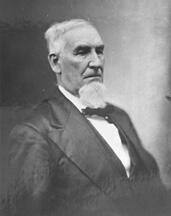
Samuel Price (July 28, 1805 – February 25, 1884) was a Virginia lawyer and Democratic politician who played a significant role in the political life of Virginia and in the establishment of the state of West Virginia during the American Civil War. Upon West Virginia’s statehood, he became its lieutenant governor and was later appointed as a United States senator from West Virginia, serving one term in the United States Congress from 1875 to 1877.
Price was born in Fauquier County, Virginia, on July 28, 1805. In 1815 he moved with his parents to Preston County, then part of Virginia and now within the state of West Virginia. He received preparatory training rather than a formal collegiate education and pursued legal studies by reading law, a common practice of the period. This early relocation to what would become West Virginia and his legal training laid the foundation for his long career in law and public service.
Admitted to the Virginia bar in 1832, Price began practicing law in Nicholas and Braxton Counties. Even before his formal admission to the bar, he had entered public service: he was elected clerk of Nicholas County in 1830 and became the county’s Commonwealth’s Attorney in 1833. He also owned slaves, a fact that placed him within the slaveholding legal and political elite of antebellum Virginia. From 1836 to 1850 he served as prosecuting attorney for Braxton County, further consolidating his position as a prominent regional lawyer.
Price’s legislative career began in the Virginia House of Delegates, where he represented Nicholas County part time from 1834 to 1836. In 1836 he moved to Wheeling, Virginia (now West Virginia), and in 1838 he settled in Lewisburg, Virginia (now Lewisburg, West Virginia), which became his long-term home and political base. He represented Braxton County in the Virginia House of Delegates from 1847 to 1850 and again in 1852, participating in state legislative affairs during a period of growing sectional tension. He was a delegate to the Virginia Constitutional Convention of 1850, which addressed issues of representation, suffrage, and governance within the Commonwealth.
As the secession crisis deepened, Price continued to play a visible role in Virginia politics. He served as a delegate to the Virginia Secession Convention of 1861, where he voted against secession, aligning himself with the Unionist minority in that body. During the Civil War, as the northwestern counties of Virginia moved toward separation and the formation of a new state, Price emerged as one of the figures who helped to establish West Virginia. In 1863 he was elected the fifth lieutenant governor of Virginia under the Restored (Unionist) government and served in that capacity until the close of the Civil War, a period that overlapped with the creation and early organization of West Virginia’s state government.
After the war, Price remained active in the political development of the new state. A member of the Democratic Party, he was a delegate to the West Virginia constitutional convention of 1872 and served as its president, helping to shape the state’s postwar constitutional framework. His prominence in West Virginia politics led to his selection for national office. He was appointed as a Democrat to the United States Senate from West Virginia to fill the vacancy caused by the death of Senator Allen T. Caperton. Price served in the Senate from August 26, 1876, to January 26, 1877, during a significant period in American history at the close of Reconstruction. His service in Congress, encompassing one term in office, involved participation in the legislative process and representation of West Virginia’s interests, although he was an unsuccessful candidate in 1876 for election to fill the vacancy on a permanent basis.
In his later years, Price continued to reside in Lewisburg, where he remained a respected figure in the community. He died in Lewisburg on February 25, 1884. His remains were interred in the Stuart Burying Ground at Stuart Manor, near Lewisburg. His residence, known as the Gov. Samuel Price House in Lewisburg, was later recognized for its historical significance and was listed on the National Register of Historic Places in 1975. His papers, documenting his career as a lawyer and politician, are preserved in the West Virginia & Regional History Center at West Virginia University.
Congressional Record