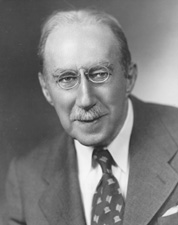
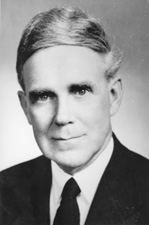
Samuel John Potter (June 29, 1753 – October 14, 1804) was a United States senator from Rhode Island and a prominent Country Party anti-Federalist leader who later served in the U.S. Senate as a member of the Republican (Democratic-Republican) Party. Over the course of his public life, he played a notable role in Rhode Island’s transition from the Revolutionary era into the early national period, participating in both state and federal governance and representing the interests of his constituents during a formative time in American political history.
Potter was born in South Kingstown, Rhode Island, on June 29, 1753. He was one of seven children born to John Potter (1724–1787) and his second wife, Elizabeth (née Hazard) Potter (1729–1806). Before marrying Elizabeth Hazard, his father had been married to Mary Hazard, Elizabeth’s elder sister, reflecting the close interconnections among leading Rhode Island families of the period. Potter’s paternal grandparents were Ichabod Potter III and Sarah (née Robinson) Gardiner, and his maternal grandparents were Mary (née Robinson) Hazard and Stephen Hazard, a justice of the Inferior Court of Common Pleas. These family ties placed him within a network of established colonial and early state leaders in Rhode Island.
Potter completed preparatory studies in his youth and went on to study law. After his legal training, he was admitted to the bar and entered into practice, establishing himself in the profession at a time when legal expertise was increasingly important in the new republic. His legal background helped shape his political views and provided a foundation for his later service in state and national office. As a prominent Country Party anti-Federalist leader in Rhode Island, he was associated with those who were skeptical of a strong centralized federal government and who sought to protect local autonomy and the interests of small farmers and rural communities.
On September 10, 1788, Potter married Ann Nancy Segar in South Kingstown. Ann was a daughter of Joseph Segar and Mary (née Taylor) Segar. The marriage further linked Potter to other established Rhode Island families. Together they were the parents of at least one known child, Isaac Fenner Potter (1796–1883), who later married Sally Ennis in 1839. Potter’s family life unfolded alongside his growing responsibilities in public affairs, and his household remained rooted in the South Kingstown area.
Potter’s political career advanced significantly in the 1790s. He served as deputy governor of Rhode Island from 1790 to 1799, during which time the title of the office was changed to lieutenant governor, reflecting evolving state governmental structures in the post-Revolutionary era. He returned to the same office from 1800 to 1803, demonstrating sustained confidence in his leadership by the state’s electorate. In addition to his executive responsibilities, Potter took part in the national electoral process as a presidential elector in 1792 and again in 1796, participating directly in the selection of the early presidents of the United States and helping to shape the course of the new federal government.
Potter’s service in Congress came at a significant period in American history, as the young republic grappled with questions of federal power, party formation, and national policy. Elected as a Democratic-Republican (often referred to at the time as the Republican Party) to the United States Senate from Rhode Island, he began his term on March 4, 1803. In this role, he contributed to the legislative process during one term in office, representing Rhode Island’s interests in the upper chamber of Congress. His tenure coincided with the administration of President Thomas Jefferson and with major developments such as the Louisiana Purchase, a context in which Democratic-Republican principles of limited federal authority and agrarian republicanism were central to national debates.
Samuel John Potter’s congressional service was cut short by his untimely death in office. He died in Washington, D.C., on October 14, 1804, while still serving as a United States senator. His passing placed him among the early members of Congress who died while in federal office between 1790 and 1899. Following his death, Potter was interred in the family burial ground at Kingston (formerly known as Little Rest) in Washington County, Rhode Island, returning him to the community and region where his life had begun and where his family had long been established.
Congressional Record