United States Representative Directory

Samuel McKee

Samuel McKee served as a representative for Kentucky (1809-1817).

  • Republican
  • Kentucky
  • District 7
  • Former
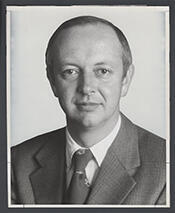
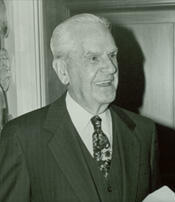
Portrait of Samuel McKee Kentucky
Role Representative

Current assignment referenced in the congressional directory.

State Kentucky

Representing constituents across the Kentucky delegation.

District District 7

District insights and legislative focus areas.

Service period 1809-1817

Years of public service formally recorded.

Font size

Biography

Samuel McKee is a name shared by several notable nineteenth‑century American public figures, most prominently three Kentuckians who served in the United States House of Representatives or the Union Army, and an American attorney and judge. The individuals most often referenced in congressional and historical records are Samuel McKee (politician, born 1774), a U.S. Representative from Kentucky; Samuel McKee (born 1832), a Union Army colonel from Kentucky; Samuel McKee (politician, born 1833), a Union Army captain and U.S. Representative from Kentucky; and Samuel B. McKee, an American attorney and judge. Each played a distinct role in the political, military, or judicial life of the United States during a period marked by westward expansion, sectional conflict, and civil war.

Samuel McKee, the politician born in 1774, was part of the early generation of Kentucky leaders who helped shape the young state’s representation in the federal government. Born in 1774, during the final years of the colonial era, he came of age as the United States was establishing its institutions and expanding westward into territories that would include Kentucky. His early life was intertwined with the frontier character of the region, and like many of his contemporaries, he pursued legal and political studies that prepared him for public service. By the time Kentucky had secured its place as a state, McKee had emerged as a figure capable of representing its interests in the national legislature.

McKee’s congressional service reflected the concerns of a growing western state in the early nineteenth century. As a U.S. Representative from Kentucky, he served in the House of Representatives during a period when issues such as internal improvements, relations with Native American nations, and the balance between federal and state authority were at the forefront of national debate. His tenure placed him among the cohort of Kentucky politicians who helped articulate the state’s position on matters of national policy, including questions of economic development and territorial security. He remained active in public life until his death in 1826, leaving a record as one of the early federal legislators from Kentucky.

Another prominent bearer of the name, Samuel McKee (born 1832), was a Union Army colonel from Kentucky whose career was defined by the American Civil War. Born in 1832, he belonged to a later generation of Kentuckians who faced the crisis of secession and civil conflict. Kentucky’s status as a border state made military and political loyalties particularly fraught, and McKee’s decision to serve as a colonel in the Union Army placed him firmly on the side of preserving the United States. His early life and education prepared him for leadership, and by the outbreak of war he was positioned to take on significant responsibility in the Union forces.

As a Union Army colonel from Kentucky, the 1832‑born Samuel McKee would have been engaged in organizing, leading, and disciplining troops drawn from a state divided in its sympathies. Colonels in the Civil War typically commanded regiments, oversaw training, and led men in battle or in critical support operations. McKee’s service contributed to the broader Union war effort in a theater where control of key transportation routes and loyalty of the local population were strategically vital. His military career was cut short by his death in 1862, in the midst of the conflict, marking him as one of many officers whose lives were claimed during the war.

A third figure, Samuel McKee (politician, born 1833), combined military and political service in a manner characteristic of many Civil War–era leaders. Born in 1833, he was a near contemporary of the 1832‑born colonel, and like him, he served in the Union Army from Kentucky. His rank as a Union Army captain placed him in a position of direct command over companies of soldiers, responsible for their conduct in the field and in camp. His wartime experience, leadership, and Unionist credentials helped propel him into political life after or alongside his military service.

The 1833‑born Samuel McKee went on to serve as a U.S. Representative from Kentucky, joining the House of Representatives during the turbulent Reconstruction and postwar years when the nation grappled with the consequences of emancipation, the reintegration of the former Confederate states, and the redefinition of federal and state powers. As a Union Army captain and later a member of Congress, he embodied the transition from wartime command to peacetime governance. His legislative work would have been informed by his military background and by Kentucky’s complex position in the postwar political landscape. He remained active in public affairs until his death in 1898, spanning a period from antebellum America through Reconstruction and into the Gilded Age.

Samuel B. McKee, born in 1822, represents a related but distinct strand of public service as an American attorney and judge. His early life and legal training prepared him for a career in the law at a time when the American judiciary was evolving alongside rapid territorial and economic growth. As an attorney, he would have engaged in the advocacy and interpretation of law in both civil and criminal matters, while his later role as a judge placed him in a position to shape legal precedent and administer justice. His judicial service contributed to the development of American jurisprudence in the mid‑ to late nineteenth century, and he remained a figure of legal authority until his death in 1887.

Taken together, the careers of these men named Samuel McKee illustrate the breadth of public service undertaken by individuals of the same name across several generations. From early representation of Kentucky in the U.S. House of Representatives, through military leadership in the Union Army during the Civil War, to postwar congressional service and the steady work of an attorney and judge, they participated in key institutions of American government. Their lives, spanning from 1774 to 1898, trace a continuous thread through the nation’s formative decades, reflecting the evolving roles of legislators, soldiers, and jurists in the United States.

Congressional Record
Loading recent votes…

More Representatives from Kentucky