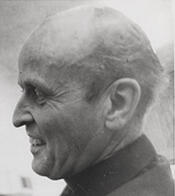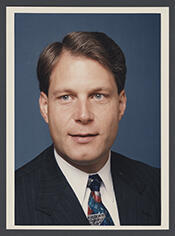
Samuel Lathrop (May 1, 1772 – July 11, 1846) was a U.S. representative from Massachusetts and a prominent lawyer and public official in the early national and antebellum periods. A member of the Adams Party representing Massachusetts, he contributed to the legislative process during four terms in the United States House of Representatives, serving during a significant period in American history and participating in the evolving democratic process while representing the interests of his constituents.
Lathrop was born on May 1, 1772, on the western side of Springfield in the Province of Massachusetts Bay, an area that was incorporated as the separate town of West Springfield in 1774. He was the son of Reverend Joseph Lathrop, the longtime pastor of the First Church of West Springfield, a position that made his father a leading religious and civic figure in the community. Raised in this environment, Samuel Lathrop pursued classical studies and prepared for higher education in the traditional New England manner of the late eighteenth century.
Lathrop attended Yale College, where he received a classical education and graduated in 1792. After completing his studies at Yale, he read law and undertook the customary legal training of the period, studying under established practitioners rather than in a formal law school. He was admitted to the bar and commenced the practice of law in West Springfield, returning to his native community to build his professional and public career.
In addition to his legal practice, Lathrop quickly became active in local government. He served as clerk and treasurer of West Springfield from 1796 to 1798, managing the town’s records and finances during a formative period in its civic development. He also served as town meeting moderator for eight years, presiding over the principal forum of local self-government in New England. His growing reputation as a lawyer and local official led to his appointment as Hampden County Attorney, a post he held from 1817 to 1821, in which he represented the county in legal matters and prosecutions.
Lathrop’s state and local service provided the foundation for his subsequent congressional career. He was elected as a Federalist to the Sixteenth and Seventeenth Congresses and was reelected as an Adams-Clay Federalist to the Eighteenth Congress and as an Adams candidate to the Nineteenth Congress, serving from March 4, 1819, to March 3, 1827. During these four consecutive terms, he sat in the House of Representatives at a time marked by the aftermath of the War of 1812, the “Era of Good Feelings,” and the emergence of new national political alignments. He served as chairman of the Committee on Revisal and Unfinished Business in the Seventeenth and Eighteenth Congresses, overseeing the review of pending legislation and the orderly disposition of incomplete business before the House. As a member of the Adams Party representing Massachusetts, he was aligned with the nationalist and reform-oriented wing of American politics associated with John Quincy Adams and Henry Clay.
While still in national office, Lathrop sought higher executive responsibility at the state level. In 1824 he ran unsuccessfully for Governor of Massachusetts as the Federalist nominee, losing to Levi Lincoln Jr. His candidacy was historically notable as he became the last Federalist nominee for governor in Massachusetts, marking the effective end of the Federalist Party’s role in the state’s gubernatorial politics. After leaving Congress in 1827, he resumed the practice of law in West Springfield and also became a gentleman farmer, reflecting the combination of professional and agricultural pursuits common among New England elites of his generation.
Lathrop continued to play an active role in public life after his congressional service. He served as a member of the Massachusetts State Senate in 1829 and 1830 and held the position of president pro tempore of that body, presiding in the absence of the Senate’s regular presiding officer and helping to guide legislative business. His political affiliations evolved with the changing party system of the Jacksonian era; in 1831 and 1832 he ran unsuccessfully for governor of Massachusetts as an Anti-Mason, again losing both contests to Levi Lincoln Jr. Beyond elective politics, he contributed to higher education as a trustee of Amherst College from 1829 to 1840, participating in the governance of the institution during its early decades.
In his personal life, Lathrop married Mary McCracken in 1797. The couple had a large family, with four sons and six daughters, and were part of the social and civic fabric of West Springfield. Samuel Lathrop lived in West Springfield for most of his life and remained identified with the town where he had been born, practiced law, and held numerous public offices.
Lathrop died in West Springfield on July 11, 1846. He was interred in Park Street Cemetery in West Springfield, where his burial reflected his long-standing ties to the community and his role in local, state, and national affairs over more than half a century of public service.
Congressional Record